


Old House Renovation in Vanagaram
Old House Renovation in Vanagaram starts with one question: is the house repairable as it stands, or is it hiding a structural problem that needs more than paint and plaster? In many older homes here, the real work is not cosmetic. It is checking slab cracks, damp patches, settled floors and the way rainwater leaves the plot.
If you are planning to keep the house and not rebuild it, this page will help you separate useful repair from money wasted on short-lived finishes. We also cover what the local site conditions change, what a proper inspection should include, and where renovation stops being sensible.
What Vanagaram Changes First
Vanagaram sits on the west side of Chennai, where you see a mix of older individual houses, newer layouts and houses that have been extended a few times without anyone keeping a clean drawing set. That matters during renovation. We usually find mixed wall thicknesses, patched beams, roof slabs with old seepage marks and plumbing that has been altered twice already. If the house is in a street with limited working space, the sequence of work matters more than the finish brand.
Some plots here have enough room for material stacking and a small mixer movement; others do not. That changes labour productivity, debris removal and even how quickly we can open up the roof for waterproofing. In a tight plot, one bad decision on staging creates damage in the neighbour’s compound wall, and then the job slows down for reasons nobody budgeted for.
We also look at approval and utility reality before talking about design. If the house needs only internal repair, the paperwork is simple. If you are altering structure, adding a room or changing the roof line, we check what the plot documents and local body process will ask for before we promise a date.
What We Check Before We Touch the Finish
An old house should not be judged by paint. We begin with condition assessment, because cracks and damp often have different causes. A plaster crack can come from shrinkage or a weak junction. A beam crack, a diagonal crack through masonry, or a recurring crack at the same line after repair needs a different response. That is where a civil engineer’s eye saves you from paying twice.
Common problems we inspect
We open the weak points first: terrace seepage, toilet slab leakage, wall damp near the plinth, rust staining on RCC members, floor settlement near the kitchen or rear side, and any area where doors have started rubbing. If the house has been extended, we check whether the old and new portions are moving differently. That is common in Chennai. It looks harmless until monsoon water sits against the joint line for a week.
Where the crack pattern or settlement suggests a foundation issue, we don’t pretend plaster alone will cure it. We check the structure, the load path and the likely cause. If the house needs repair of RCC members, we plan for jacketing, patch repair or local strengthening as the case demands. If the house is stable and the damage is only surface-level, we keep the intervention lighter and cheaper.
Repair, Rebuild or Just Refresh?
This is the real trade-off. A lot of owners want to preserve the old house because the plot is good, the family location works and the structure feels emotionally valuable. That makes sense. The wrong move is to spend on tiles, false ceiling and premium paint before the structure, drainage and waterproofing are settled. Those finishes look good in week one and start failing after the first heavy rain.
When renovation is the right choice
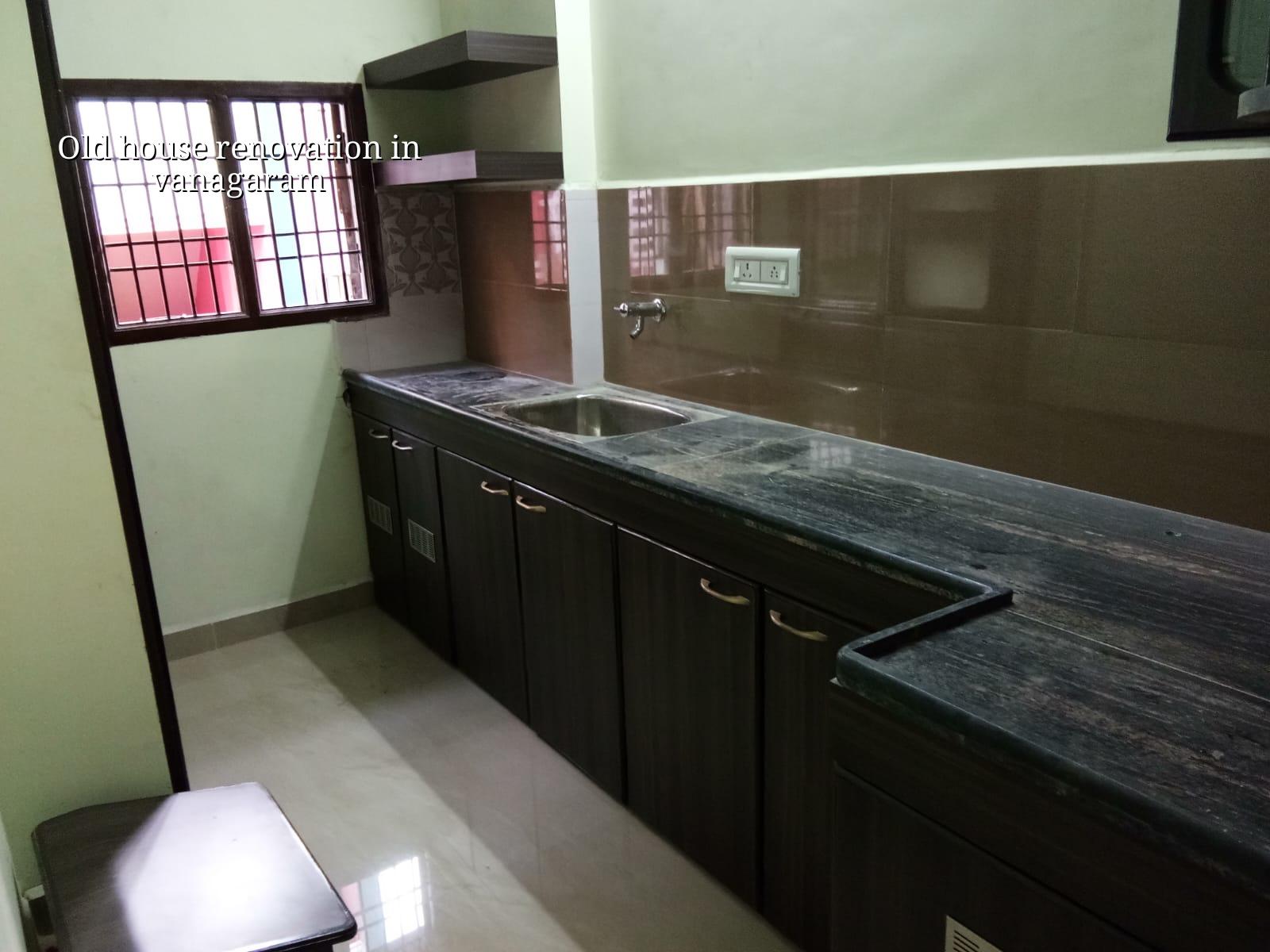
Renovation is sensible when the main frame is sound, the layout still works for your family and the defects are localised. In that case, we can improve the house without changing its identity. Many owners here choose to keep the front room, rework the kitchen, fix toilets, replace the old staircase railing and treat the terrace. That is a proper renovation.
When renovation is the wrong choice
If the house has repeated structural distress, major foundation movement, badly corroded RCC members or a room arrangement that no longer serves you, patch repair becomes a bad habit. Then you spend in stages and still end up with an awkward plan. Sometimes partial demolition and rebuilding one portion is cleaner than trying to save every wall. It costs more at the start, but less over the next five years.
- Condition survey — We inspect cracks, damp, slab edges, plumbing and roof lines, usually in one visit plus photos.
- Opening up the weak spots — We remove a small patch of plaster or finish where needed so the hidden problem is visible, usually 1 to 2 days.
- Repair planning and BOQ — We list the exact work item by item, so you know what is being fixed and what is not, usually 2 to 4 days.
- Structural and civil repair — We do the structural strengthening, waterproofing, masonry and service corrections in sequence, often 2 to 6 weeks depending on scope.
- Finish and handover — We complete plaster, paint, fittings and cleanup after the cured areas are ready, usually 1 to 2 weeks.
What You Should Ask For
If you are comparing contractors, do not ask only for a quotation. Ask for the inspection basis, the repair method and the exclusions. A proper renovation quote should tell you what has been opened, what was found and what was rejected as unnecessary. That way, a patch does not quietly become a fresh layer over a hidden defect.
The best way to protect yourself is to keep the questions practical. Ask whether the cracks were measured, whether the roof waterproofing includes slope correction or only coating, whether plumbing lines are being changed or merely connected back, and whether the old electrical wiring is staying in place. In an old house, that last question matters more than people think.
- Ask for a crack and damp map with locations marked on the plan or photos.
- Check whether waterproofing includes surface preparation, slope correction and curing time.
- Confirm which walls are being dismantled and rebuilt, not just repaired with putty.
- See if the BOQ separates civil work, plumbing, electrical and finishing.
- Ask how debris will be removed in a narrow street and who handles cleanup.
- Verify whether the contract says what is excluded, especially furniture shifting and temporary repairs.
Rates, approvals and the work order
For old house renovation in Vanagaram, the cost depends on how much structural repair is needed, how many wet areas are being redone, how accessible the plot is and whether the old services are being replaced. Renovation rates are not the same as new construction rates. Small repair work can look cheaper on paper and then become expensive per square foot because of dismantling, carting, patching and rework around old finishes.
As a reference, renovation work often lands somewhere within the interior works range of ₹1,200 to ₹2,500 per sq ft when it is a fit-out-heavy job, but structural repair, waterproofing and service replacement can move that figure. We confirm the real figure only after a BOQ. No honest contractor should give you a neat total price for an old house without opening up a few areas first.
| Work head | What usually gets included | What changes the cost |
|---|---|---|
| Surface repair | Plaster patching, crack filling, painting prep | How many walls are affected and whether damp is present |
| Waterproofing | Terrace treatment, toilet treatment, junction sealing | Slab condition, slope correction and curing time |
| Structural repair | RCC patch repair, local strengthening, jacketing where needed | Extent of corrosion, crack pattern and access for repair |
| Service upgrade | Plumbing lines, electrical rewiring, switches and fixtures | How much of the old system is being retained |
On approvals, the local authority depends on the plot location and the scope. Inside Chennai city limits, the building licence route is different from a municipality or town panchayat area. If the work changes structure or footprint, we check the documents first: patta, encumbrance certificate, FMB sketch, drawings, structural stability certificate and drainage details. If the house is near airport influence areas, height clearance can also matter. For a renovation, the safest way is to confirm the exact requirement before you break a wall.
How We Work on Older Homes
We handle renovation with in-house civil engineers, a structural engineer and an architect, so the person who checks the problem is not guessing what the site team will later do. A site engineer is on the property every working day. If you cannot visit often, we send weekly photo updates by WhatsApp. We also write the milestone-linked payment schedule into the contract and prepare the BOQ before anyone signs.
If your old house in Vanagaram needs a practical inspection or a repair plan, call us at +91 97107 13838 or write to info@shalomconstruction.com. You can also visit us at No. 45, 2nd Main Road, Abirami Nagar, Koladi (Landmark: Ratna Chamber), Thiruverkadu, Chennai – 600077.
Frequently Asked Questions
The house you already own may still be the right one, but only if the repairs are honest. If the structure is tired, tell yourself that early. That is cheaper than discovering it after the second monsoon patch.
Old House Renovation in Vanagaram
Send us photos, a rough floor plan or a site location, and we’ll tell you what needs opening up before you commit to a full repair plan. For a site visit or a BOQ-based quote, use the buttons below.
Request a Quote Call +91 97107 13838