


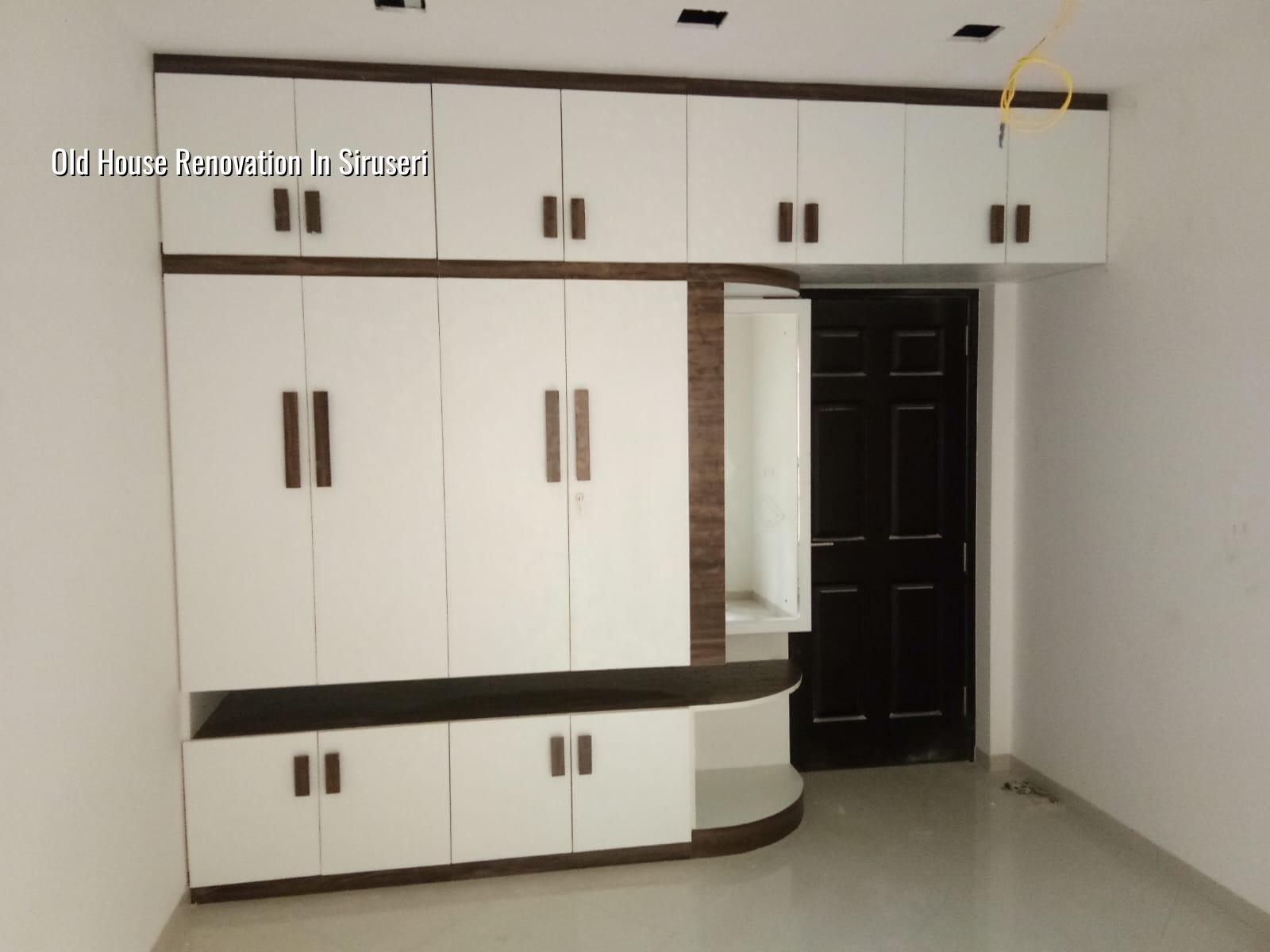
Old House Renovation in Siruseri
Old house renovation in Siruseri starts with one hard question: is the house tired, or is the structure actually failing? In this belt, many homes were built before the present wave of apartment growth, so the first job is to check walls, roof slabs, plumbing runs, and how the old house meets the site level now.
We work on that kind of project by sorting repair from rebuild. That saves you from spending on fresh paint when the real problem is water entry, cracked beams, a sinking patch near the plinth, or a room layout that no longer works for a family with cars, borewell lines, and more service loads than the house was designed for.
What Siruseri Changes
Siruseri sits on the OMR side where growth has been fast, plots have been subdivided, and old houses now share roads with newer apartment blocks and commercial buildings. That matters during renovation because access for a mixer, debris removal, and even material storage is tighter than people expect. If your street is narrow or the frontage is already crowded with compound walls and parked vehicles, we plan work in smaller delivery cycles instead of dumping everything on site and hoping it fits.
The other point is ground and drainage. Parts of this side of Chennai can hold water after hard rain, and an old house that looked fine in summer may show damp patches, loose floor finish, or wall seepage after the monsoon gets its second week in. So before we touch finishes, we check plinth level, roof slope, terrace waterproofing, and where rainwater leaves the plot. If the house sits low, raising the finished level becomes a design decision, not a cosmetic one.
Approvals also need to be handled properly. The planning authority in the Chennai Metropolitan Area is CMDA, but the actual building licence depends on the local body for that plot. For Siruseri and nearby growth pockets, we confirm the body and the required drawings before work starts. If the job needs structural changes, we also keep the design side aligned with IS 456:2000, IS 875, NBC 2016, and seismic provisions under IS 1893:2016.
How We Judge an Old House
Renovation is not one activity. It is a sequence of tests, decisions, and then work. A house that needs re-plastering is very different from a house where the slab line is sound but the wiring, plumbing, and bathroom waterproofing are all past their life. We inspect what can be repaired, what must be opened up, and what should be left alone because it is already performing well.
First checks on site
We start with the visible signs: cracks that go through plaster only, cracks that pass through masonry, rust staining on beams, damp around toilet walls, settlement at corners, and roof leakage marks. Then we check doors and windows for binding, because that often shows movement before the owner notices a structural symptom. We also ask how the house behaved during the last heavy rain. Homeowners usually remember the room that smelled damp, the staircase wall that darkened, or the terrace corner where water stood for a day.
- Condition survey — 1 to 3 days, depending on size. We record defects, measure levels, and separate surface damage from structural concern.
- Opening-up points — 1 to 2 days. Small trial openings tell us what is behind a crack, a seepage patch, or a weak plaster zone.
- Repair scope and BOQ — 2 to 5 days. We list what to repair, what to replace, and what must stay untouched, then prepare the BOQ before contract.
- Execution in trade sequence — 2 to 8 weeks for a typical house. Structural repair, waterproofing, plumbing, electrical, plaster, flooring, painting, and final fixes are not done in a random order.
- Final inspection — 1 to 2 days. We test water points, check slope, inspect patched areas, and close only after the finish is stable.
Repair or Rebuild?
This is the decision most people delay. They know the house looks old, but they want to keep the structure if possible and spend only where needed. That is fair. A good engineer should respect that. At the same time, some houses are not worth dressing up. If a house has repeated settlement, badly altered beam lines, or damage that keeps returning after each monsoon, a partial renovation can become a series of expensive patches.
We usually explain it in three buckets. If the structure is sound and the trouble is finishes, services, and waterproofing, renovation is the sensible choice. If the structure is sound in parts but the plan is awkward, we can open walls, improve movement, and keep the main frame. If the structure is tired in a serious way, then a major structural renovation or rebuild becomes the honest answer, even if that is not the cheapest answer today.
- Cracks that reappear after repainting.
- Damp patches that grow after each rainy season.
- Bathroom floors with no proper slope to the drain.
- Rust marks near slab edges or beam corners.
- Uneven floor levels between rooms.
- Old wiring that cannot safely carry modern load.
What We Repair, What We Don’t Guess
The work may include RCC patch repairs, plaster removal and re-plastering, terrace waterproofing, plumbing line replacement, bathroom refit, electrical rewiring, window and door changes, flooring replacement, and layout corrections. If a beam, slab, or column shows real distress, we do not cover it with putty and hope for the best. We inspect it, confirm the cause, and then decide whether repair, strengthening, or replacement is needed.
That honesty matters because bad renovation often hides the problem. A fresh coat can make a cracked wall look neat for a month. It does nothing for a leak from the terrace parapet or a pipe joint that keeps wetting the wall from inside. The job is to stop the cause, not to beautify the symptom.
| Item | Typical approach | What it prevents |
|---|---|---|
| Terrace waterproofing | Surface preparation, crack sealing, slope correction, membrane or approved coating | Leakage into bedrooms and stains on ceiling plaster |
| Bathroom repair | Remove failed finish, check pipe joints, redo slope, relay tiles | Water seepage to the room below and smell from trapped moisture |
| Wall repairs | Open loose plaster, treat rusted steel if exposed, re-plaster in layers | Hairline cracks turning into open patches after painting |
| Service upgrade | Replace unsafe wiring and old plumbing with tested new lines | Frequent faults, low pressure, and hidden leakage |
Cost Drivers You Should Watch
For renovation work, there is no honest fixed rate without seeing the house. A simple repaint job and a structural renovation are not the same thing, and the cost moves with the amount of opening-up, the condition of the old finish, the need for plumbing or electrical changes, floor area, and access. If the house is easy to stage and material can be carried straight in, the job is simpler. If we have to work in tight lanes with limited storage, labour time and protection work rise.
If you are comparing quotes, ask what is included. A cheap number often leaves out debris removal, waterproofing prep, crack repair, shuttering for local patch work, or service replacement. Our own pricing is always settled through a detailed BOQ, because a BOQ tells you where the money goes and where it does not. That is much more useful than a neat sounding lump sum.
These are the main cost drivers in an old-house job:
- How much demolition is needed before repair starts.
- Whether the cracks are in plaster, masonry, or RCC.
- How many toilets, kitchens, and wet areas need new lines.
- Whether terrace waterproofing and slope correction are required.
- Whether the plan changes need structural openings or only partition work.
- How easy the site is for material delivery and debris removal.
Approvals, Paperwork, and Timing
Most owners think renovation is only a construction issue. It is not. If the work changes structure, footprint, or approval-relevant elements, we check the local approval path first. In Chennai, that means knowing whether the plot sits under Corporation limits, a municipality, a town panchayat, or another local body, while CMDA remains the planning authority for the metropolitan area. Near airport-side zones, height-related checks can also come into play. We confirm the route before drawing work starts, because a wrong assumption can stall the job later.
For a typical renovation, the time line depends on how much is being opened and how much curing the repair needs. A small refresh may take a few weeks. A deeper structural and service renovation can run longer because concrete repair, waterproofing, and plaster need proper drying time. Rushing those stages is how a project looks good on day of handover and ugly again by the next monsoon.
One practical point: if your house is occupied during renovation, plan the sequence around rooms, not around trade names. Kitchen, toilet, and sleeping space should not all be shut at once unless you have alternative living arrangements. That sounds obvious, but it is the point people regret missing.
How We Work
We handle renovation with in-house civil engineers, a structural engineer, and an architect. A site engineer is on site every working day, and clients who cannot visit get weekly photo updates by WhatsApp. Before any contract is signed, we prepare a BOQ and agree a milestone-linked payment schedule, so you know what is being done at each stage. If you want us to look at an old house in Siruseri, call us on +91 97107 13838 or write to info@shalomconstruction.com. Our office is at No. 45, 2nd Main Road, Abirami Nagar, Koladi (Landmark: Ratna Chamber), Thiruverkadu, Chennai – 600077.
Frequently Asked Questions
If your old house in Siruseri needs a proper check before you spend on paint or tiles, we can look at the structure, the seepage, and the service lines first. After that, you’ll know whether the house needs repair, strengthening, or a larger rethink.
Old House Renovation in Siruseri
Send us the site details and we’ll schedule a visit or prepare a BOQ-based discussion for the work that actually needs doing.
Request a Quote Call +91 97107 13838