


Old House Renovation in Sholinganallur
Old House Renovation in Sholinganallur usually starts with one question: can the house be repaired, or is part of it too tired to keep? In this side of Chennai, the answer depends on structure, drainage and how the old rooms were built, not on the paint finish you can see from the gate.
We work on that order. First we inspect what is carrying the load, where water has entered, and what the site can support during the work. Then we decide what to keep, what to strengthen and what to rebuild, so you don't pay for cosmetic work over a sick structure.
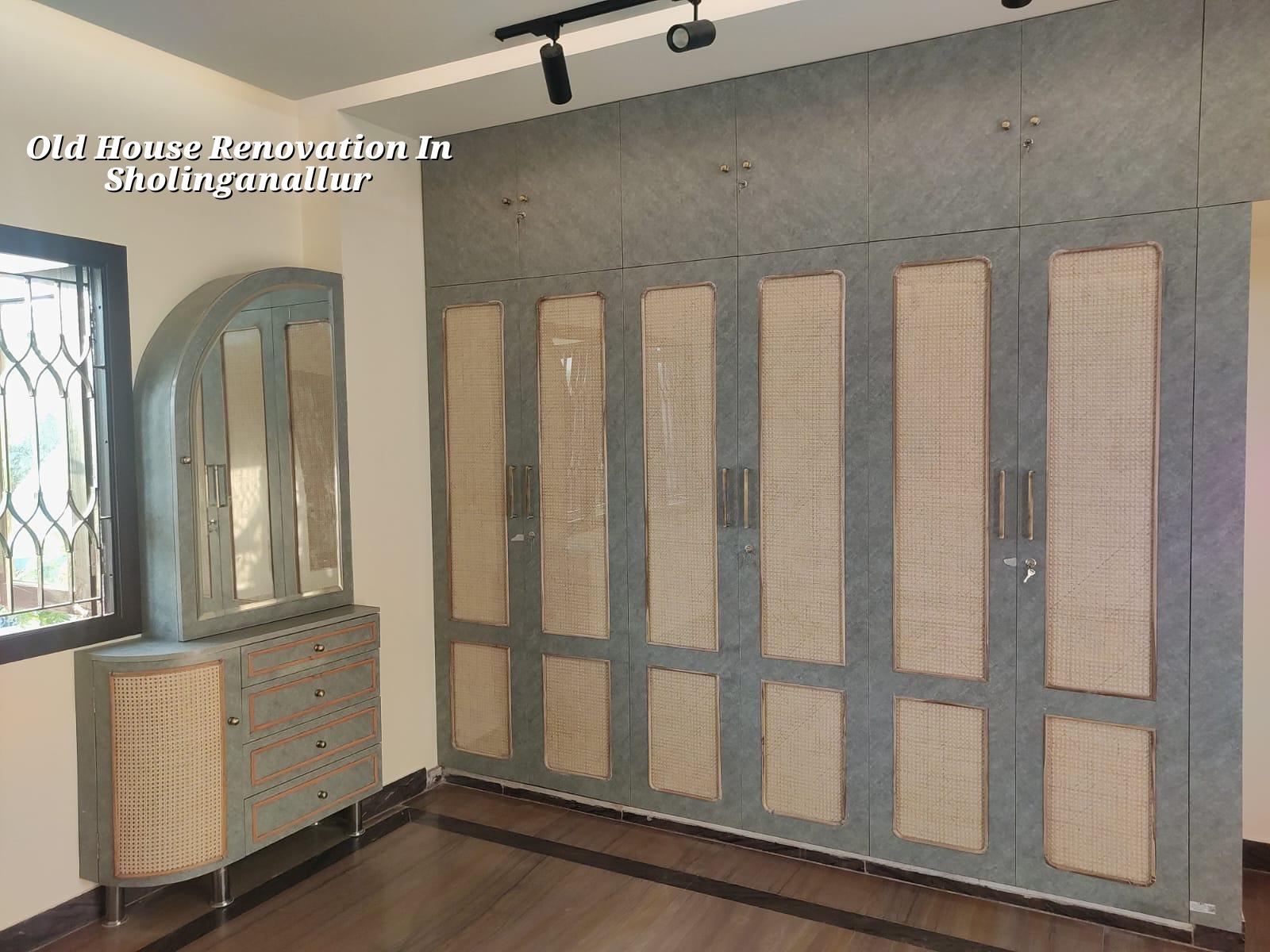
What Sholinganallur changes
Sholinganallur sits in the OMR belt where a lot of older houses are now being altered beside newer apartments and villas. That mix matters on a renovation site. Access can be tight even on a wider road because neighbours, parked vehicles and ongoing construction all compete for space. Inside the plot, many older homes were built before today's expectations for service shafts, rainwater handling and ducting, so any new bathroom, kitchen or staircase work has to be planned around the structure that is already there.
Ground behaviour also affects the decision. We do not assume the same foundation approach for every old house here. If a soil report shows soft or variable layers, we plan the strengthening accordingly. If the ground is firm, that gives you more options, but it still does not excuse skipping a proper assessment. A cheap inspection is still cheaper than repairing a crack after false economy has already spread through the house.
There is also the approval side. Depending on the plot location, the licence may fall under the local body, while CMDA rules and the right drawings still matter. If you are changing the structure, adding floors, altering the staircase or touching drainage and sanitary lines, the paperwork must match the work. People often treat renovation as if it is only interior work. It isn't.
What we inspect before we quote
For old houses, we start with a condition assessment. That means we look at the visible cracks, the slab edges, the soffit of the roof, damp patches, termite damage, previous patch repairs, and the way water moves across the site in rain. A house that looks tired on the surface may only need repairs and replastering. Another one with neat paint can hide corrosion in the slab edge or settlement near a column line.
Repairable, risky, or beyond repair
Not every defect needs demolition. Hairline plaster cracks, failed waterproofing, tired tiles, rust-stained ceilings and leaking bathrooms are usually repairable if the structural frame is sound. Deep diagonal cracks, slab sag, exposed steel, column distress or repeated settlement need engineering review before any finishing work starts. If the frame is compromised, new paint only hides the problem for a few months.
The honest limitation is this: renovation is the wrong choice when the owner wants the whole house changed, including floor plans, services and finish levels, but expects a near-new budget. Structural work, waterproofing and new services take money first. If you want to save, save on finish upgrades, not on the frame or the waterproofing layer.
- Survey and measurement — we record the existing house, crack locations, levels and service routes; usually 1 to 2 days for a normal residence.
- Condition check — our civil engineer and structural engineer inspect the frame, roof, wet areas and foundation clues; this avoids guessing.
- Repair decision — we separate cosmetic repairs from structural repairs and mark what must stay open until the hidden work is done.
- BOQ and sequence — we prepare a detailed BOQ, list materials and fix the stage-wise payment plan before contract signing.
- Execution and checks — demolition, strengthening, waterproofing, services and finishes are done in order, with a site engineer present every working day.
How to decide what to keep
Most homeowners want to keep as much of the old house as possible. That's sensible. The better question is what to keep without trapping future problems. A staircase with a sound waist slab can stay. A leaking toilet sunken slab with broken waterproofing may need complete rebuild. Old floor tiles may be worth keeping only if the substrate is stable and levels can be matched cleanly.
We usually tell clients to spend on the parts that are hard to access later: roof waterproofing, bathroom lines, external plaster, corrosion treatment, and any structural strengthening. Paint, lights and decorative finishes can wait if the budget is tight. The reverse order causes trouble. People spend on polish first, then find they have no room left for the work that actually protects the house.
- Check whether cracks are only in plaster or run through the masonry and RCC.
- Check for damp at the wall base, slab edge and bathroom back side after rain.
- Check whether doors and windows have started binding because levels have shifted.
- Check the roof slope, rainwater outlet points and whether water ponds on the terrace.
- Check if the old electrical wiring, plumbing and drain lines are still serviceable.
- Check whether any previous patch repair is already breaking at the same line.
Rates, scope and what moves the cost
For renovation, the rate depends on how much of the house you are changing and how much hidden damage we uncover. Interior fit-out work starts from the interior works range of ₹1,200 to ₹2,500 per sq ft. Where structural repair, waterproofing, replacement of services and new finishes come together, the figure can move quickly. We do not give a fake total price from a phone call. A BOQ settles the actual figure after site inspection.
The biggest cost drivers are the same ones that trip people up on old houses everywhere in Chennai: structural repair, demolition and debris removal, water damage, electrical and plumbing replacement, and site access. A house in a tighter lane takes longer because material stacking and debris movement are slower. A house with repeated leakage is rarely a paint job. If you try to price it that way, the quote will look low and the final bill will not.
| Renovation head | Typical scope | What changes the cost |
|---|---|---|
| Repair only | Crack filling, replastering, patch waterproofing | Depth of damage, access, number of affected rooms |
| Partial renovation | Kitchen, toilets, wiring, plumbing, select finishes | Service rerouting, tile removal, hidden leakage |
| Structural renovation | Column or beam strengthening, slab repairs, RCC treatment | Engineer design, shuttering, curing time, material access |
| Full-house renovation | Mixed repair, services and complete interior refresh | Extent of demolition, temporary relocation, finish level |
Our work on site
We keep the technical work in-house. Our civil engineers, structural engineer and architect handle the assessment and the drawings. A site engineer is there every working day, and clients who cannot visit get weekly photo updates on WhatsApp. That matters on renovation, because old houses reveal things only after you open them. The contract, payment stages and BOQ are written before work starts, so you know what is included and what is not.
If you want to speak to us about an old house in Sholinganallur, call us and share a few photos first. We can usually tell you whether the issue sounds like waterproofing, services or a deeper structural check. If you already have drawings, bring them along. If not, we can start from the existing house and build the scope from there. Reach us at +91 97107 13838 or write to info@shalomconstruction.com.
Frequently Asked Questions
If your house has been patched more than once and the same problem keeps coming back, don't keep paying for the same repair. We would rather inspect it properly, tell you what can stay and what should go, and build the work around that truth.
Old House Renovation in Sholinganallur
Share the house details, a few photos or a rough sketch, and we'll tell you the next sensible step. We can also prepare a BOQ-based quote after a site visit.
Request a Quote Call +91 97107 13838