


Old House Renovation in Saidapet
Old House Renovation in Saidapet usually starts with one question: is the house only tired, or is it hiding a structural problem? In Saidapet, that question matters because many plots sit close to low-lying pockets near the Adyar side, and water does not forgive a weak plinth, a bad slope, or a patchwork repair done in a hurry.
We look at the building as it stands, not as the owner hopes it is. Cracks, seepage, roof leaks, rusted steel, a sinking floor and bad wiring all need different answers, and the wrong fix is expensive because it hides the real fault for a while and then fails again.
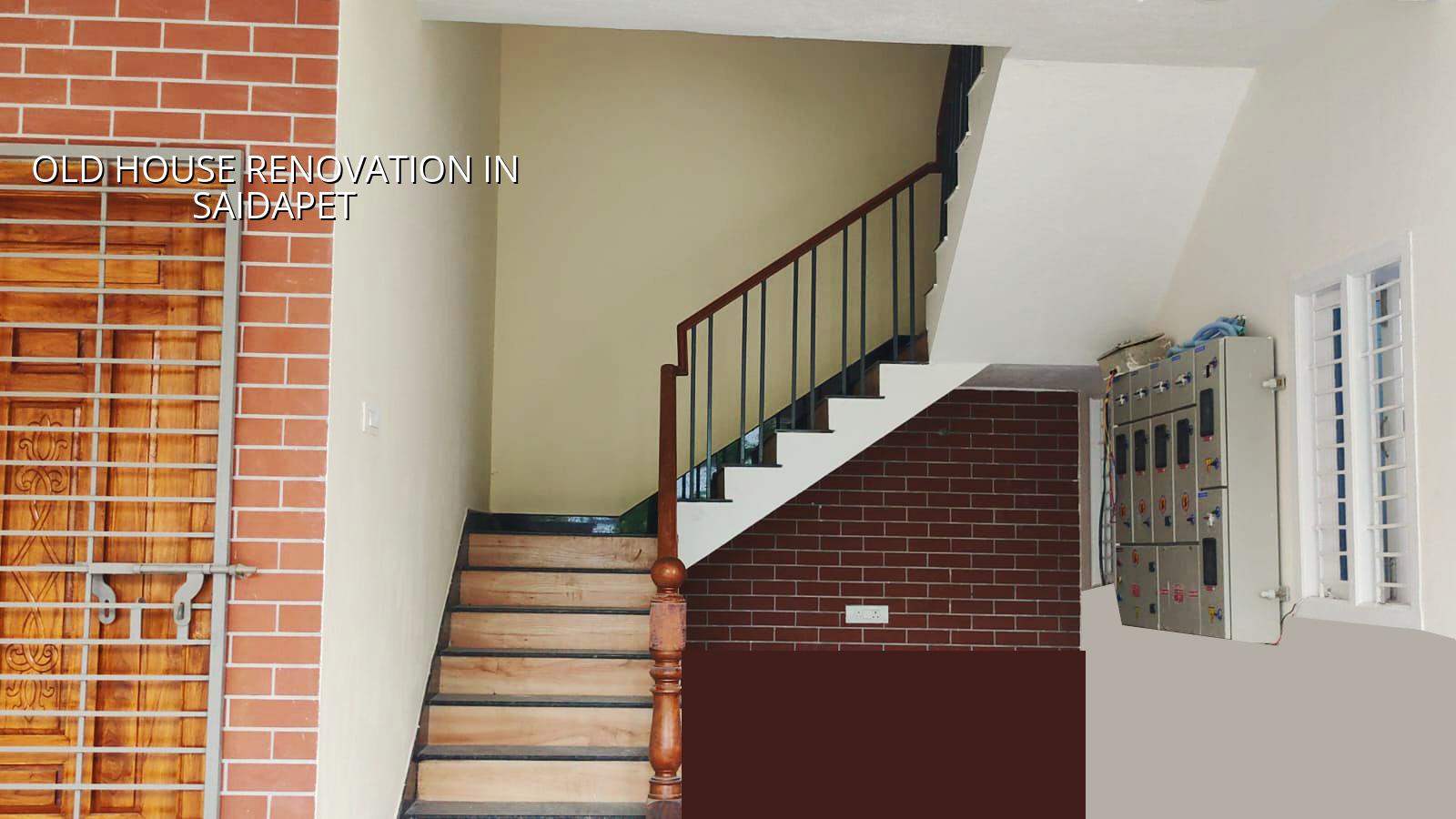
What Saidapet changes
Saidapet is not a place where you can treat an old house like a fresh site. It has dense streets, busy access, and pockets where the ground and drainage force you to think about plinth level, rainwater runoff and temporary storage for debris before you even start demolition. If a lorry cannot stop near the gate, materials have to move in smaller loads, and that affects both time and labour.
Many homes here are older independent houses that have had two or three rounds of modifications. A room gets extended, a slab gets hacked for a staircase, a toilet is added where the original drainage was never meant to take it. That is the pattern we see. The house still stands, but the load path has changed, and the water path has usually changed too.
For a homeowner, the real local decision is simple. Do you repair for another five to ten years, or do you strip parts of the building and rebuild them properly? If the answer is wrong, you spend twice. In a place like Saidapet, where access and drainage already make the site awkward, half-measures show up quickly.
How we assess an old house
We start with a condition check, not with a quotation. That means we look at visible cracks, roof slab leakage, rust staining, settlement at the floor, damp walls, timber or steel condition where it is exposed, and how the house behaves around openings and junctions. A plaster crack is not the same as a beam crack. A leak from a toilet slab is not the same as a terrace crack. The repair changes with the cause.
What we inspect first
Structural work has to be based on evidence. We check whether the issue is localised or structural, whether the old reinforcement is still sound, whether the concrete cover has been lost, and whether the existing foundation can take the revised loads if you plan a new room, a staircase change, or a roof modification. Where needed, we coordinate soil investigation before any foundation decision. That is cheap compared with fixing a wrong footing after the house starts moving.
We also check whether the house needs code-aware redesign. Our team works to Indian standards such as IS 456:2000 for RCC, IS 1893:2016 for seismic design, IS 875 for loads and NBC 2016. Chennai sits in Seismic Zone III, so even an old house being repaired should not be treated as if gravity is the only thing acting on it.
- Site inspection — 1 visit to map cracks, seepage, roof condition and access constraints.
- Condition report — 2 to 4 days for the repair scope, risk points and what can wait.
- Testing and measurements — as needed for soil, concrete cover, slab condition or settlement indicators.
- BOQ and method statement — 3 to 5 days to set out quantities, sequence and payment stages.
- Execution — from a few weeks for local repairs to longer for structural strengthening or partial rebuilds.
Repair, strengthen or rebuild?
This is the decision people struggle with most. Patch repair is cheaper today, and full reconstruction feels like too much if the house still “looks okay”. But old houses often fail at hidden points. A terrace leak eats the slab from the top. A bathroom leak ruins reinforcement near the beam edge. A wall crack that seems minor can mark movement at the support.
We usually break the choice into three buckets. First, repairable damage: plaster debonding, terrace waterproofing failure, local pipe leaks, damaged flooring, corroded door frames. Second, strengthen-and-retain: beam or slab strengthening, column jacketing, roof repairs, staircase reinforcement, selective concrete restoration. Third, rebuild-partly: when the plan itself is bad, the structure has aged too far, or the old house cannot support the use you want now.
The case against rebuilding is real. If you only need a dry house and the structure is otherwise sound, full demolition is wasteful. The case against piecemeal repair is equally real. If the structure is already asking for help, another coat of putty will not save it. A good engineer tells you which side you are on, even if the cheaper answer is not the one you wanted.
| Typical scope | What it usually includes | What affects effort |
|---|---|---|
| Minor repair | Crack filling, plaster patching, leak sealing, paint prep | How many rooms, whether the source is active, access to the affected area |
| Bathroom or terrace repair | Breaking local finishes, waterproofing, slope correction, reinstatement | Extent of damage, pipe condition, need for rerouting |
| Structural strengthening | Jacketing, beam repair, slab treatment, corrosion treatment | Member size, exposed steel loss, working space, occupancy during work |
| Partial rebuild | Selective demolition, new RCC work, rebuilt walls, services reset | Foundation condition, approval route, access for material and debris |
What goes into the cost
For renovation work, cost is driven by what the building is hiding. A cosmetic refresh is one thing. A house with damp walls, rusted reinforcement and failed plumbing is another. For Chennai, standard residential construction typically runs at ₹1,900 – ₹2,300 per sq ft, mid-premium at ₹2,300 – ₹2,800 per sq ft, and premium at ₹2,800 – ₹3,500+ per sq ft. Renovation does not sit in a single neat figure because the BOQ depends on the existing condition.
On old houses, the biggest cost movers are the extent of demolition, the amount of steel or concrete repair, floor-to-floor access, the need to keep part of the house liveable, and how easy it is to bring material in Saidapet’s streets. Saving on waterproofing is a bad idea. Saving on needless decorative work is sensible. Saving on structural repair is not saving; it is postponing a larger bill.
Here is the way we tell clients to think about it. If the problem is water, fix the source first. If the problem is settlement, study the foundation first. If the problem is corrosion, expose enough of the member to see how far the damage has gone. If you only repair the surface, you are paying for the same failure twice.
- Ask for a BOQ before any contract is signed.
- Check whether the source of seepage has been traced, not just covered.
- Confirm if the house can stay occupied during work, room by room.
- See what is included in demolition, debris removal and reinstatement.
- Insist on the payment stages being tied to actual progress.
- Ask how the engineer will inspect reinforcement before concrete is closed.
Approvals, timelines and the old-house trap
Renovation is not always approval-free. If you are altering structure, changing footprint, adding floors, or touching the building line in a way that matters to the local body, we check the route first. In the Chennai Metropolitan Area, CMDA is the planning authority, and the licence comes from the local body relevant to the plot. That may be the Greater Chennai Corporation, or a municipality or town panchayat outside it. We do not guess. We confirm what applies to your site.
If your plot is near the airport side, height clearance can also come into the picture. For an old house, the common mistake is to start work and think paperwork can be settled later. It cannot. Once walls are opened and slabs are altered, you lose time. If you need drawings, stability certificates or drainage details, they should be ready before the first breaker machine arrives.
As a rough planning frame, a small repair can move in a couple of weeks. A terrace and bathroom restoration needs more time because drying, slope checks and waterproofing are not things you hurry. Structural strengthening or partial rebuilds take longer because the sequence has to be controlled. The calendar is not the issue. The order is.
How we handle renovation work
We keep the work in-house with our civil engineers, structural engineer and architect. A site engineer is on site every working day, and our clients who cannot come often get weekly photo updates by WhatsApp. Before any contract, we prepare a detailed BOQ and the payment stages are written into the agreement. That matters more in renovation than in new construction because hidden damage changes the scope fast.
If your old house in Saidapet needs a structural repair, a roof fix, a new layout or a partial rebuild, we can inspect it and tell you what is repairable and what is not. Call us on +91 97107 13838 or write to info@shalomconstruction.com. Our office is at No. 45, 2nd Main Road, Abirami Nagar, Koladi, Thiruverkadu, Chennai – 600077, and we also take calls on +91 99941 32004.
Frequently Asked Questions
Old houses deserve careful work, not optimism. If you open the first layer and the problem looks larger than expected, that is not a failure of the inspection; it is the inspection doing its job.
Old House Renovation in Saidapet
If you want us to inspect the house, we can look at the condition, tell you what can be saved and prepare a BOQ-based proposal. Call us or send a message and we’ll take it from there.
Request a Quote Call +91 97107 13838