


Old House Renovation in Thiruverkadu
If your house in Thiruverkadu is 15, 20 or 30 years old, the first question is not how to make it look new. It is whether the structure, roof and plumbing can take another decade without opening up the same problems again.
Old House Renovation in Thiruverkadu usually starts with a condition check, not with tiles and paint. We look at cracks, seepage lines, roof slope, slab edges, bathroom leaks, wiring and the way rain water leaves the site, then we decide what can be repaired and what has to be rebuilt.
What Thiruverkadu changes on site
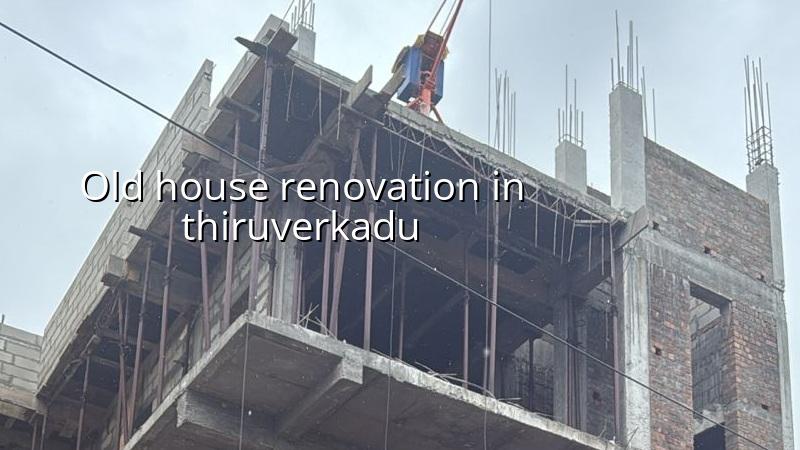
Thiruverkadu is a municipality area, and many old homes here sit on plots that were extended in phases. You see one room added later, a stair moved, a bathroom patched into a corner and a terrace roof changed by a different mason years ago. That matters more than the age of the house itself. A repair plan for a neat, single-phase building will fail if the house has mixed brickwork, different floor levels or a terrace slab that was never detailed properly.
The other local reality is access. Some streets give us enough room for material stacking and debris removal, while others do not. If the road is tight, we plan for smaller loads, cleaner demolition and more frequent clearing. That affects time and labour. It also changes how we schedule concrete, waterproofing and shuttering so the neighbour opposite is not blocked by a truck for half a day.
Approval route is another thing people miss. If the renovation touches structure, additional floor space or major external changes, we first check what the plot needs under CMDA rules and which local body is issuing the building licence. For some homes the paper trail is light; for others we need old drawings, patta, encumbrance certificate, FMB sketch and a current structural plan before work can move.
What we check before we touch anything
An old house is not judged by one crack. We inspect the pattern. Hairline plaster cracks are one thing. A diagonal crack running through masonry near a beam or a wide crack at a column-beam joint is another. Damp patches at the foot of a wall can mean rising moisture, a broken external drain or a floor level that has become lower than the outside path. Rust stains below a slab edge usually mean water is reaching reinforcement. You can paint over any of these. That does not make them go away.
In our experience, the costly mistake is starting with finishes. People want tiles, false ceiling and fresh paint because they are visible. We understand that. But if the terrace waterproofing is weak or the bathroom waste line leaks into the wall, the new finish will fail within one monsoon. A sensible renovation sequence is structural first, services second, finishes last.
What usually needs attention first
We often find one of four things: a leaking terrace, old plumbing hidden in walls, rusted reinforcement at an exposed edge, or settling at a later extension. Sometimes all four show up in the same house. When that happens, we do not promise a cosmetic makeover. We make a repair plan that matches the damage. That may mean re-plastering, crack stitching, re-tiling only after waterproofing, or opening and replacing service lines before any interior work starts.
- Condition survey — 2 to 4 days, depending on access and how much of the house can be opened safely.
- Trial openings and measurements — 1 to 3 days to confirm slab, beam, wall and plumbing conditions.
- Repair drawings and BOQ — usually 3 to 5 days after the survey, so you see what is included before any contract.
- Structural and service repairs — 1 to 4 weeks, depending on whether the work is local patching or full replacement of damaged sections.
- Finishes and handover — 1 to 3 weeks for plaster, paint, flooring touch-ups and final snag correction.
Repair, remodel, or rebuild?
This is the real decision. A house with sound columns and slabs can usually be renovated. A house with repeated foundation movement, badly altered load paths or widespread reinforcement corrosion may need partial rebuilding. We tell people that bluntly because a weak structure with good paint is a false saving.
Repair makes sense when the frame is stable, the damage is local and the family wants to keep using the house while work happens in stages. Rebuild makes more sense when room sizes are awkward, the stair is unsafe, the services are old beyond rescue or the foundation details are unknown. A home owner often asks us to "just strengthen it a little". Sometimes that is honest. Sometimes it is a way of avoiding the real cost. We separate the two.
There is a trade-off here. Renovation is faster, usually less disruptive and can preserve the house you already know. It also has a ceiling. If the old plan wastes space or the structure has too many hidden defects, you can spend a lot and still end up with an old house in new clothes. A rebuild costs more and takes longer, but it lets us fix levels, circulation, drainage and structure as one system. We recommend renovation when the skeleton is worth keeping. We do not recommend it just because it sounds cheaper.
How the work is planned
For old-house jobs, sequence matters more than enthusiasm. If you break the sequence, you end up redoing work that was just finished. That is why we keep the survey, the BOQ and the site plan tied together.
| Work head | Typical scope | What can go wrong if skipped |
|---|---|---|
| Structural repair | Crack treatment, concrete patching, strengthening, local rebuild | Fresh plaster hides the problem for a few months and then the crack returns |
| Waterproofing | Terrace, toilet, sunshade and external wall sealing | New paint blisters, ceiling stains return, plaster falls off |
| Plumbing and drainage | Replacing old lines, slope correction, leak testing | Hidden leaks keep damaging walls and floors from inside |
| Electrical upgrade | New wiring, earthing checks, DB corrections, load review | Frequent tripping, overheating and unsafe mixed old-new circuits |
| Finishes | Plaster, tile, paint, joinery touch-up | Pretty work that fails early if the base is not sound |
- Check whether the crack is active, stepped, vertical or diagonal.
- See if damp is from terrace, plumbing or external ground level.
- Ask for a BOQ before agreeing to any demolition.
- Confirm whether the work touches structure, services or only finishes.
- Keep a record of old photos so you can compare before and after.
- Insist on leak testing before new tiles are closed up.
For cost, old-house renovation is never a flat number. In Chennai, the rate moves with the amount of structural repair, the finish level, the number of rooms opened up and how easy the site is to reach. If the job is mostly repair and repainting, it sits lower. If you are replacing bathrooms, wiring, terrace waterproofing and some RCC members, the figure moves up fast. We do not quote a total price from the phone. We prepare a BOQ so you can see where every rupee is going before you sign.
When renovation is light, the work can stay within the painting and repair band. When it becomes a major makeover with structural changes, the cost starts looking more like a mid-premium residential project. The right way to compare is head by head, not by guesswork. What saves money on paper and creates seepage later is not saving.
One honest limitation: if the house has repeated settlement, badly corroded reinforcement across large areas or a plan that no longer serves the family, renovation may not be the right answer. A good engineer should say that early. Waiting until the finishes are removed only makes the decision more expensive.
How we work on these houses
We start with an in-house engineer visit, not a sales visit. Our civil engineer, structural engineer and architect review the house together, and a site engineer stays on site every working day once work begins. If you cannot visit often, we send weekly WhatsApp photo updates so you can see what was opened, repaired and closed. The contract carries milestone-linked payments, and the BOQ is detailed before signing. If you want us to look at your house in Thiruverkadu, call +91 97107 13838 or write to info@shalomconstruction.com. You can also start from our contact page or see the kind of work we do in renovation and residential.
Frequently Asked Questions
If you are standing in a house where the wall patch has already come back twice, that is usually the sign to stop guessing. A proper survey answers more than a week of arguments with the mason.
Old House Renovation in Thiruverkadu
Send us the photos, or let us inspect the house and prepare a BOQ-based repair plan before you start spending on finishes.
Request a Quote Call +91 97107 13838