


Plastering Contractors in Saidapet
When you’re comparing plastering contractors in Saidapet, the real question is whether the walls will stay true, crack-free and ready for paint after the first monsoon. Plaster looks simple from outside, but it decides how straight a room feels, how paint sits, and how much patching you’ll do later.
In Saidapet, the work often happens on occupied plots, tight streets and older structures where you can’t afford messy staging or guesswork. We handle plastering as part of a proper civil sequence: wall checking, surface preparation, line and level control, curing and only then the finish coat.
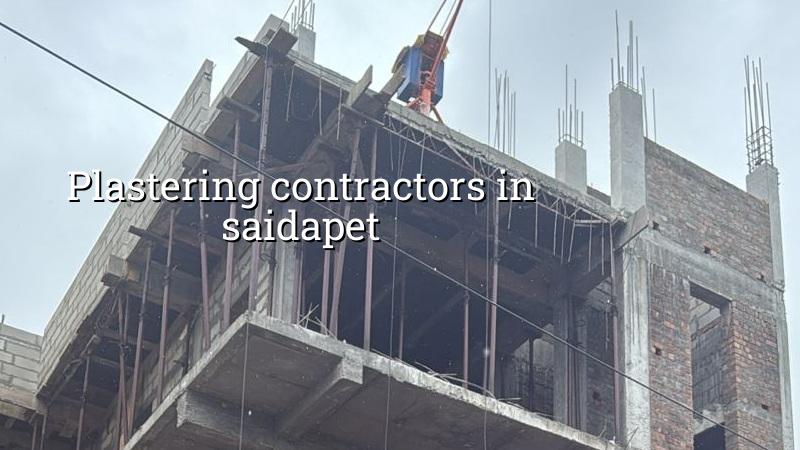
Saidapet sites need careful plaster work
Saidapet is not the kind of place where you get wide open access and plenty of storage. It sits close to the Adyar river belt, and low-lying pockets can hold moisture after heavy rain, so walls that are damp, poorly cured or rushed through finishing tend to show hairline cracks and patch marks sooner than they should. On older plots, the bigger issue is not the plaster mix alone; it is how much the wall has already moved, whether the masonry was built true, and whether the contractor checks plumb before applying mortar.
We also see the practical side. Narrow access affects how sand, cement and scaffolding reach the site. In some houses, the plaster team works around stairs, neighbours, parked two-wheelers and limited curing space. That changes the way the job is planned. If the surface is not prepared well, the final paint will expose every ridge, hollow patch and joint line. A local contractor who understands this will spend time on surface correction before chasing speed.
What plastering should actually cover
Good plaster is not just “putting a layer on the wall”. It is a controlled coat that levels the masonry, closes surface pores, improves bond for putty or paint, and protects the wall from dust and minor moisture ingress. For most homes, the work starts with removing loose mortar, dust and oil from the surface. Then we check line, level and corner angles. Where the blockwork or brickwork is uneven, the plaster thickness is adjusted so the finished wall looks straight, not wavy under sunlight.
Where failures usually start
Cracks often come from one of four things: poor wall preparation, a weak mix, excess water in the mortar, or curing that was cut short. In Chennai heat, plaster can dry too fast on exposed surfaces. In Saidapet, the second issue is moisture movement from nearby damp areas or a wall that was plastered before the masonry had settled enough. We also see corner cracks when beads and junctions are not treated properly. A neat-looking wall on day three can still fail after paint if the base is careless.
- Inspection and measurement — We check the wall for hollows, offsets and damp patches, usually in a few hours for a typical floor.
- Surface preparation — Loose mortar, dust and weak joints are cleaned so the plaster can bond properly.
- Line, level and beading — Corners, openings and long runs are set before the main coat goes on.
- Application and curing — The coat is applied in sequence, then cured for several days so it hardens without surface shrinkage.
How to choose a plastering contractor
If you’re calling multiple contractors, ask them what they will inspect before mixing mortar. A serious team will talk about wall surface, dampness, junction treatment, curing and the next finish layer. A weak team will only quote a rate per square foot and leave the rest to chance. For interior work, that difference shows up later as putty consumption, uneven paint reflections and cracks around beams or column joints.
Also ask how they handle old walls. New masonry and old masonry do not behave the same. In a renovation, we may recommend hack-checking the surface, removing loose patches, and using a bonding coat where the substrate is poor. On fresh brickwork, the focus is different: keeping the thickness even and not over-wetting the wall before application. Either way, the contractor should explain what finish you’ll get, not just promise that the wall will “look good”.
- Ask for the plaster thickness they plan to use on each wall face.
- Check whether they will cure the surface and for how many days.
- Confirm how they handle junctions at beams, columns and window corners.
- See whether their quote includes scaffolding, surface prep and material shifting.
- Look for a clear BOQ before you sign anything.
Cost, finish and the trade-offs
Plastering rates move with wall condition, floor height, access, finish level and how much surface correction is needed. For Chennai, painting and finish work start from the labour side, but plastering itself is judged more by the substrate than the quote alone. If you try to save by skipping repair on rough masonry, you usually pay again in putty, paint and repeated touch-up. The cheaper option is only cheaper when the wall is already straight and sound.
For a new house, a straight, well-cured plaster coat often saves more money later than a bargain quote that leaves ridges and hollows. For renovation work, the trade-off is different. You may spend more on correction, but only where the existing surface needs it. We tell owners that plaster should not be made thicker than necessary just to hide errors. Thick plaster can look fine on day one and still crack if the wall below is unstable.
| Work item | What affects it | What a fair quote should clarify |
|---|---|---|
| Internal wall plaster | Wall straightness, existing finish, floor height | Thickness, surface prep, curing period |
| External wall plaster | Exposure to rain and sun, scaffolding, access | Mix, corner treatment, weather protection |
| Patch repairs | Extent of cracks, dampness, hollow sections | Area to be repaired and curing method |
| Plaster for renovation | Old substrate condition and bonding need | Hack-checking, bonding coat, final smoothness |
How we handle the job on site
We start with measurement and a quick look at the wall, because a plaster quote without a site reading is usually a guess. Our in-house civil engineers and site engineer check the surface, the openings and the corners before work begins. The contract includes a detailed BOQ, and the payment stages are tied to milestones, not vague promises. If you can’t visit every day, we send weekly photo updates by WhatsApp so you can see progress without chasing anyone.
For homes in Saidapet and nearby central Chennai areas, we’re used to tighter access and live-site coordination. If the work is part of a larger build, we can coordinate plastering with our residential, renovation or interior teams so the wall finish matches the next stage properly. If you want to speak to us, call +91 97107 13838 or write to info@shalomconstruction.com.
Frequently Asked Questions
If you’re comparing plastering contractors in Saidapet, don’t start with the cheapest quote. Start with the wall itself. A neat finish comes from the surface below it, and the surface below it only behaves if the contractor treats the job like part of the structure, not like a cosmetic afterthought.
Plastering Contractors in Saidapet
Send us your site location or call for a BOQ-based quote and a practical discussion on the wall condition, finish and curing plan.
Request a Quote Call +91 97107 13838