


Plastering Contractors in Pallikaranai
Plastering contractors in Pallikaranai are usually called after the brickwork is up and the walls still look rough, uneven, or damp. If you are seeing hairline cracks, hollow patches, or a finish that will never look straight under paint, the plastering stage is where that gets corrected.
In this part of Chennai, the job is not just about getting a smooth wall. The ground retains water in many pockets, so curing, joint treatment, and the timing of interior work matter more than people expect. We’ll explain what good plaster should look like, what fails later, and what you should ask for before any labour starts.
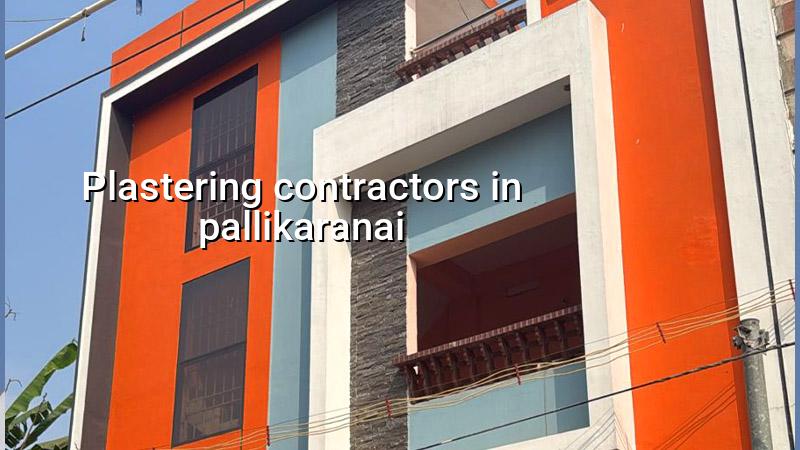
Why Pallikaranai changes the plastering job
Pallikaranai is not a place where you can treat wall finishing as a simple cosmetic layer. Many plots sit beside soft, water-retaining ground, and that shows up later as damp lines near the lower wall, weak corners after monsoon, or a slow bloom of powder on the paint film if the base coat was rushed. In a house here, the plaster has to work with the building, not just look good on day one.
The practical issue is timing. If masonry is still holding moisture, fresh plaster can shrink unevenly and crack at door openings, slab junctions and long corridor walls. We also see people start putty too soon because the room “looks dry” from the outside. It isn’t. Once that mistake is made, the repair is usually messy and expensive.
Another local point is site access. Many layouts in this side of Chennai have narrow internal roads or limited space to stack sand and cement in a dry spot. That affects the mix consistency and the speed at which a crew can finish a bay. If the material sits in the open and takes on moisture, the batch changes. The wall will show it.
What a proper plaster layer should do
Plaster is the skin that gives your wall a true line, a hard enough surface for paint, and protection to the masonry below. For normal residential work we usually talk about cement-sand plaster with the right thickness for the wall condition, proper bonding at junctions, and full curing after application. On ceilings, the finish needs even tighter control because every ripple shows once light hits it from the side.
Materials and workmanship that matter
Good plastering starts with the base, not the trowel. The masonry joints should be cleaned, dust removed, and the wall dampened before application. The mix must be kept uniform from one stretch to the next. If the sand is dirty, if the mix is watered down on site, or if the crew works on a dry wall in full heat, the result is weak and patchy. We also pay attention to slab-wall junctions, beam edges, and around electrical boxes, because that is where cracks usually begin.
For internal walls, the finish should be straight enough that a long screed does not leave a wave every few feet. For external walls, the plaster needs a firmer surface and careful curing because Chennai’s weather swings from hot sun to heavy rain. A weak outer coat may look fine at handover and start shedding dust after the first monsoon.
- Surface check — We inspect masonry, slab junctions, and damp spots before any work begins. This usually takes a day for a normal house.
- Base preparation — Loose mortar, dust, and oil marks are cleaned off, and the wall is dampened so the plaster bonds properly.
- Application — The plaster is laid in controlled stretches, with line and level checked as the work moves. A room or bay is usually finished in one to two days depending on size.
- Curing and follow-up — The surface is cured for several days, and then we check for shrinkage cracks, hollows, or uneven patches before the next trade starts.
How to judge the finish before paint goes on
If you are hiring plastering contractors in Pallikaranai, don’t inspect only the final look from three feet away. Stand at the corners, look along the wall with side light, and tap for hollow sound. A wall can look smooth and still be weak beneath the surface. That is the kind of problem that appears after putty, primer and paint, when correcting it means scraping back layers you already paid for.
- The wall should feel even under a straightedge, not wavy in the middle.
- Door and window reveals should be square enough that frames sit cleanly.
- No open shrinkage cracks should run from slab corners or electrical chases.
- External plaster should not crumble when rubbed by hand after curing.
- Patch repairs should blend into the main surface, not sit as visible islands.
- Wet areas need a sound base before waterproofing or tile work begins.
Where people save money and where they shouldn’t
Plastering rates move with wall condition, scaffold height, the number of corners, ceiling area, access to the plot, and whether the work is inside or outside. A straight wall in a simple room costs less to finish than a room with lots of offsets, beams, and service openings. Tall external work also takes more time because safe access takes time. For Chennai residential work, plastering is often hidden inside a larger construction package, but the same logic applies.
Here is the part people miss: saving on plaster thickness or curing usually looks smart for one week and expensive later. Saving on a smooth, even undercoat is dangerous because paint will only magnify the defects. The place to save is usually in the decision to avoid unnecessary decorative work. The place not to save is on base preparation, line checking, and curing.
| Area of work | What changes the rate | What to insist on |
|---|---|---|
| Internal wall plaster | Wall length, corners, openings, base condition | Line, level, sound bonding, proper curing |
| Ceiling plaster | Height, staging, slab condition, finish tolerance | Flatness, no ripples, clean junctions |
| External plaster | Working height, weather exposure, access | Firm mix, uniform finish, careful curing |
| Patch repair | Extent of damage, bonding surface, moisture level | Full removal of weak material before repair |
For broader residential work, our standard Chennai construction rates sit from ₹1,900 to ₹2,300 per sq ft for standard finishes, ₹2,300 to ₹2,800 per sq ft for mid-premium, and ₹2,800 to ₹3,500+ per sq ft for premium homes. Those figures still move with soil, foundation type, span, finish level and site access, so the real number comes from a detailed BOQ, not a guess on the phone.
What to verify before you hire
This is the part most homeowners should use as a filter. A plastering crew can talk well and still leave you with a wall that needs sanding, patching and rework. Ask for the method, not just the labour rate. If they cannot explain how they handle curing or cracks at slab junctions, that tells you enough.
We would look for the following before we sign off on any plastering package:
- Whether the crew checks the wall for dampness before starting.
- How they treat beam junctions, corners and service chases.
- Whether the mix is measured or simply judged by eye.
- How many days of curing are planned for internal and external walls.
- Whether the finish is being checked with line, level and straightedge.
- Whether patching, hacking and surface prep are included or charged later.
How we work on finishing jobs
We handle plastering as part of a proper build sequence, not as a loose labour call. Our in-house civil engineers and site engineer check the surface before work starts, then watch the line, thickness and curing while the job moves. We also give weekly WhatsApp photo updates if you are not visiting the site every day. If the work is tied to a larger house or renovation, we bring it into the BOQ so you know what is included and what isn’t. You can call us on +91 97107 13838 or write to info@shalomconstruction.com; our office is at No. 45, 2nd Main Road, Abirami Nagar, Koladi, Thiruverkadu, Chennai – 600077.
Frequently Asked Questions
In a place like Pallikaranai, a finish job should be judged by how it behaves after rain, not just by how it looks on handover day. If the wall stays tight, straight and quiet through the first wet season, that is the real sign the plaster was done properly.
Plastering Contractors in Pallikaranai
If you want us to inspect a wall, review a patch repair, or quote the plastering as part of a house build, call us for a site visit or a BOQ-based discussion.
Request a Quote Call +91 97107 13838