


Plastering Contractors in Poonamallee
If you need plastering contractors in Poonamallee, you’re usually looking at fresh masonry, patch repairs after wiring, or a wall that has stopped looking straight. The real question is not who can spread cement on a wall; it’s who can make the surface stay true after the first summer and the first monsoon.
We handle plastering as part of a proper civil job, not as a loose labour gang. That means we check the substrate, the bond, the line and level, the cure, and the paint-ready finish before we call it done. If you’re comparing quotes, the details below will help you separate a fair rate from a cheap one that cracks in a few months.
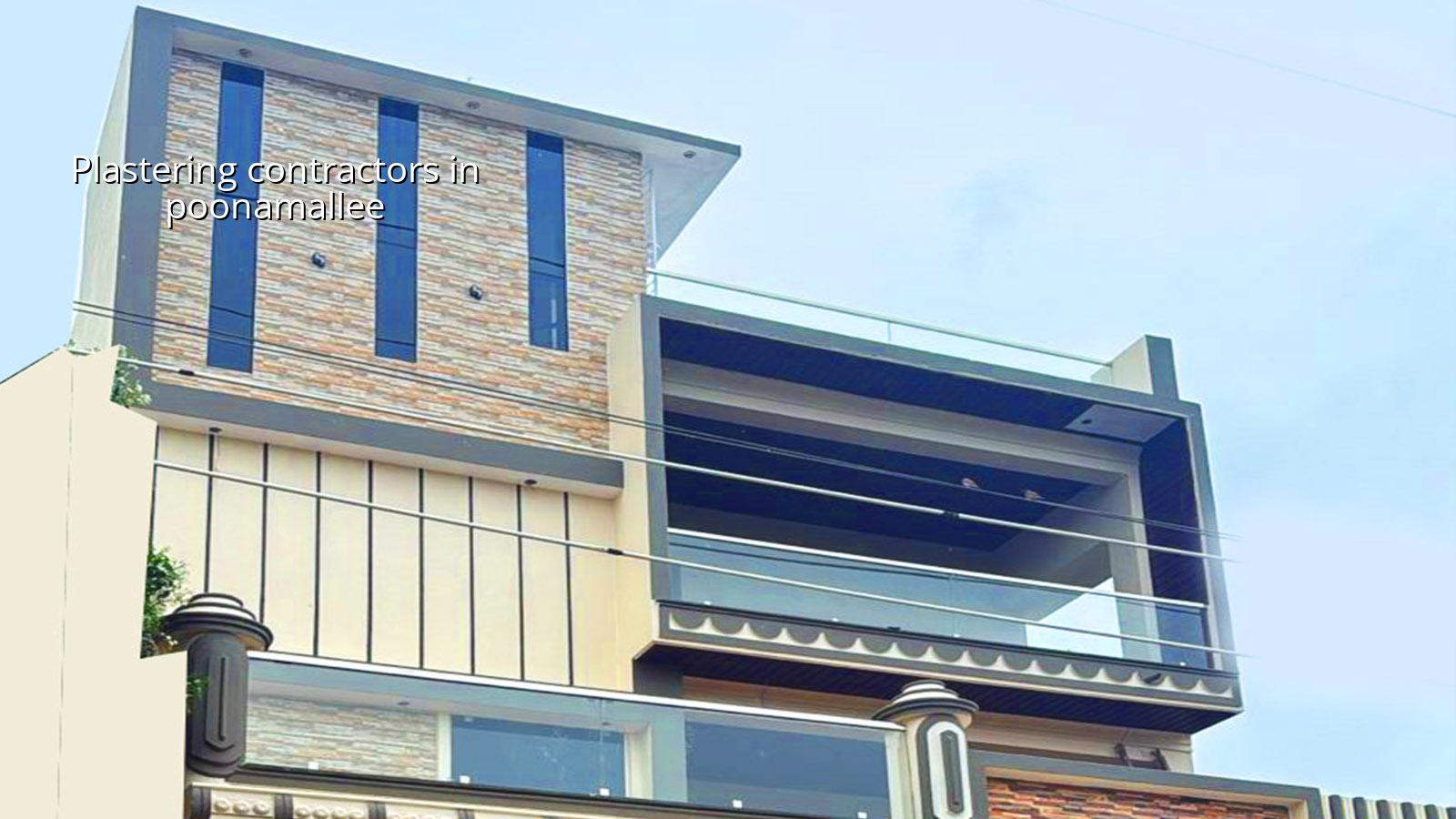
What Poonamallee sites ask for
Poonamallee is a mix of old town streets, newer layouts, and plots that sit close to the highway traffic moving toward the west side of Chennai. That matters on site. You often get narrow access near the town centre, dust from the road edge, and clients who want work finished before interior painting or rental handover. In the outskirts, the plots are larger, but the wall surfaces are often newly built and still settling, so the plaster has to tolerate small movements without showing hairline cracks everywhere.
The approval side matters too. Poonamallee falls outside Greater Chennai Corporation, so the building licence route is through the local municipality side of the system rather than the city corporation route. For a plastering or renovation job, that mostly affects how the broader project is managed: who signs off the structure, which drawings are available, and whether the work is part of a new build, a repair, or a full rebuild. If the old plaster is damp or hollow, we inspect the cause first; covering it with fresh mortar only hides the problem for a season.
How we judge a wall before plastering
Good plaster starts before the trowel hits the wall. We check whether the blockwork or brickwork is cured enough, whether the surface has dust or salt, and whether the joints are open enough to grip. On a mixed brick-and-block wall, the surface does not absorb water evenly, so the prep work has to be adjusted panel by panel. On a ceiling, the concern is different: sagging patches, old leak marks, and the bond at the slab underside.
We normally look at three things first: plane, adhesion, and moisture. Plane tells you whether you need a thicker make-up coat. Adhesion tells you whether hacking or keying is needed. Moisture tells you whether the wall is ready today or should be left to dry and treated first. That sounds basic, but most plaster failures begin when someone skips one of those checks and starts mixing immediately.
Mix, thickness, and finish
For ordinary internal plaster, the mix and thickness depend on the wall condition and the finish you want. A flat, paint-ready surface needs a different hand from a rough utility area or a ceiling where every ripple will show under light. We use the right sand grading, water control, and curing discipline because plaster that is too rich in cement can shrink and crack, while a weak mix powders later. On the other hand, over-watering makes it easy to spread and hard to keep straight.
External plaster has a tougher life. In west Chennai, hot afternoons and sudden rain put stress on the surface, so curing and crack control matter more than the neatness of the first day. A small corner patch is one thing. A full elevation re-plastering job is another. If the base is moving, no finish coat will hide that for long.
- Inspect and mark — we check the wall, identify hollow areas, measure the true thickness needed, and confirm what should be hacked or repaired first. This usually takes a few hours for a room, longer for a full house.
- Prepare the surface — dust removal, hacking where needed, water spray, mesh at junctions, and line setting. If this step is rushed, the plaster may look fine on day one and debond later.
- Apply the coat — the plaster is laid in sections, levelled, and finished according to the room use. Internal work is usually faster than external work because access and weather are easier to control.
- Cure and check — we keep the surface moist for the right period, then inspect for shrinkage marks, hollowness and waviness before handover. This is where many sites fail, especially when painting starts too soon.
What a fair plastering quote should include
If you’re collecting quotations, ask what is included and what is not. A number by itself tells you very little. A proper quote should tell you whether it covers hacking of loose plaster, scaffolding or staging, corner beads, mesh at joints, curing water, and finishing ready for putty or paint. If the wall is damp, the quote should also say how the source is being treated. If the wall is very uneven, the quote should show the extra thickness separately. That is how you compare apples to apples.
- surface hacking or removal of loose plaster where required
- bonding and junction treatment at RCC and masonry interfaces
- scaffolding, staging, or safe access for upper portions
- curing arrangement and the number of curing days
- final finish level for putty, paint, or texture work
- repair treatment for cracks, damp patches, and hollow sounds
Rate bands and what moves them
For plastering, the actual price is not a single fixed figure. It moves with wall condition, height, access, finish level, and whether the job is repair work or fresh work in a new build. When plastering is part of interior fit-out or renovation, the practical rate usually sits within the interior works range, but the real number is settled only after a detailed BOQ and site inspection. Soil does not affect plaster cost directly, but if the building has movement or moisture issues from foundation or drainage problems, the plaster job becomes a repair cycle instead of a simple finish.
| Work head | Indicative rate | What changes it |
|---|---|---|
| Standard residential construction | ₹1,900 – ₹2,300 per sq ft | Used as the broader project reference when plastering is part of a full build |
| Mid-premium residential | ₹2,300 – ₹2,800 per sq ft | Higher finish expectations, more junction treatment, cleaner corners |
| Interior works | ₹1,200 – ₹2,500 per sq ft | Fit-out scope, repair extent, putty and paint readiness |
| Painting | ₹25 – ₹45 per sq ft | Depends on surface prep, which is where plaster quality shows up |
How we work on site
We keep the work practical. Our in-house civil team checks the wall, the structure and the finish sequence, and a site engineer is on site every working day. If you can’t visit the property in Poonamallee, we share weekly photo updates by WhatsApp. For a repair job, we first look for the cause of the damage instead of only patching the face of the wall. For a new house, we coordinate plastering with electrical chasing, plumbing, and later painting so nobody has to break a finished wall.
We also give you a detailed BOQ before contract signing, because that is where plastering jobs become clear. A fair price for one home may not suit another home across the road. If you want to speak to us, call +91 97107 13838, use the alternate number +91 99941 32004, or email info@shalomconstruction.com. Our office is at No. 45, 2nd Main Road, Abirami Nagar, Koladi, Thiruverkadu, Chennai – 600077.
Frequently Asked Questions
Some walls only need a careful repair. Others need a proper sequence from hacking to curing, and there’s no shortcut that survives Chennai weather for long. If you want the work done once, it helps to have the details pinned down before the first bag is opened.
Plastering Contractors in Poonamallee
Send us a photo of the wall, or ask for a site visit and a BOQ-based quote.
Request a Quote Call +91 97107 13838