


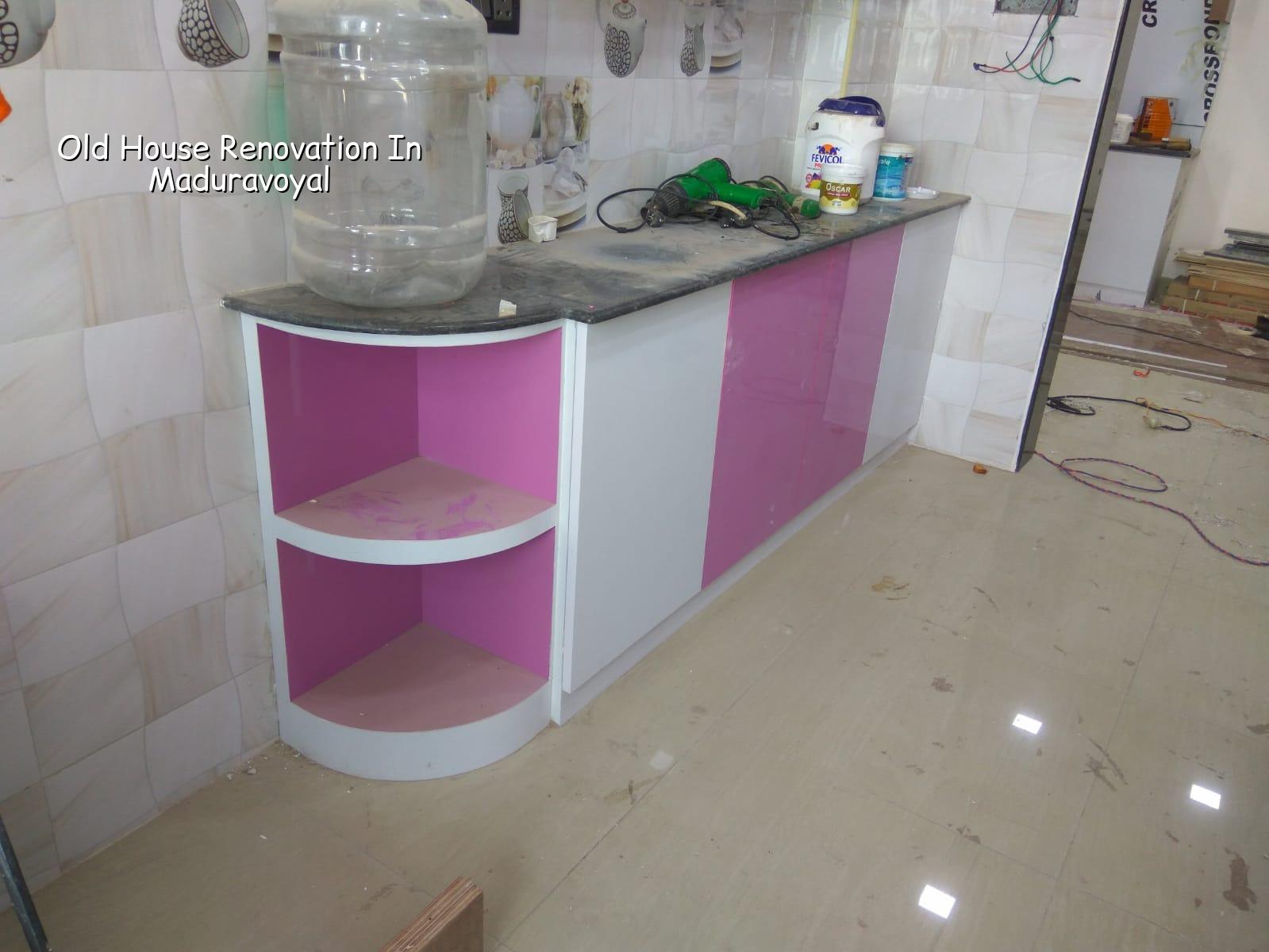
Old House Renovation in Maduravoyal
Old House Renovation in Maduravoyal usually starts with a crack, a damp patch, or a room that no longer works for the way your family lives. In this part of west Chennai, the bigger question is not what to repaint first; it is what is still sound and what needs to be opened up before you spend on finishes.
We handle renovation the way an engineer should. First we inspect the structure, the water paths, the roof slab, the old plumbing and the electrical runs. Then we decide what can be repaired, what should be replaced, and what should be left alone. That order saves money and stops the common mistake of beautifying a weak house.
What Maduravoyal changes on site
Maduravoyal sits on the west side of Chennai near a busy junction and a lot of mixed old and new development. Many plots there were built in stages, so you often find one wing older than the other, patchwork repairs on the terrace, and plumbing lines added without drawings. The approach roads are better than in the old core of the city, so material movement is easier, but access still matters when a house shares a side wall or when there is no open yard for stacking debris.
The ground condition is not something we guess from the locality name. What matters is the plot log and the signs on site. If we find soft layers or water movement, we change the repair plan before opening walls. If the structure is firm, we can keep the intervention lighter. That decision affects everything from jacketing to tile replacement.
In old houses here, the real pain points are usually the terrace, the bathroom slopes, sunken plumbing, and a staircase that feels too tight after the family has grown. A renovation that ignores those things looks fresh for a few months and then starts leaking again.
What we inspect first
Before we talk about colours or false ceilings, we look at the bones of the building. A proper renovation begins with checking cracks, roof seepage, wall dampness, settlement signs, corroded reinforcement, electrical overload points and termite damage in timber where it exists. In a house that has stood for years, these issues rarely come alone. One leak often means another hidden source above or behind it.
Signs we treat seriously
A thin paint crack is one thing. A crack that follows a beam, opens after rain, or runs across a wall with damp staining is another. So is a terrace slab that has been patched more than once, or a bathroom that keeps sending water into the ceiling below. If the plaster sounds hollow over a wide area, we remove it and see what is happening underneath instead of sealing over it again.
- Condition survey — one visit to map cracks, damp spots, slab stains, unsafe wiring and layout issues. This usually takes a day for a small house.
- Test opening — we open selected plaster, terrace patches or bathroom zones to see the real cause. Two to three days is common.
- Repair plan and BOQ — we list each item, quantity and material. This is where the budget becomes real.
- Structural and service work — waterproofing, patch repair, plumbing replacement, rewiring or strengthening happens next. Duration depends on the extent.
- Finishing — plaster correction, tiling, painting and fixtures come only after the wet work has settled.
Renovation choices you actually have to make
Old-house work is not one decision. It is a set of smaller ones. Some owners want a full strip-out. Others only want to stop seepage and improve one floor. Both can be sensible. What matters is matching the scope to the condition of the house and the amount you want to spend.
Repair, remodel, or rebuild?
If the structure is sound and the layout still suits you, renovation is usually the better choice. You keep the foundation, the main frame and the walls that still perform. If the house has repeated settlement, major beam distress, or the plan is too cramped to fix without heavy alteration, then a partial rebuild can be the cleaner option. We say no to cosmetic work on a failing shell. That approach wastes money.
The trade-off is simple. Repairing is cheaper at the start, but only if the hidden faults are not ignored. Rebuilding costs more and takes longer, yet it removes years of patchwork and makes the services easier to redesign. Most families want to keep the house they know. I understand that. But if the terrace keeps leaking into the bedrooms, a cheap repair is not really cheap.
What a proper scope should include
- Crack mapping and patch repair, not just filler on the surface
- Bathroom and terrace waterproofing with slope correction where needed
- Electrical recheck for load, old joints and unsafe routing
- Plumbing replacement in concealed lines if the existing pipes are old
- Plaster correction and repainting only after wet defects are fixed
Old-house work and the hidden cost drivers
Renovation cost moves for reasons people can see and reasons they cannot. A small house with a simple repair list can stay near the lower end of the interior or repair range. A house that needs slab treatment, plumbing rerouting, repeated waterproofing and a full electrical refresh climbs quickly. Site access also matters. If materials must be carried through a narrow passage or shifted floor by floor, labour goes up.
For Chennai, the usual reference point for interior works is ₹1,200 to ₹2,500 per sq ft, and painting with labour plus standard emulsion is ₹25 to ₹45 per sq ft. Old-house renovation often mixes both, along with civil repairs, so a BOQ is the only honest way to settle the figure before work starts. We do not quote a fake lump sum just to win the job.
| Work head | What changes the rate | What we check first |
|---|---|---|
| Waterproofing | Terrace area, crack depth, slope correction, access | Rain leak points, old patch layers, parapet joints |
| Plumbing | Concealed line replacement, bathroom count, routing | Pipe age, joint leaks, floor slope, wet wall marks |
| Electrical | Load points, number of circuits, rewiring extent | Old board, loose joints, heat marks, earth continuity |
| Civil repair | Crack width, concrete distress, plaster quantity | Beam lines, slab edges, hollow plaster, settlement signs |
How we handle approvals and disruption
In a renovation, approvals are usually lighter than for a new build, but they are not zero. If the work changes the structure, the drainage arrangement or the external form of the house in a way that needs local scrutiny, we check the applicable route for the plot first. In the Chennai metropolitan area, the authority depends on where the property sits, and the paperwork often includes existing documents, drawings and a structural stability note when changes are structural.
The site itself is the bigger issue. Old houses are occupied houses most of the time. That means dust control, temporary water shut-offs, noisy work windows and a clear sequence so the family is not forced to live in a demolition zone longer than needed. In our experience, a renovation goes wrong when people start finishes before they settle the wet work. The second month is where those mistakes show up.
How we work on a renovation like this
We start with an inspection by our civil engineer and the site engineer, then we prepare a BOQ and a practical sequence. Our team stays in-house, so the engineer who studies the crack is not a stranger who disappears after the estimate. A site engineer is on site every working day, and if you cannot visit, we send weekly photo updates on WhatsApp. If the job needs design input or a structural decision, Mr. D. Salamon Ashok Rajan reviews it personally. Call +91 97107 13838 or write to info@shalomconstruction.com if you want us to look at the house before you decide on repair or rebuild.
Frequently Asked Questions
If your house in Maduravoyal has started asking for the same repair twice, that is usually the real warning. Fix the cause once, not the paint over it.
Old House Renovation in Maduravoyal
Send us the photos, or ask for a site visit. We’ll inspect the condition, prepare a BOQ and tell you plainly whether repair, partial renovation or rebuild is the better spend.
Request a Quote Call +91 97107 13838