


Old House Renovation in Karapakkam
Old House Renovation in Karapakkam usually starts with one hard question: what can be repaired safely, and what has to come out. If your house is 15, 25, or 40 years old, the right answer depends on cracks, dampness, corrosion, wiring, and the way the plot drains after a heavy spell of rain.
We do not start with paint shades. We start with the structure, the roof, the plinth level, and the service lines. In Karapakkam, that order matters because a small-looking leak or slab crack can hide a much bigger problem under the finish.
What Karapakkam changes first
Karapakkam sits in the OMR belt where old houses often share the same street with newer apartments and offices. The plot may look ordinary from the gate, but the ground can hold water after rain, especially where the site is lower than the road or where the drainage channel is slow. That changes renovation work in a very practical way. We check plinth level, floor dampness, terrace slope, and whether water is entering through the wall-footing junction before we talk about flooring or fresh plaster.
The other issue is access. Some old homes have narrow side passages, shared compound walls, and no real space to stack sand, cement, or shuttering steel. In that kind of site, the renovation plan has to be staged carefully. If a wall is demolished before the new route for material is ready, the house becomes unsafe and messy very quickly. That is not theory. It is what usually goes wrong when people try to renovate by labour alone.
For plots near the OMR traffic belt, timing also matters. Concrete delivery, debris removal, and sand movement need more discipline than on an empty suburban site. If you are living inside the house during work, we plan the sequence around that. If you are shifting out for a few weeks, the scope can move faster, but only if the structure is sound enough to allow it.
What we inspect before any work starts
A proper renovation is not just a repair job with nicer paint. We inspect the building as a system. That means the RCC members, masonry, roof waterproofing, bathroom lines, electrical load, and the way the house settles on the soil. Chennai uses IS 456:2000 for RCC, IS 1893:2016 for seismic design, IS 875 for loads, and NBC 2016 as the base code set, so even when we are renovating an older home we still measure the present condition against current engineering practice.
The weak points we look for
Hairline cracks are not all the same. A crack at a plaster junction may be minor, while a crack running through a beam or a repeated diagonal crack at a corner needs a different response. Damp patches under windows can come from failed sealant, but damp at the lower wall can mean rainwater entry, bad slope outside, or a plumbing leak inside the floor. Rust marks on the slab or beam line need a closer look because they often mean reinforcement corrosion has already started.
We also check the parts people usually ignore: door frames that have twisted, bathroom floors that pond water, parapet walls with poor waterproofing, and terrace outlets that choke during the monsoon. Those are the places where old houses keep failing after the fresh work is done.
- Condition survey — one site visit, crack mapping, damp check, and a short engineer's note. This usually takes 1 to 2 days.
- Opening-up work — a few selected patches are cut or chipped so the hidden condition can be seen. This is where slab leaks, corroded steel, or failed pipe joints show up.
- Repair design and BOQ — we decide what to retain, what to strengthen, and what to replace, then prepare the BOQ before pricing is fixed.
- Execution in stages — structural repairs first, then waterproofing, then services, then finishes. A medium renovation often runs 4 to 10 weeks depending on size and damage.
Repair, rebuild, or leave it alone?
This is the trade-off most owners need to face honestly. Repairing an old house is cheaper than rebuilding, and sometimes much quicker. If the foundation is sound, the roof is stable, and the damage is mostly in plaster, waterproofing, bathroom lines, or old wiring, renovation makes sense. You keep the shell and improve comfort without paying for a full new structure.
But repair is the wrong choice when the structure itself is tired. If the slab has widespread corrosion, if beams show repeated distress, if settlement is active, or if the plan layout is so poor that every room needs breaking and shifting, a partial repair can become wasted money. People often try to save on the structure and spend on finishes. That is backwards. New tiles cannot hide movement in the frame.
In Karapakkam, we are cautious with low plinths and old drainage. If the house sits too close to the surrounding ground level, the floor can keep taking moisture even after a neat interior makeover. Then the paint peels, the skirting swells, and the owner feels cheated. We would rather tell you to raise a level, cut a damp source, or replace a wet patch of slab than sell you a cosmetic job that fails in one monsoon.
What a sensible renovation scope includes
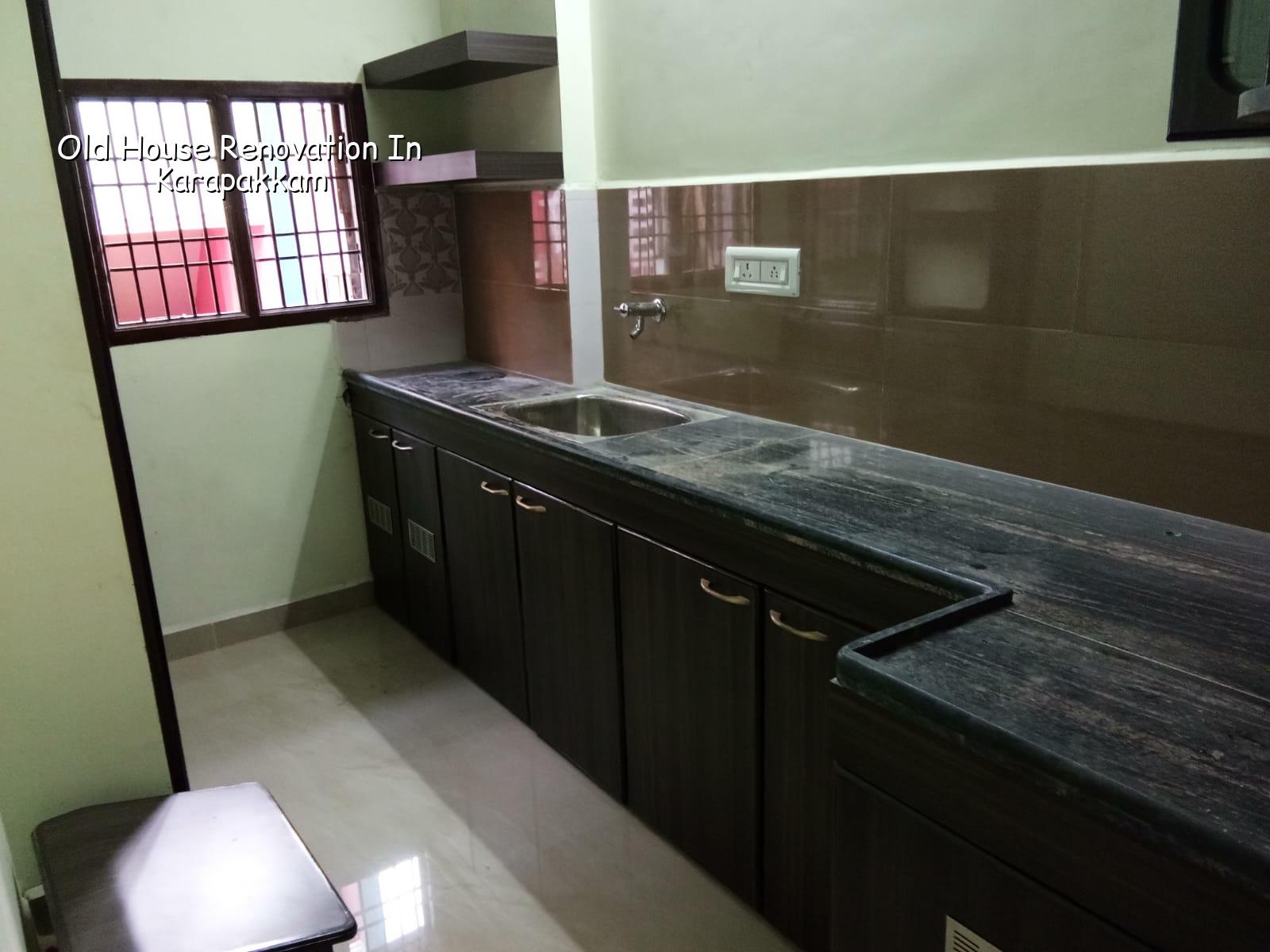
Most people ask for "full renovation", but the work should be broken down by risk, not by sales language. A sensible scope may include RCC repair with anti-corrosion treatment, terrace waterproofing, bathroom re-laying, plumbing replacement where the pipes are old, rewiring where the load has changed, and plaster rework only where the wall is loose or salt stained. Interior paint comes last, after leaks are stopped and moisture has dried down.
- Check the terrace slope and rainwater outlet before applying any membrane.
- Test the bathroom lines and kitchen lines for hidden seepage.
- Inspect beam-soffit cracks and rust stains separately, not as one issue.
- Confirm whether the house can stay occupied during work or needs phased shifting.
- Ask for a BOQ that splits structure, waterproofing, MEP, and finish items.
- Use a site engineer who can explain what is repairable and what is not.
| Renovation item | Typical sign of trouble | What we usually do |
|---|---|---|
| Terrace waterproofing | Ceiling stains after rain | Check slope, outlet, crack seal, then membrane system |
| Bathroom repair | Damp walls, loose tiles, smell | Open the source, replace pipe sections, re-lay where needed |
| RCC patch repair | Rust marks, spalling, exposed steel | Remove loose cover, treat steel, rebuild cover correctly |
| Plaster and paint | Powdering, staining, flaking | Fix moisture first, then redo plaster and finish coats |
Approvals, pricing and the parts people forget
For many home renovations in Karapakkam, the work is inside an existing building and does not need a fresh building licence. That does not mean paperwork is absent. If structural alteration is involved, if the plan changes materially, or if the site falls under a specific local body procedure, we check the route before work begins. Around Chennai, the authority depends on where the plot sits, and we never guess that part.
Price depends on what we find. A light refresh is one thing; structural repair is another. As a reference, interior works generally sit around ₹1,200 to ₹2,500 per sq ft, and painting is about ₹25 to ₹45 per sq ft, but those figures move with the amount of demolition, the quality of finish, and the condition of the base. The real figure should come from a detailed BOQ, not from a promise over the phone. Soil, access, number of floors, and the extent of hidden damage all affect the bill.
The parts people forget are the costly ones later: disposal of debris, temporary water storage, patching after pipe replacement, and the time lost when a leak is discovered after the tile work is already done. A renovation that looks cheap on day one can become expensive if you skip the inspection stage.
How we work here
We handle renovation with our in-house civil engineers, structural engineer, and architect. A site engineer visits every working day, and we share weekly photo updates by WhatsApp if you are not on site. Mr. D. Salamon Ashok Rajan personally reviews the technical side. Before any contract, we prepare the BOQ and write the payment stages into the agreement. If you want us to look at an old house in Karapakkam, call +91 97107 13838 or write to info@shalomconstruction.com. If needed, we can also connect the renovation scope with our renovation, residential, and interior works pages.
Frequently Asked Questions
When you open an old house carefully, you learn very quickly what the building has been telling you for years. The good repairs are the ones nobody notices after the monsoon. The bad ones show up in the first wet week.
Old House Renovation in Karapakkam
If you want a site inspection or a BOQ-based renovation quote, call us or send a message and we will take it from there.
Request a Quote Call +91 97107 13838