


Old House Renovation in Adyar
Old House Renovation in Adyar usually starts with one question: is the house only tired, or is it moving? In a mature part of Chennai like Adyar, that answer changes the whole scope, from a simple repair list to a structural renovation with real checks on slab cracks, damp patches and service lines.
We look at the building the way a homeowner should: what can be retained, what must be replaced, and what can wait another year. If you are planning to stay in the house while work happens, the sequence matters as much as the repair itself.
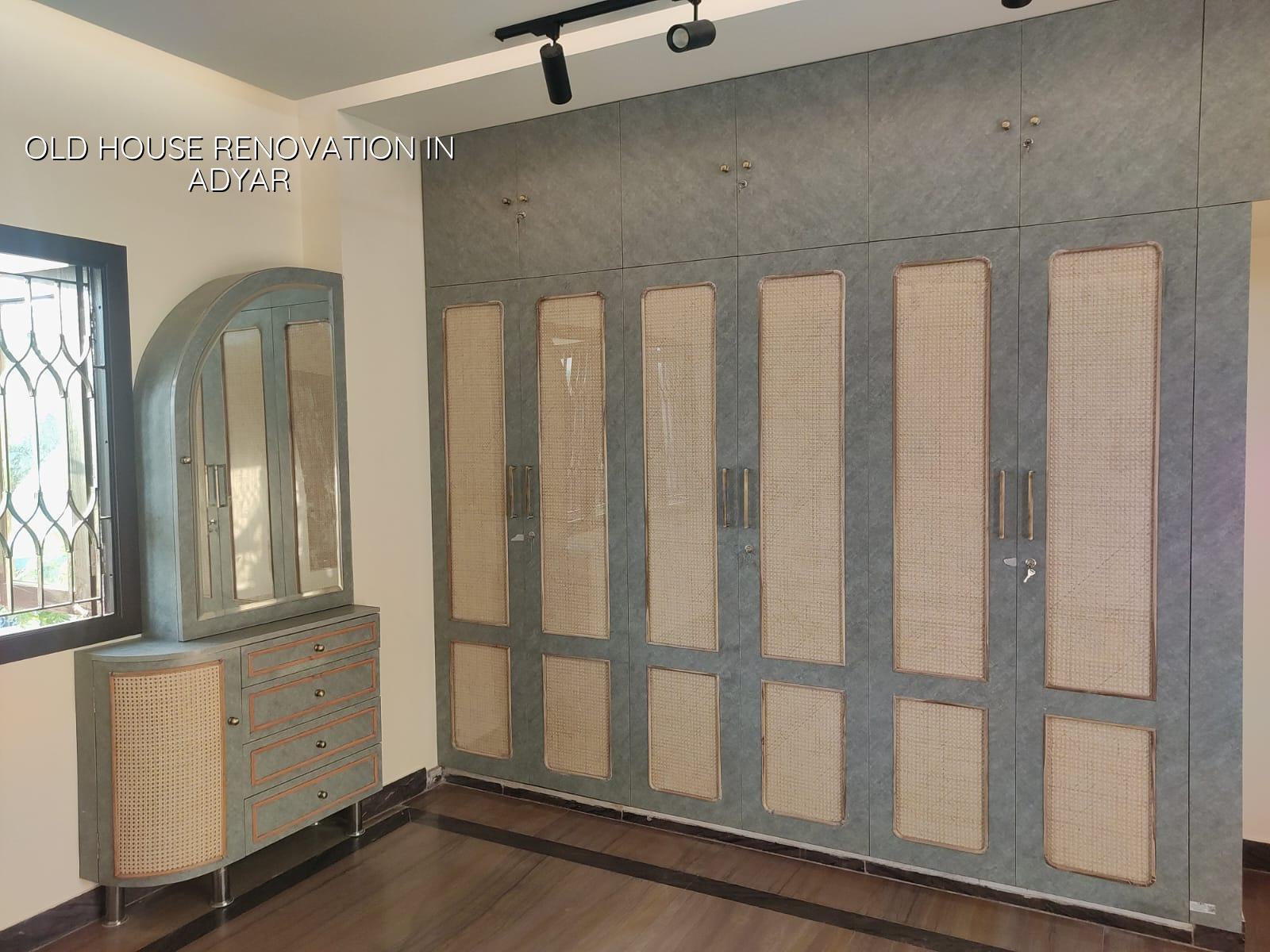
What Adyar changes first
Adyar is not a place where you can treat every old house the same way. Some plots sit closer to the estuary side, some are under mature tree cover, and many homes were built before current expectations for waterproofing, electrical load and bathroom planning. That means we often see more than one issue together: hairline cracks from ageing plaster, seepage around terrace junctions, rust marks near lintels and old plumbing that was never meant for today’s water heater or pump load.
The site itself decides a lot. Older streets can be tight, so material storage and debris removal need planning before the first hammer strike. If the approach is narrow, you cannot bring everything in at once and hope the house remains orderly. We plan the sequence around access, neighbour movement and the hours when concrete, sand or brick movement will least disturb the street.
What we inspect before anyone breaks a wall
In a renovation, the first mistake is cosmetic work too early. Paint hides only what it can cover. Before that, we inspect the structure, the wet areas, the roof slab, the staircase, the electrical load points and the condition of old openings. If the house has been altered several times, we also check which walls are original and which are later additions, because that changes what can be safely removed.
Typical trouble points in an old Chennai house
We pay attention to the places where old homes usually fail. Kitchen and bathroom zones are common leak sources because pipes were often chased into masonry without proper protection. Terrace parapets crack where waterproofing has aged out. Door and window frames may have swollen from repeated dampness. If steel corrosion is visible, the repair is not just a patch; the concrete around the affected steel needs to be opened and restored properly.
Our approach follows Indian standards and common engineering checks, not guesswork. For RCC repair and additions we work with IS 456:2000, load considerations under IS 875, seismic provisions under IS 1893:2016 and the general planning principles of NBC 2016. We also look at whether the building needs a soil check before any added load or foundation alteration. A small test is cheap compared with having to correct a bad assumption later.
- Condition survey — we inspect visible cracks, damp spots, slab edges, roof lines and service routes. This usually takes one visit and a few hours on site.
- Open-up tests — where needed, we remove a small plaster patch or tile strip to see what is really below. This avoids hiding a deeper problem with fresh finish.
- Repair planning — we decide what is repairable, what must be replaced, and whether the work can be done room by room while you stay in the house.
- Execution and checks — structural repairs, waterproofing, MEP changes and finishing happen in sequence, with inspections between stages so mistakes do not get buried.
Repair, rebuild or extend?
The real choice in an old house renovation is usually not between perfect and imperfect. It is between three different kinds of spend. One option is repair: patch the leaks, fix the damaged plaster, renew services and keep the structure. Another is partial rebuild: retain the sound portions and replace the weak ones. The third is a more complete reconstruction, which makes sense only when the house has outgrown its structure or the defects are too widespread.
We are direct about the case against over-renovating. If the structure is sound but the layout is awkward, people often spend heavily on finishes and still get a house that functions badly. If the rooms are too small, the staircase is badly placed or the service shafts are wrong, more polish will not solve it. In those cases, a cleaner redesign can be better than trying to preserve every wall because it is already there.
- Cracks that change after monsoon, not just old hairline lines from plaster shrinkage.
- Seepage at terrace edges, bathroom floors and wall-to-slab junctions.
- Rust stains, spalling concrete or soft patches near beams and columns.
- Old wiring without enough points for present-day loads and appliances.
- Bathroom drainage that slopes the wrong way or backs up after heavy use.
- Doors, windows and grills that were fixed in after the original build and may need reset work.
What the work usually includes
A proper renovation scope is more than paint and tiles. In most old houses we discuss reinforcement repair, plaster renewal, terrace waterproofing, kitchen and toilet replanning, new electrical runs, plumbing replacement in vulnerable areas and, if needed, local strengthening. Where an extension is planned, we check the existing foundation and the load path before deciding whether the old and new portions can work together safely.
| Work head | What it covers | Practical note |
|---|---|---|
| Structural repair | Crack treatment, RCC patch repair, local strengthening | Needed when rust, deflection or recurring cracks are visible |
| Waterproofing | Terrace, toilet, balcony and parapet treatment | Needs correct slope and edge detailing, not only coating |
| Services update | Electrical, plumbing, pump and drainage changes | Most old homes need this before fresh finishes |
| Finishing | Plaster, putty, paint, tiles, doors and joinery | Do this only after damp sources are controlled |
Cost, approvals and the part people miss
For renovation pricing, the correct range depends on how much of the structure stays, how much demolition is needed and whether you are only repairing or also upgrading finishes. As a Chennai benchmark, interior works run at ₹1,200 – ₹2,500 per sq ft, and painting at ₹25 – ₹45 per sq ft. Renovation work sits somewhere around those heads only when the scope is light; once structural repair, waterproofing and service replacement enter the picture, the BOQ decides the real figure.
The common mistake is to ask for a paint quote on a house that actually needs a repair quote. That saves time on paper and costs money on site. If the terrace leaks, the wall finish will fail again. If the wiring is unsafe, new switch plates do not make it safe. If the drainage is wrong, polished flooring only gives you a nicer surface to mop after the next overflow.
For approvals, what you need depends on how far the renovation goes. A like-for-like repair is different from structural alteration or added floor area. In the Chennai metropolitan area, the local body may be the Greater Chennai Corporation, a municipality, a town panchayat or, in some places, a cantonment board. CMDA planning rules and site-specific documents still matter, and any extension needs proper drawings and a structural view before work starts.
How we work on an old house
We start with an inspection by our site engineer and technical team, not with a sales estimate written from a phone call. Our in-house civil engineers, structural engineer and architect review the house, then we prepare a BOQ so you can see what is included and what is not. A site engineer stays on the job every working day, and if you cannot visit, we send weekly photo updates on WhatsApp. If the work needs staged execution while you live in the house, we plan that too. Call us on +91 97107 13838 or write to info@shalomconstruction.com.
Frequently Asked Questions
Older homes reward honest inspection. If you rush to the final coat, you end up decorating a problem. We would rather tell you early where the weak points are and what can safely stay.
Old House Renovation in Adyar
If you want a site visit or a BOQ-based renovation quote, we can inspect the house and tell you what needs repair, what can remain and what should be replaced.
Request a Quote Call +91 97107 13838