


Old House Renovation in Vepery
Old house renovation in Vepery usually starts with cracks, damp patches, tired wiring, and a layout that no longer suits the family living in it. In a place like this, the first question is not what to decorate; it is what can safely stay and what must be rebuilt.
We look at the structure first, then the services, then the finish. That order matters. If you skip it, you can spend money on paint, tiles, and false ceiling work while the real problem sits inside the slab, beams, or plumbing line.
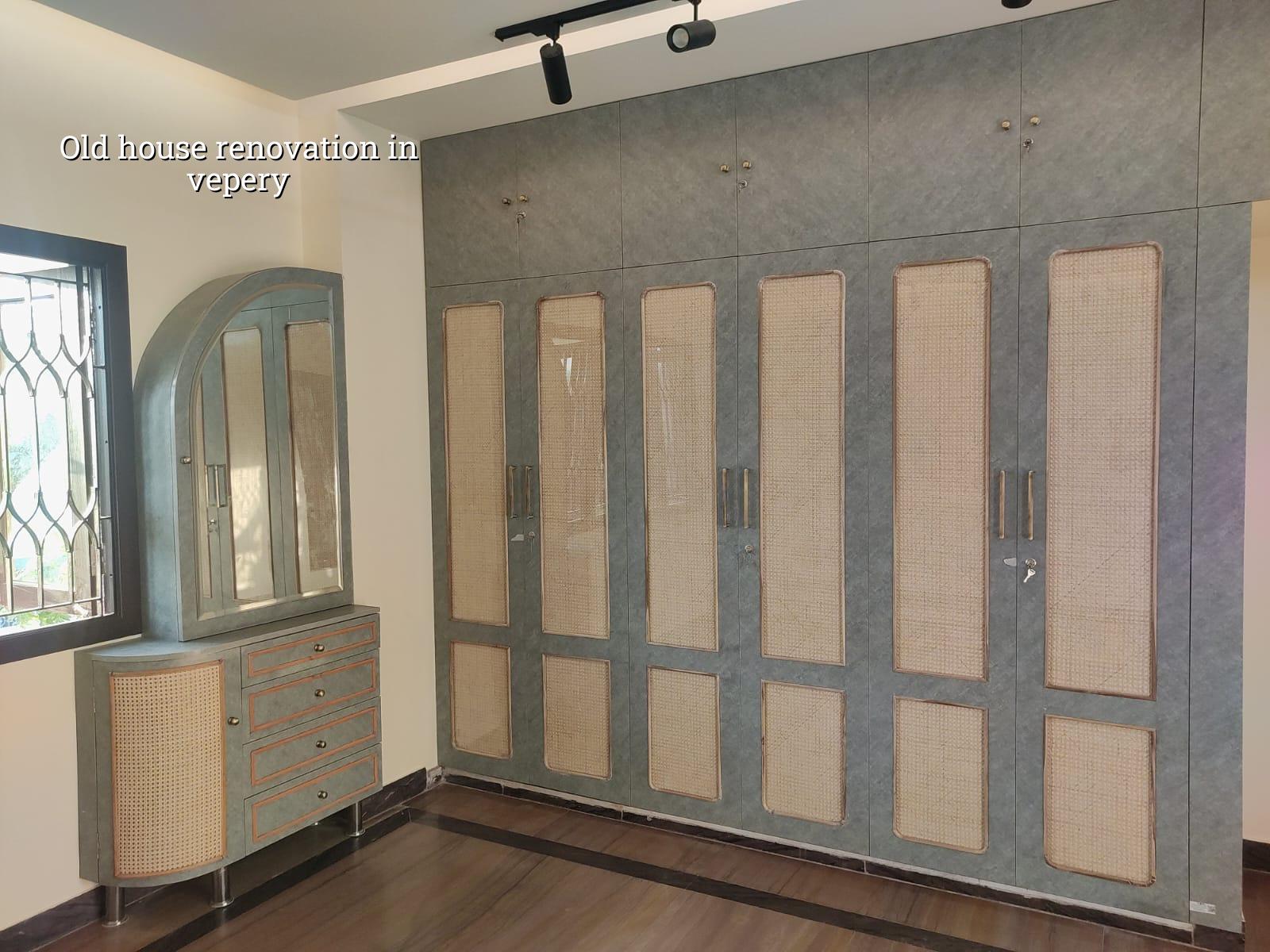
What Vepery changes on site
Vepery is not a blank-layout suburb. It is a historic central neighbourhood with older building stock, mixed use streets, and the kind of access problems that make work harder than the drawing suggests. Material movement is tighter. Neighbour coordination matters. Dust control matters too, because many homes sit close together and the next wall may belong to someone else.
We also see older RCC and masonry buildings here where a family wants to keep the shell, open up rooms, and improve the services. That is possible in many cases, but only after the actual condition of the slab, columns, walls, and stair geometry is checked. A cosmetic plan drawn before that check is usually the wrong plan.
In Chennai, approvals depend on where the plot sits and who issues the licence. Inside city limits, that is Greater Chennai Corporation; outside, it changes to the municipality or town panchayat for that area, and CMDA governs the planning side in the metropolitan area. For a renovation, we confirm what is being altered, what is only repaired, and whether the papers need updating before work starts.
What we inspect before touching the finish
Most owners call us saying the house “just needs renovation”. After one site visit, the list usually changes. We check the structure, seepage source, service lines, and the habit of the building over time. An old house does not fail in one big way; it gives small warnings that people ignore until the repair becomes expensive.
The sequence below is the one we trust on occupied renovation jobs, especially where the family stays in part of the house during work.
- Condition survey — we inspect visible cracks, damp zones, roof slope, beam lines, stair members, and old plumbing. This usually takes one site visit plus measurement time.
- Repair classification — we separate cosmetic work from structural repair, because not every crack means danger and not every damp patch is only paint failure.
- Service mapping — electrical, water supply, drainage, and rainwater paths are checked before demolition begins. Hidden lines are where renovation jobs go wrong.
- Method and sequence — we decide which room can be opened first, where temporary support is needed, and how the family will move through the house while work continues.
- Execution and testing — repairs, waterproofing, rewiring, and finish work are done in stages, with checks before the next layer goes on.
Repair first, finish later
If you are renovating an old house, the trade-off is simple: you can save money by leaving good parts alone, or you can spend too early on finishes and discover the building still leaks, flexes, or trips the MCB. We usually recommend keeping sound walls and slabs, repairing only the damaged parts, and replacing the services that are past their useful life.
What fails most often
In old Chennai houses, we keep seeing the same patterns. Water finds its way through terrace joints, bathroom edges, and parapet cracks. Steel corrosion starts where cover is thin or concrete has aged badly. Old wiring gets overloaded because present-day appliances ask for more than the original system was built for. None of this is rare. It is normal ageing, and normal ageing still needs an engineer.
- Cracks that move with seasons instead of staying fixed.
- Damp patches below bathrooms, terraces, and window sills.
- Rust stains on beams, slabs, or stair edges.
- Weak or outdated wiring that cannot take current load.
- Doors and floors that no longer sit level after settlement or water damage.
What a proper specification looks like
For structural work, we use Indian standards for RCC and loading checks, including IS 456:2000, IS 875, IS 1893:2016, and NBC 2016 where the scope applies. We do not guess on the repair method. If the damage is only on the surface, a patch repair may be enough. If the log of the building shows deeper distress, the remedy changes. That may mean rebar treatment, jacketing, partial slab repair, or a more careful redesign of the affected area.
Chennai also has a wet season that exposes bad waterproofing quickly. The second month of monsoon is often the real test. A terrace that looked fine in summer can start dripping from a joint that nobody inspected. A bathroom that seemed “finished” can show seepage at the skirting. Those are the details that tell us whether the repair was honest.
| Work head | What we check | Typical decision |
|---|---|---|
| Structure | Cracks, slab deflection, beam distress, column condition | Patch, repair, or strengthen |
| Waterproofing | Terrace, toilets, parapets, window edges | Rework the source, not just the stain |
| Electrical | Load, wire condition, DB, earthing, safety | Retain, upgrade, or fully rewire |
| Finishes | Plaster, paint, flooring, carpentry | Keep what is sound, replace what has failed |
How the job moves in real life
Old house renovation in Vepery is usually a phased job, not a clean start-and-finish apartment interior. The site is active, the family may be living there, and access is tighter than on a new plot. That changes the programme. A good renovation team works around the house without making it unusable.
We usually plan the work in practical stages. Structural repair and waterproofing come before finish items. Plumbing and electrical changes come before closing walls. Paint is last, not first. Clients ask for this order because they have seen the mistake before: fresh paint over a damp wall, new flooring over an uneven base, or kitchen cabinets installed before the service points are final.
What you should insist on is simple:
- A written BOQ before contract signing.
- A clear split between repair, replacement, and finish work.
- Site protection for occupied homes and shared passages.
- Material approval before bulk purchase.
- Weekly progress photos if you cannot visit often.
Cost, approvals, and the limits of renovation
Renovation cost depends on what the house needs, not on the age of the house alone. Light repair and repainting sit at the lower end. Full internal rework with new services, flooring, and kitchen changes moves higher. When structural strengthening is needed, the cost rises again because labour, support, and testing become part of the job. We never quote a total project price on a public page, because the real figure comes from the BOQ and the plot condition.
For reference, interior works in Chennai usually sit around ₹1,200 to ₹2,500 per sq ft, and painting labour with standard emulsion is around ₹25 to ₹45 per sq ft. Renovation is different from a new build, so the mix of repair, replacement, and finish decides where your house lands inside those bands. Soil and foundation type matter too if any part of the substructure is being altered.
Sometimes renovation is the wrong choice. If the structure has major distress, repeated seepage from the base, or a layout so compromised that every room needs a different structural compromise, a partial rebuild can be smarter than patchwork. People often try to save an old house by spending in the wrong order. That is the mistake we try to stop early.
How we work on renovation jobs
We handle renovation through our in-house civil engineers, structural engineer, and architect, and a site engineer is on site every working day. Mr. D. Salamon Ashok Rajan, our Managing Director, reviews the technical side personally. For clients who cannot visit often, we send weekly photo updates by WhatsApp. We also prepare the BOQ before any contract is signed, so you can see exactly what is being done and what is not.
If you need help with an occupied house, a tired terrace, or a room-by-room repair plan, call us on +91 97107 13838 or write to info@shalomconstruction.com. Our office is at No. 45, 2nd Main Road, Abirami Nagar, Koladi, Thiruverkadu, Chennai – 600077.
Frequently Asked Questions
Old houses in Vepery can be kept useful for a long time, but only if the repair order is honest. If you start with the wrong layer, you pay twice. If you start with the structure, the rest becomes manageable.
Old House Renovation in Vepery
Share the house condition with us, and we’ll help with an inspection and a BOQ-based plan before you spend on the wrong work.
Request a Quote Call +91 97107 13838