


Carpentry Contractors in Purasawalkam
If you need carpentry contractors in Purasawalkam, you’re probably trying to fix a room that never quite closed properly, a shutter that swells in the rain, or a storage plan that looked fine on paper and failed on site. Carpentry looks simple until the door rubs, the laminate edge lifts, or the wardrobe leaves no room for skirting and switch lines.
We handle carpentry as part of a building, not as loose furniture work. That means we look at the wall finish, moisture, fixing points, alignment, and how the carpenter will actually move inside a dense old Chennai house with narrow access and little space to cut, clamp, or stage materials.
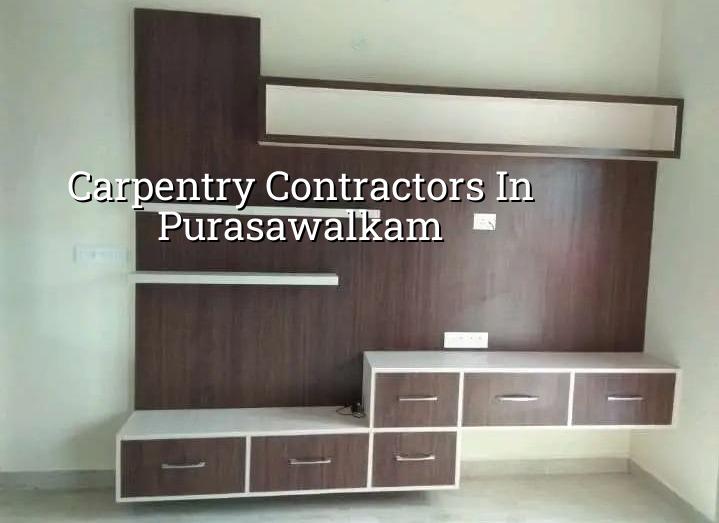
Purasawalkam needs site carpentry, not showroom carpentry
Purasawalkam is full of older houses, mixed-use buildings, small plots, and streets where you don’t get the luxury of keeping timber stacked for days. Work often happens around occupied homes, so one noisy cut or a missed measurement can upset the whole floor. That is why on-site checking matters more here than a glossy sample board. A cupboard built for a flat drawing room can fail in a Purasawalkam passage if the wall is out by even a small amount, or if the floor has settled unevenly over time.
The other local reality is access. In many streets, the loading point is not beside the room. Material has to be carried in, and there is rarely extra space for waste pieces, machine setup, or a second round of rework. If the contractor has not worked in dense central Chennai before, you see it immediately in damaged skirting, hurried edge banding, and mismatched shutter gaps. Good carpentry here starts with measurement discipline, not with the saw.
What we fix, build, and adjust
Carpentry in a house or commercial unit is not just cupboards. It covers the pieces that make a space usable every day, and the pieces that get blamed when the room feels unfinished. We look at built-in work, repairs, replacement of swollen members, alignment corrections, and finish items that tie into civil and interior work. For a new home, that may mean lofts, shelves, door frames, shutters, kitchen carcasses, and covering details around service pipes. In a renovation, it may mean replacing a damaged jamb, reworking a warped shutter, or resetting hardware so the door closes without force.
What fails first in bad carpentry
Most call-backs come from five places: moisture at the base, poor anchoring to the wall, wrong clearances, cheap hardware, and rushed finishing. A shutter can be perfectly cut and still fail if the hinge line sits on weak plaster. A wardrobe can look neat on day one and start opening at an angle if the carcass was not set level. In Chennai, especially in older parts of the city, the wall is often the problem as much as the wood. We check both.
- Measure the room properly — We check wall-to-wall size, floor level, wall plumb, and openings before anything is cut. This usually takes a site visit and one round of rechecking.
- Confirm the use — A kitchen cabinet, office shelf, pooja unit, or door repair needs different material thickness, fixing detail, and hardware grade. One standard does not suit every job.
- Prepare the substrate — We make sure the wall surface, backing, and fixing points can carry the item. If the plaster is weak or damp, carpentry should wait until the base is corrected.
- Cut, assemble, and align — The work is set in position, checked for levels, then fixed. This is where most site errors show up if the contractor is careless.
- Finish and test — Edges, polish or laminate finish, handle fitment, hinge action, and closing clearances are checked before handover.
How to choose a carpenter without getting stuck later
If you’re comparing carpentry contractors, ask for the method, not just the rate. A low quote can hide thin boards, basic hinges, poor edge treatment, and no allowance for rework. You should see a written scope, material type, hardware make or specification, and the fixing method. If the contractor cannot explain how the item will be anchored to the wall, that’s a red flag.
For a proper job, the contract should say what is included and what is not: board material, labour, laminate or polish, handles, hinges, sliding channels, transport, and site cleanup. People often assume “carpentry work” means the whole item. It doesn’t. If those points are not written down, you end up paying twice when small extras start appearing mid-job.
- Ask for the exact board or timber type, not a vague “good quality” promise.
- Check whether hinges, channels, screws, and edge banding are included.
- Confirm how the item will be fixed to the wall and what backing is used.
- Look at one completed shutter edge and one closed corner joint before you approve.
- Ask who will revisit if a door sags after the first few weeks of use.
Costs, material choices, and what changes the quote
For carpentry work, the price depends on material choice, item size, finish level, hardware, and site access. In Chennai, interior carpentry and fit-out work commonly sits within the interior works range of ₹1,200 to ₹2,500 per sq ft, but that is only a guide for scope planning. A BOQ is what settles the actual figure before any contract is signed. In a place like Purasawalkam, tight access and repair work in an existing home can add labour time even when the item size is small.
What you save on material can be lost in a year if the board swells, the edge tape peels, or the hinge screws pull out of weak backing. We’ve seen clients try to economise on shutter thickness and then call us back after monsoon humidity changes the fit. That is the wrong place to chase a bargain. Saving on a less visible item, like a premium handle finish, is usually safer than saving on core board thickness or proper moisture protection.
| Carpentry Item | What Usually Decides the Rate | What We Check Before Quoting |
|---|---|---|
| Wardrobes and lofts | Board type, shutter finish, hinge and channel quality | Room size, wall straightness, moisture risk, hardware access |
| Kitchen carpentry | Number of shutters, drawer fittings, laminate or polish | Plumbing positions, sink area, service clearances, backing support |
| Door repair and frame work | Extent of damage, replacement versus adjustment, finish type | Jamb condition, hinge line, floor level, shutter warp |
| Site-made storage and shelves | Span, load, finish level, wall fixing method | Wall strength, span length, intended use, edge protection |
Approvals, repairs, and work in old buildings
Most small carpentry jobs don’t need a separate building approval, but renovation work can still be blocked by poor planning. If the carpentry sits inside a larger structural renovation, the sequence matters. We first check what’s wet, warped, loose, or holding load. Then we decide whether the item can be repaired, reskinned, re-hung, or must be replaced. A badly damaged frame with hidden termite or moisture issue is not something to “adjust and continue”.
In old Chennai houses, we often find that the real fault is not the shutter itself but the wall around it. Plaster failure, hidden seepage, or uneven floor finish can make a good carpenter look bad. That is why we coordinate with civil work and, where needed, interior works. If the base is wrong, no amount of polishing will save the joint line.
For a typical site job, the sequence is straightforward:
We inspect the opening, confirm dimensions, decide the material, prepare the support, make and fix the item, then test the movement under real use. If the job is part of a larger house build, we align it with the civil schedule so the carpenter is not working around still-damp plaster or freshly laid flooring.
How we work on these jobs
We keep carpentry work under the same project discipline we use for residential construction, interior works, and renovation. Our in-house civil engineers check the opening, the substrate, and the actual sequence before the carpenter starts. A site engineer is on site every working day, and clients who cannot visit get weekly WhatsApp photo updates. The contract has a milestone-linked payment schedule, and we issue a detailed BOQ before anything is signed. If you want to discuss a repair, a new shutter line, or built-in storage, call +91 97107 13838 or write to info@shalomconstruction.com.
Frequently Asked Questions
If you’re trying to get one room right, or you need a contractor who can coordinate carpentry with the rest of the house work, we can help you make the scope clear before you spend on materials. The cleanest job is the one that starts with the right opening measurement and ends with a door that closes by itself.
Carpentry Contractors in Purasawalkam
Send us the measurements or ask for a site visit. We’ll check the scope, prepare a BOQ, and tell you what’s sensible to repair and what should be replaced.
Request a Quote Call +91 97107 13838