


Plastering Contractors in Teynampet
If you are looking for plastering contractors in Teynampet, you probably have a wall that is uneven, cracked, patched after a leak, or simply too rough for paint. Good plaster work is not just about covering brickwork. It decides how straight the wall reads, how paint sits, and how long the finish stays decent in Chennai weather.
We handle plastering for new work, repair work, and replastering after seepage. In a place like Teynampet, where old buildings, offices, and dense site access all show up in the same block, the job is rarely just a skim coat. It starts with the substrate, the thickness needed, and the reason the old surface failed.
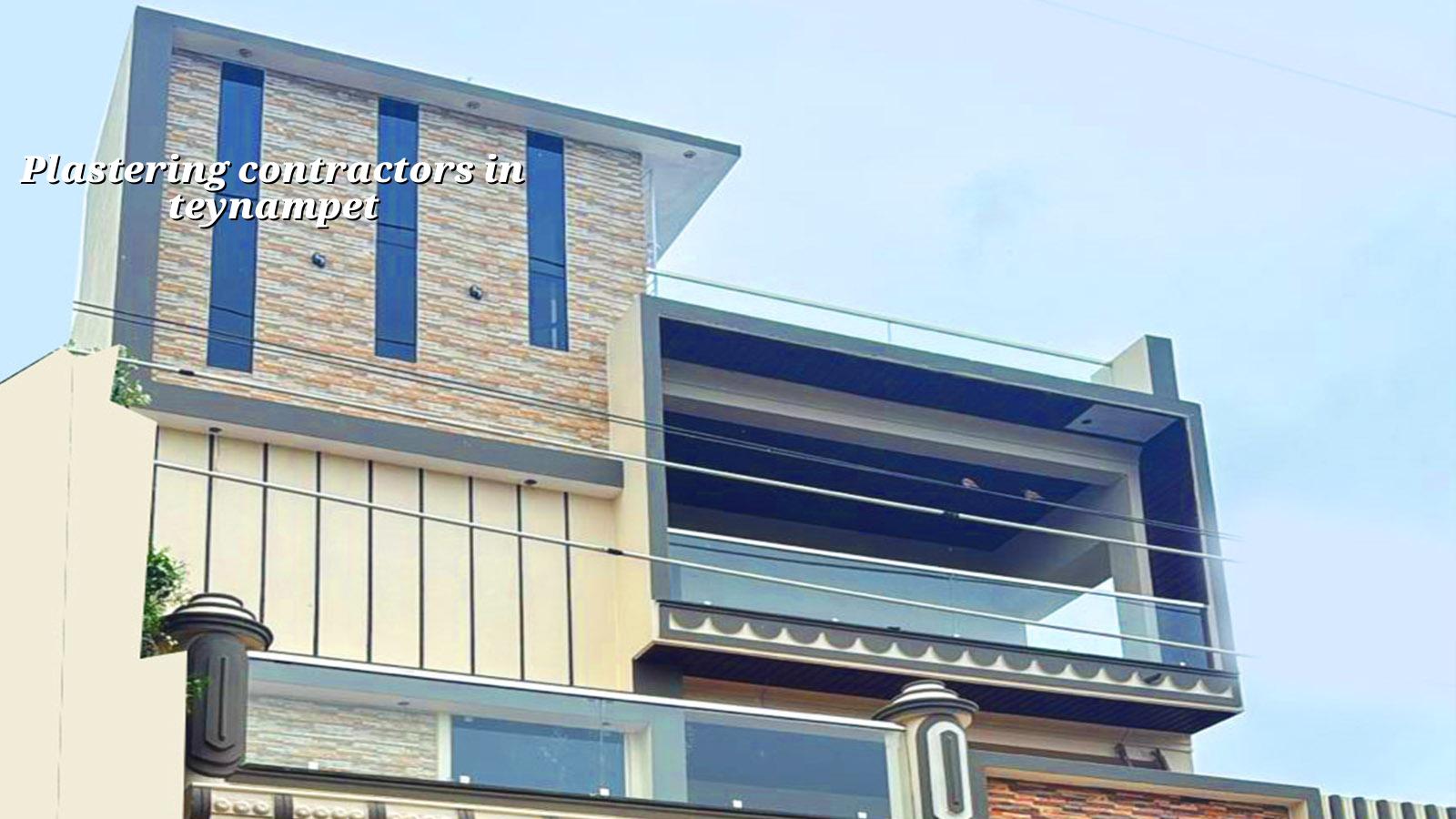
Teynampet walls need more than a quick coat
Teynampet sits in central Chennai, where access is tight, traffic is heavy, and many buildings have been modified more than once. That matters for plastering. If a wall has been hacked for plumbing, or if an old plaster layer has hollow pockets, a fresh finish coat alone will not hold for long. You need to strip loose material, check the bond, and decide whether patching is enough or whether a full replaster makes more sense.
We also see a lot of mixed work here: office interiors with old masonry, apartment common areas with repair patches, and older homes where one room has already been painted three times over a bad base. The local constraint is not just the building age. It is the fact that getting materials, scaffolding, and labour into a narrow urban site takes planning, and rushed plastering usually shows up as waviness when daylight hits the wall from the side.
In our experience, clients in central Chennai usually want two things at once: a finish that looks straight under good paint, and a job that does not keep their rooms shut for weeks. Those goals are possible, but only if the plaster schedule is matched to the actual condition of the wall.
What good plaster work includes
Plastering should be treated as a small engineering job, not decoration. The surface has to be cleaned, hacked where needed, dampened correctly, and then applied in a thickness that suits the wall and the material below it. On fresh masonry, the coat has to key into the brick or block. On old work, the bond layer matters more than the face finish. If the base is weak, the top layer just hides the problem for a few months.
Where cracks and patches come from
Most plaster problems begin with movement, moisture, or poor mixing. Hairline cracks often come from shrinkage when the coat is too rich in cement or dries too fast. Wider cracks can point to movement in the wall, junctions between RCC and masonry, or old seepage that has softened the base. Bubbling or hollow sound means the layer has already lost grip in that area. That is why we tap-test old plaster before we decide to patch it.
For ceiling work, the failure mode is a little different. Ceiling plaster usually suffers from sagging where the mix was too wet, or from recurring dampness at terrace edges, toilet slabs, and pipe runs. If the leak is not fixed first, replastering is wasted money. The wall will only complain again after the next monsoon spell.
- Inspect and mark the failed areas — 1 to 2 hours for a room, longer if the damage is hidden under paint or putty.
- Remove loose plaster and clean the base — usually the same day, because sound adhesion starts with a clean surface.
- Check the source of dampness or movement — this can take half a day if plumbing or terrace leakage is involved.
- Apply bonding, plaster, and curing — the plastering itself is quick; curing and drying need several days.
- Check line, level, and hollow spots — done before putty or paint so defects do not get locked in.
Choosing the right plaster mix and finish
The mix depends on where the wall sits and what finish you want. For normal internal masonry, a sound cement-sand plaster with proper curing is still the workhorse. On old work, especially where there has already been repair, the key is not to make the coat too thick. Thick patches shrink more and are easier to spot later. For exposed zones, wet areas, and surfaces next to service lines, we look harder at bond, waterproofing details, and the junction with the surrounding work.
In Chennai, people often ask for a smooth finish and then expect the plaster to hide all wall problems. It won't. A straight plastered wall can improve the look of a room, but it cannot correct a badly built line of masonry, a slab edge that has moved, or a leaking toilet pipe. That is the trade-off. You can save time and money by patching only where needed, but if the base is failing everywhere, a full replaster is the honest choice.
- Tap the wall and listen for hollow areas before paint work starts.
- Check the RCC and masonry junctions, since cracks often appear there first.
- Look for damp patches near toilets, balconies, parapet walls, and pipe chases.
- Ask whether the old plaster will be removed or only topped up.
- Confirm the curing plan, because half-cured plaster is one reason finishes powder later.
- Check that corners, reveals, and window lines are being ruled properly, not by eye alone.
Plastering rates, thickness and site factors
Plastering is usually priced as part of a larger repair or construction package, and the real figure depends on wall condition, area, access, height, and how much old work must come off first. For a Chennai project, the cost conversation must start with the BOQ. A neat wall in a second-floor room is one thing; a cracked ceiling with seepage history is another. The same square footage can mean very different labour and material effort.
We do not publish a flat total for a site because that is how people get surprised later. What moves the number is the amount of hacking, whether the plaster is internal or external, the number of repair junctions, scaffold need, and whether curing water can be managed easily. The right question is not “what is the cheapest plastering contractor?” The better question is “what exactly am I paying for, and what fails if I cut that item out?”
| Work Type | What Usually Changes the Quote | What We Check Before Pricing |
|---|---|---|
| New internal wall plaster | Surface area, wall height, line correction, curing access | Masonry condition, wall thickness, room use |
| Patch repair after seepage | Removal depth, hidden dampness, junction repairs | Leak source, extent of hollow plaster, paint damage |
| Ceiling replaster | Scaffold or props, overhead labour, drying time | Slab condition, leakage history, safety access |
| External plaster repair | Height, weather exposure, edge details, access around the building | Crack pattern, parapet joints, drainage splash zones |
For context, Chennai residential construction rates commonly move between ₹1,900 and ₹2,300 per sq ft for standard work, with higher bands for more finished projects. Plastering by itself is only one part of that picture, but the same logic applies: difficult access, more repair work, and more finish expectations push the figure up. A detailed BOQ settles it before any contract is signed.
How we handle work in central Chennai
We work with in-house civil engineers, a structural engineer, and an architect, and a site engineer is on site every working day. For plastering work in central areas like Teynampet, that daily supervision matters because a small change in wall prep changes the whole finish. Weekly photo updates are available for clients who cannot visit often, and we keep the payment schedule milestone-linked in the contract.
If you need the plastering tied into larger repair work, we can also coordinate with our renovation and interior teams so the sequence is sensible. That helps when a wall is being replastered before paint, or when a damaged room needs both structural checks and interior finishing. You can speak to us through Contact, or if the job is part of a broader build, see our Renovation and Interior Works pages.
Frequently Asked Questions
If you want a wall that looks straight after paint, start with the base. That is the part most people try to skip, and it is the reason many plaster repairs fail twice.
Plastering Contractors in Teynampet
Send us the room size, photos of the damaged wall, and your site location. We can review the condition and give you a BOQ-based quote after a visit.
Request a Quote Call +91 97107 13838