


Plastering Contractors in Mangadu
When walls start showing uneven joints, hollow patches or hairline cracks, you need plastering contractors in Mangadu who know how Chennai walls behave after the masonry is up. Plaster is not just a finish coat; it is what straightens the wall, protects the blockwork and decides how the paint will sit for years.
We handle internal and external plastering for new houses, extensions and repair work, with the right mix, thickness and curing for the site. If you are comparing quotes, this page will help you judge the work by method, not by the lowest number on paper.
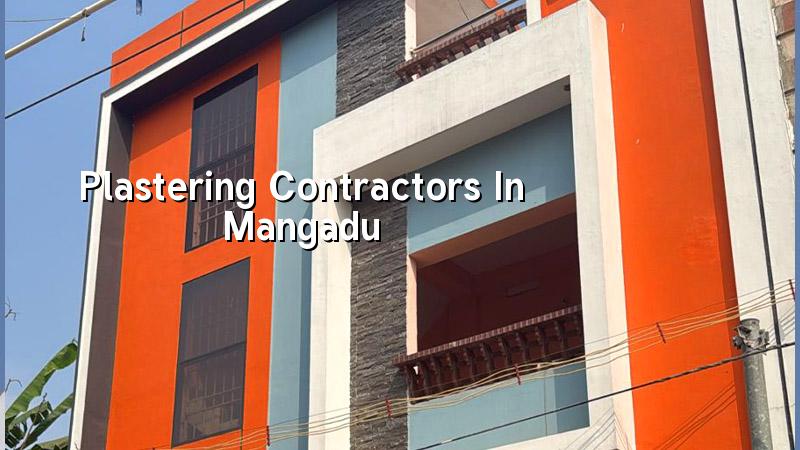
What Mangadu sites ask of plaster work
Mangadu sits in the west side of Chennai, where you see a mix of temple-town streets, new layouts and independent houses going up plot by plot. In many sites the approach road is narrow, so sand, cement and scaffolding have to be planned around small stacking space and neighbour access. That affects the pace of work more than people expect. If we cannot land material properly, the plaster gets rushed. Rushed plaster cracks later.
The other point is the weather. Chennai heat pulls moisture out of fresh plaster fast, and in the second week of monsoon a wall that was not cured properly starts showing fine cracks and powdering at the edges. In Mangadu, we also see a fair amount of ground-floor work on plots that are still settling into full residential use, so you need plaster that can tolerate normal movement without looking wavy or opening up at corners.
What decides the right method is not the locality name alone. It is the masonry type, the surface condition, whether the wall is internal or external, and how much exposure the wall gets to rain splash and sun. That is why we inspect the wall first before we talk about finish. A good plaster coat starts with a sound base.
How we prepare a wall before plastering
Plaster fails for small reasons that are easy to miss. Dust on the wall, loose mortar in joints, an oily shuttering patch, or an unclean beam junction can all show through later as a crack, a blister or a dead patch under paint. We clean the surface, rake out weak joints where needed, dampen the wall evenly and fix alignment points before the first coat goes on. On fresh masonry, that prep work matters more than the brand name on the cement bag.
Where the finish usually goes wrong
The common mistake is to treat plaster like paint: one team throws material quickly, another team sandpapers it, and the owner sees a smooth-looking wall for a week. A month later the defects appear. That is not a material problem alone. It is usually a mix problem, poor bonding or bad curing. A correct plaster should be level, properly keyed to the wall and kept moist long enough to gain strength.
For RCC surfaces, junction treatment is just as important. Beam and column faces expand and shrink differently from brick or block walls, so the edge detail needs care. We do not hide that movement with extra cement. We control it with preparation, mesh where needed and a sensible curing routine.
- Surface check — We inspect masonry, RCC junctions and damaged areas before work starts. This usually takes half a day on a normal house.
- Cleaning and dampening — Loose material is removed, the wall is cleaned and wetted, then line levels are marked. One working day for a small floor plate.
- Base coat application — The plaster mix is applied to the required thickness and ruled to line and plumb. This is the stage where skill shows.
- Finishing and curing — Edges are corrected, surface irregularities are removed and curing starts immediately. Curing continues for several days, not a few sprays in the morning.
What good plastering should include
If you are checking a quote, ask for the method first. A fair plastering job should spell out the surface preparation, mix proportion, thickness, curing plan and the treatment of cracks or joints. If the contractor cannot explain those items clearly, the quote is too thin. We prefer a detailed BOQ because it keeps the scope visible before anyone signs.
- Wall preparation that removes dust, loose mortar and weak patches before the first coat.
- Proper line and level checking so walls do not end up visibly wavy under paint.
- Control at beam, column and slab junctions where cracks usually start.
- Enough curing time so the surface does not dry out and powder later.
- Clear separation between internal plaster, external plaster and repair plaster.
- Written scope for scaffold, patching, corners and final touch-up work.
Rates, scope and the trade-offs you should see
Plastering rates move with wall condition, thickness, access and whether the work is internal or external. For Chennai, standard residential construction is usually quoted at ₹1,900 to ₹2,300 per sq ft overall, but plastering is only one part of that package. If you are taking plastering as a separate trade, the real quote should still be tied to a BOQ, because a rough wall, high ceiling or difficult scaffold changes the labour content quickly.
The trade-off is simple. A cheaper plaster quote can save money on day one, but if the team skips curing, under-mixes cement or leaves the wall out of plumb, you pay again in putty, paint and patch repairs. The case for a lower rate is only valid when the surface is already sound and access is easy. The case against it is that plaster faults are hidden until the finish coat exposes them.
| Work item | What it covers | What to check |
|---|---|---|
| Internal wall plaster | Line, level, corner finishing, smooth base for paint | Plumb lines, uniform thickness, curing method |
| External plaster | Weather-facing surfaces and edge protection | Crack control, rain exposure, surface density |
| Patch repair | Local rectification of cracks, hollows and damaged areas | Cause of defect, bonding, tie-in with old surface |
| Full replastering | Removal of weak old plaster and fresh application | Extent of demolition, debris removal, finishing scope |
Approvals, sequence and site discipline
Plastering itself does not need a separate building licence, but it sits inside the larger construction or renovation scope. In Mangadu, the plot may fall under a municipality or town panchayat route depending on the exact location and current jurisdiction, while Chennai Metropolitan Area projects still need to be checked against the correct planning authority. For renovation, we first confirm what drawings and owner permissions are already in place, especially if the work touches structure or external facade.
Good site discipline matters because plaster is timing-sensitive. The wall should be ready before the crew arrives, the sand should be clean, water should be available, and the scaffold should not block the neighbour’s passage. A site that looks tidy on day one often finishes better on day seven. A site that is left chaotic usually shows it on the wall.
These are the checks we ask for before we start:
- Whether the masonry is fully completed and cured enough for plaster.
- Whether the wall has been inspected for hollows, cracks or loose joints.
- Whether scaffold access is safe and does not damage adjacent property.
- Whether the owner wants a smooth paint-ready finish or a rougher base for later texture.
How we work on plastering jobs
We begin with a site visit, measure the areas that need plaster and prepare a BOQ before any contract is signed. Our in-house civil engineers and site engineer check the surface, identify crack-prone junctions and decide whether the work is new plaster, patch repair or replastering. Mr. D. Salamon Ashok Rajan reviews the technical side, and our team keeps the client updated with photos if you cannot visit often. If you want us to look at a wall in Mangadu, call +91 97107 13838 or write to info@shalomconstruction.com. You can also see our residential construction, renovation and projects pages if your plaster work sits inside a larger job.
Frequently Asked Questions
If you want the wall to be straight, sound and ready for paint, we can inspect it and tell you what it really needs. We would rather tell you that a small repair is enough than sell you a full replastering job you do not need.
Plastering Contractors in Mangadu
Send us the wall area, a few photos and the site location, and we will help you decide whether it needs new plaster, patch repair or a full rework.
Request a Quote Call +91 97107 13838