


Plastering Contractors in Kundrathur
If you are comparing plastering contractors in Kundrathur, the real question is not who says they can finish fastest. It is who can give you a wall that stays straight, dries evenly and does not crack the first time the monsoon pushes moisture into the blockwork.
This page will help you judge the work properly: where plaster fails, what a fair specification looks like, how Kundrathur changes site conditions, and what you should ask for before a contract is signed. If you only need a patch on one wall or a full interior and exterior plaster schedule for a new house, you should know the difference before you pay for bags of cement and labour.
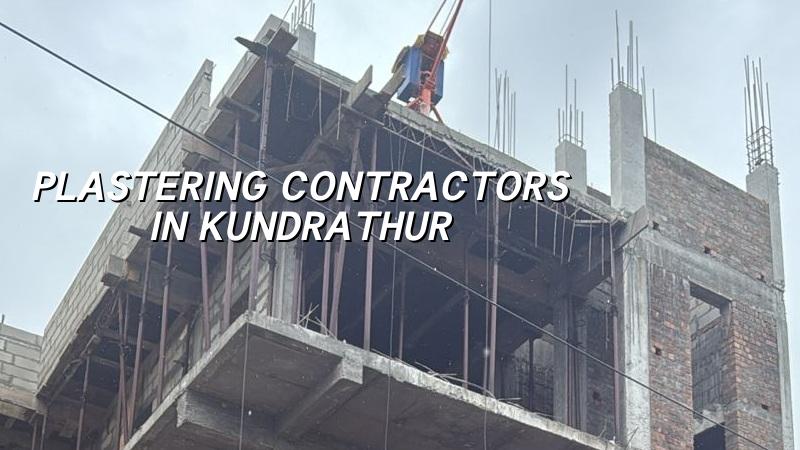
Kundrathur site conditions that affect plaster
Kundrathur sits on the south-west side of Chennai, outside the Corporation limits, so the approval route and the site rhythm are not the same as a dense inner-city plot. Many sites here still have enough room for material stacking, but that does not mean the work is simple. On a fresh layout plot, blockwork may look dry on one side and still hold moisture on the other, and that changes how fast you can apply the first coat. On older houses and additions, the wall surface often carries dust, salt from stored materials, or a weak patch left by a previous repair.
The local choice that matters most is drying time. In a low-lying or recently filled plot, the wall may pull moisture from the ground longer than you expect, so the plaster must be timed and cured with more care. If you rush that stage, the wall can sound hollow later even if it looked fine on day three. In our work, the second week is when people start seeing the truth: fine hairline cracks, uneven sheen, or a patched area that dried differently from the surrounding wall.
Kundrathur also has the kind of mixed building stock where one street may have a new G+1 house and the next may have an old masonry wall being repaired for another floor. That means the contractor must read the surface, not just quote by square foot. A fresh block wall, a rebonded old wall and a ceiling patch are three different jobs.
What good plaster actually does
Plaster is not decoration first. It is the leveling layer that closes joints, hides minor masonry variation, gives paint a sound base and helps the wall handle minor shrinkage without looking rough. For RCC and masonry work, the finish depends on the substrate below it. If the blockwork is uneven, the plaster thickness changes. If the wall is not cleaned, bond suffers. If curing is skipped, the surface may craze or dust under paint.
Materials and mix that we treat seriously
For interior work, most homes do not need a fancy mix. They need a consistent one. The cement, sand and water proportion has to be controlled, the sand must be clean and graded, and the surface must be properly hacked or keyed where bond is needed. On RCC ceilings and columns, the surface preparation matters more than people think. On masonry, joint depth and dust removal matter first. A shiny-smooth finish with poor bond is still a failure.
For exterior walls, the exposure is harsher. Rain, heat and surface movement will show up quickly if the plaster is too rich, too lean or applied in a hurry. We usually ask clients to think in terms of performance: the wall should stay straight, hold paint and tolerate normal movement. Pretty is not enough.
- Check the substrate — inspect blockwork, RCC surfaces and old repair zones, usually on day one.
- Prepare the wall — clean dust, remove loose material, roughen smooth concrete and wet the surface properly, one working day for a typical room.
- Apply the base coat — place the plaster in the correct thickness and level it with screeds, usually one to two days for a small house zone.
- Finish and cure — close the surface, check for hollows and cure it for several days so the wall gains strength evenly.
How to judge a plastering contractor
If you are comparing firms, ask for things that can be checked on site. A contractor who talks only about speed and a low rate is usually hiding the parts that create defects later. You want to know who supervises, who checks line and level, and who decides whether a wall is ready for plaster that morning. That is where the work succeeds or fails.
- Ask for a written BOQ that separates wall plaster, ceiling plaster, patch repair and scaffolding if needed.
- Look at a sample wall or a recent job and check the edges with a straight edge, not just with your eyes.
- Ask how curing is planned and who will do it on working days when the client is away.
- Confirm whether the quote includes surface preparation, mesh at junctions where required, and removal of loose old plaster.
- Reject vague promises about “smooth finish” unless the contractor states the material, thickness range and inspection method.
- For repainting jobs, ask whether the wall is sound enough to plaster over or whether the old coat must come off first.
Cost, thickness and the trade-off you need to make
Plastering cost in Chennai depends on the surface condition, height, access, thickness needed, and whether the work is interior, exterior or repair only. For a full construction package, standard residential construction is usually ₹1,900 – ₹2,300 per sq ft, mid-premium work is ₹2,300 – ₹2,800 per sq ft, and premium residential can go to ₹2,800 – ₹3,500+ per sq ft. Those are project rates, not plaster-only rates, but they matter because plaster quality is part of the finish level you are paying for. The real figure is settled by a detailed BOQ before any contract.
The main trade-off is simple. A thicker or richer plaster can help hide uneven masonry, but it also adds cost and can create shrinkage stress if it is done carelessly. A thinner finish saves money and dries faster, but it only works if the wall below is already accurate. We see people make the same mistake often: they try to make a bad wall look good with plaster. That is like putting paint on a bent shutter. It does not solve the base problem.
| What changes the work | What you should check | What usually happens if it is ignored |
|---|---|---|
| Wall condition | Are there loose patches, dust, or old hollow areas? | Bond failure, hollow sound, early repair |
| Moisture and curing | Is the wall dry enough, and will it be cured properly? | Hairline cracks, uneven shade, weak surface |
| Access and height | Can the mason reach cleanly without unsafe staging? | Waviness, missed spots, poor edge finishing |
| Finish level | Is it a paint-ready wall or just a rough base coat? | Extra putty, extra paint, higher final cost |
Approvals, repair limits and what plaster cannot fix
In Kundrathur, building licence procedures usually run through the local body while CMDA rules still matter for the Chennai metropolitan area. If the building work is part of a new house, the structural and architectural drawings should already be in order before plaster starts. For a repair job, it is smart to check whether the problem is only surface failure or a deeper movement issue. Plaster cannot hold a wall together if the structure below it is moving.
That is the honest limitation. We will happily take on a plastering job, but we will not pretend that plaster can hide settlement cracks, corrosion damage or a leaking slab. If a crack comes back after a week because water is entering from above, the repair sequence has to start with the source, not with another bag of cement.
For new homes, the sequence is usually: masonry completion, services chase closing, surface cleaning, plaster, cure, then putty and paint later. For repair work, we inspect first, remove loose areas, check the cause and then decide whether a local patch, mesh reinforcement or full replastering is the right answer.
How we work
We handle plastering as part of the larger building system, not as a loose labour gang with no supervision. Our in-house civil engineers and site engineer check the surface before work starts, and a detailed BOQ is prepared before the contract is signed. We also work to Indian standards used on our projects, with the structural side governed by the right design and inspection steps. If you want us to look at a new house, a repair wall or a full residential package, call +91 97107 13838 or write to info@shalomconstruction.com. You can also see our residential and renovation pages if your work is part of a larger build.
Frequently Asked Questions
Good plaster is quiet work. You notice it only when the wall stays straight, the paint sits cleanly and you do not have to think about that surface again. That is the kind of finish we prefer to leave behind.
Need plastering work in Kundrathur?
Send us the wall area, a photo if you have one, and whether it is new work or repair. We can inspect, prepare a BOQ and tell you what should be fixed before the first coat goes on.
Request a Quote Call +91 97107 13838