


Plastering Contractors in Madipakkam
If you need plastering contractors in Madipakkam, the first thing to settle is not the finish pattern. It is whether the wall needs fresh plaster, patch repair, or a full rework after damp, honeycombing, or a bad earlier coat.
Madipakkam sites often have tight access, older walls in extension work, and monsoon moisture that shows every weak corner. We handle plastering as a build-up of surface prep, mix control, curing and inspection, because a smooth wall only stays smooth when the base is right.
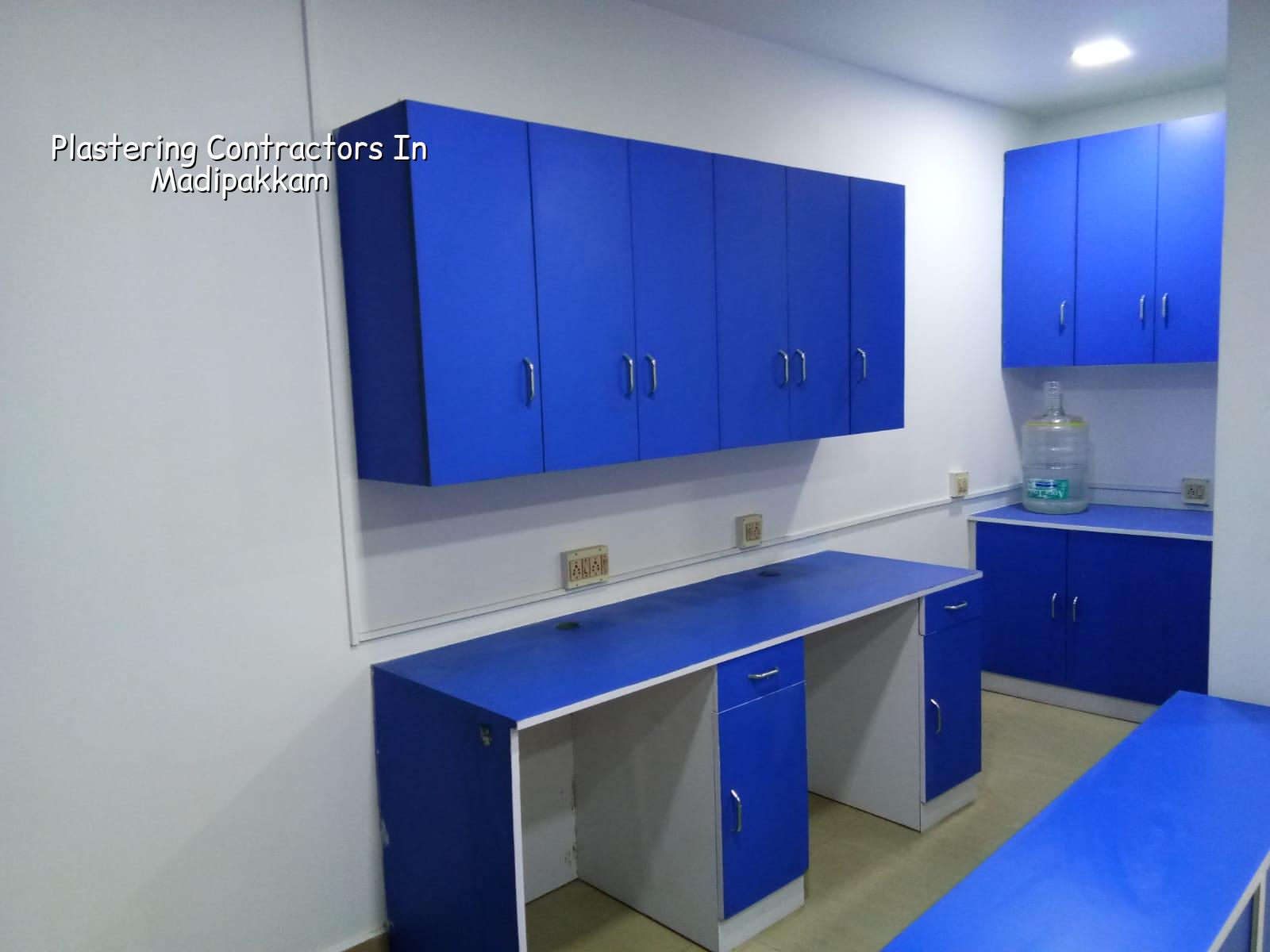
What matters on a Madipakkam site
Madipakkam is dense, and many plots here have a mix of old masonry, recent additions and narrow side access. That changes plastering more than people expect. A truck may not stop close to the wall, sand and cement may have to be moved by hand, and a careless mix becomes obvious later as shrinkage cracks or a hollow patch. In a low-lying pocket, any seepage line from the plinth or parapet will spoil even a neat finish if the surface is not first treated for moisture.
The local reality is simple. If the wall is straight and dry, plastering is straightforward. If the wall has old paint, dust, soft mortar joints or salt marks, we spend more time on preparation than on the actual laying. That is the part many people skip when they compare quotations. They see square feet. We see the condition underneath.
For homes in this part of the city, the question is often whether to patch or redo. Patch repair is sensible when the damage is local and the base is sound. Full replastering makes sense when the wall has widespread debonding, repeated damp stains, or a finish that already sounds hollow when tapped. If you plaster over a weak base, the fresh coat usually fails first at the edges.
How we approach the wall
We start by checking the substrate: brickwork, blockwork, existing cement plaster, or repairable old render. The mix and thickness should match the wall, not our convenience. For RCC surfaces, especially beams and columns, the bond coat matters. For masonry, joint depth and dust removal matter. For exterior work, curing matters more than the final sand texture, because cracks do not come from polish; they come from drying too fast or from a rich mix that was never controlled.
Finish quality is not a single product
People ask for a “smooth finish”, but that can mean different things. For paint-ready interiors, the plaster has to be level enough that putty use stays reasonable. For exteriors, we look for a finish that can handle rain, sun and small movement without showing a line every few feet. For repair patches, matching the existing plane is harder than making a new wall flat, because the old wall has already settled.
We use Indian standard practice for structural and finishing work on our projects, and we keep the plastering sequence disciplined: prep, check levels, apply, cure, inspect. That sounds basic. It is. Most bad plaster work in Chennai comes from skipping one of those four and then blaming the weather.
- Surface check — 1 day for a room or small elevation. We mark hollow areas, dust, damp lines and loose edges before any fresh mix goes on.
- Removal and prep — 1 to 2 days. Loose plaster, flaky paint and weak mortar joints are cut away, and the surface is cleaned for bond.
- Base coat application — usually 1 to 3 days depending on area. We keep the thickness even and control the mix so the wall does not crack later.
- Curing and final checking — 3 to 7 days of watering and inspection. This is where a lot of small failures are prevented.
What a fair plastering job should include
Whether you are comparing quotes or supervising a team, ask for the parts that can be checked on site. If a contractor cannot describe these clearly, the quote is probably built on assumptions. A proper plastering scope should spell out the wall area, the kind of surface being plastered, the thickness where relevant, the curing period, and what happens if the base needs extra repair before work begins.
- Wall-wise measurement, not just a lump-sum rate.
- Clear note on new plaster, patch work, or re-plastering.
- Mix proportion and sand quality stated in plain language.
- Preparation steps for dusty, painted or damp surfaces.
- Curing plan, especially for exterior and sun-facing walls.
- Any scaffolding, edge protection or disposal item clearly marked.
One mistake we keep seeing is this: people compare a cheap quote for fresh plaster over bad old plaster and think they saved money. They have only postponed the real cost. The crack appears after paint, the painter complains, and the owner pays twice. Another common issue is using the same finish expectation for every room. A utility wall does not need the same level of perfection as a living room wall that will take glossy paint and light from a window.
Rates, quantities and the part you should verify
Plastering cost depends on the area, thickness, whether the work is internal or external, the condition of the base, and how easy the site is to access. We do not give you a fake one-line total because it never survives the site visit. For Chennai, the practical way to quote is by a detailed BOQ after measuring the surface and checking what kind of preparation is actually required. If the wall needs chip-out, mesh patching, or damp treatment, the rate moves. That is normal.
For context, interior repair work and finishing often sit within the broader interior works band of ₹1,200 – ₹2,500 per sq ft when part of a larger fit-out. Painting alone is a separate activity at ₹25 – ₹45 per sq ft. Plastering is its own scope, and the quote should say what it includes and what it does not. If someone throws in a number without site inspection, you are not getting certainty; you are getting an assumption.
| Stage | What we check | Typical result if done right |
|---|---|---|
| Preparation | Dust, loose patches, damp lines, old paint | Fresh plaster bonds properly |
| Application | Mix control, thickness, alignment, corners | Wall stays even and easier to finish |
| Curing | Watering frequency and sun exposure | Lower shrinkage cracking |
| Hand-over | Tapping sound, plane, edge lines, touch-up points | Less rework before putty or paint |
How we work on these jobs
We send a site engineer every working day, and the plastering work is measured against the actual wall condition before we agree on the BOQ. Our in-house civil and technical team checks the surface, the mix plan and the sequence, instead of leaving it entirely to labour. If you cannot visit often, we share weekly photo updates by WhatsApp. If the wall needs more than plastering, such as structural repair or waterproofing before the finish, we say that early. You can reach us on +91 97107 13838 or write to our contact page. For larger house work, our renovation and residential pages help explain how we handle the full scope.
Frequently Asked Questions
If you want the wall finished once, properly, we can inspect the site and tell you what is repairable and what should be redone. A good plastering job is quiet work. You only notice it months later, when the paint still looks straight and the corners have not opened up.
Plastering Contractors in Madipakkam
Send us the wall size, a few photos, or ask for a site visit. We’ll measure the work properly and share a BOQ-based quote before anything starts.
Request a Quote Call +91 97107 13838