


Excavation Contractors in Purasawalkam
If you need excavation contractors in Purasawalkam, the first question is not who owns the machine. It is how the soil will be opened, carted out, protected and measured on a tight, older street without upsetting the neighbours or the next stage of work.
Purasawalkam is not a place where you can think of excavation as a simple digging job. Access is often tight, plots are small, and the ground has to be handled so the foundation line stays true, the work area stays dry enough, and the site does not become a complaint point before the footing is even cast.
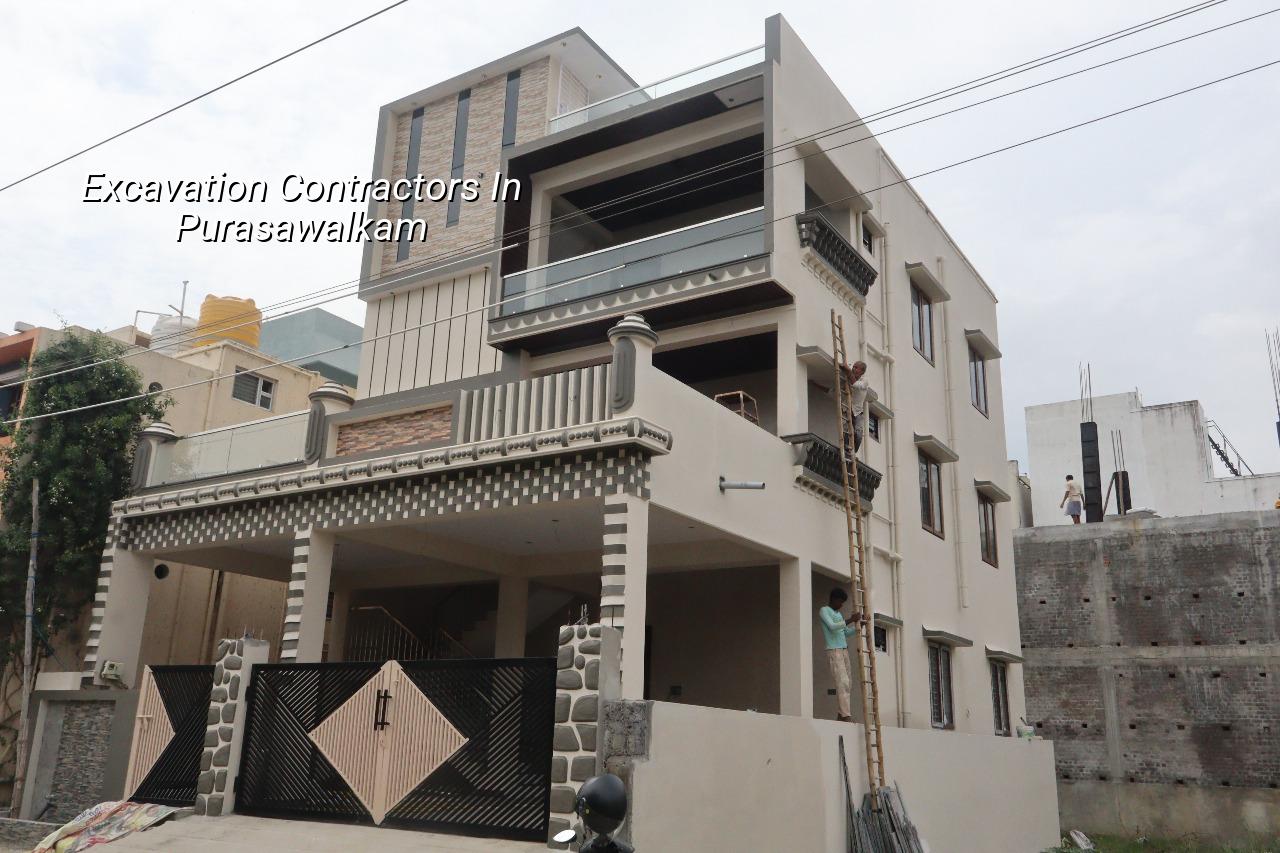
Purasawalkam needs different site planning
This part of Chennai is dense, old and busy. Many sites sit on narrow approach roads with shared boundaries, overhead lines, parked vehicles and very little room to stack soil or bring a tipper in and out. That changes the excavation method before you even talk about depth. In a place like this, we plan the dig around the access, the disposal route, the neighbour walls and the sequence of shuttering and PCC, not just around the plan area.
Most people asking for excavation here already have a structural drawing or are about to start one. They usually want to know three things: can the machine get in, where will the soil go, and how do we stop loose earth from affecting the adjoining compound. Those are the right questions. If you ignore them, the site gets slower every day.
The other local reality is municipal paperwork and utility control. On older plots, we often see mixed boundary lines, shallow drainage runs and service cables that need to be identified before the first cut. That is why we confirm the plot layout, the footing marks and the disposal method before labour starts swinging a shovel.
What excavation actually includes
Excavation is not just soil removal. For a foundation job, it includes marking, setting out, cutting to line and level, handling spoil, trimming the trench or pit walls, keeping the bottom clean enough for PCC, and protecting the excavation until reinforcement and concrete work follow. In many Chennai plots, it also means dewatering for a short spell if the cut holds water after a shower or from seepage from the side.
Where the method changes
In firmer ground, isolated footing pits and trench excavations are usually straightforward if the site has room for manual finishing after machine digging. On softer or water-retaining ground, the method changes quickly. The sides may need support, the excavation may need to be opened in stages, and the foundation type may shift to a raft or a pile-supported system after soil investigation and structural review. We never treat one plot like the next one across the road. That is how mistakes start.
Chennai’s old city belt can also force a practical trade-off: machine speed versus control. A small excavator can save labour, but if the lane is too tight or the spoil cannot be stacked safely, manual excavation with short lead disposal may be the cleaner choice. It is slower, yes. It can also be the safer and cheaper option once neighbour protection and breakage risk are counted properly.
- Survey and setting out — We mark the footing lines from the approved drawing and check levels, usually in a few hours for a small house plot.
- Trial access check — We confirm whether a machine, dumper or only manual labour can work without damaging compound walls, typically on the same day.
- Excavation and spoil removal — Soil is cut, lifted and disposed of in a controlled sequence, often one to three days for a house foundation depending on plot size and access.
- Bottom cleaning and inspection — The pit bottom is cleared, level checked and inspected before PCC, which is where most bad work is caught.
- Protection for the next stage — We keep the excavation safe until the footing steel and concrete go in, because overnight collapse or water ingress can spoil the whole line.
How we decide the right method
The right excavation method comes from the soil, the space and the building load. If the soil investigation shows firm strata and the plot can take equipment, a normal footing excavation works. If the log points to soft layers, fill or a high water-retaining zone, then the footing design may need raft or piles with tie beams, and the excavation sequence has to match that choice. The cheapest-looking dig is not always the cheapest job.
- Check whether the plot access allows a machine, or only hand work.
- Confirm where the excavated earth will be loaded and taken away.
- Inspect the neighbour side walls before digging near the boundary.
- Ask for the footing layout before anyone starts cutting the ground.
- Make sure the bottom level is checked against the drawing, not guessed.
- Plan for rain. A trench that looks fine in the morning can collect water by evening in this city.
Cost, soil and what drives the price
We do not quote excavation as a random lump sum. The price changes with the plot width, how deep the cut is, whether the spoil can be stacked on site or must be carted out, whether the work is manual or machine-assisted, and whether water control is needed. Soil type matters too. Soft or mixed fill slows work and increases handling. A simple foundation dig on a clean plot is one thing; a tight urban site with disposal issues is another.
For construction as a whole, Chennai rates still depend on the same broad things: soil and foundation type, number of floors, span, finish level and site access. That is why a detailed BOQ settles the figure before any contract is signed. For residential construction, standard rates usually sit between ₹1,900 and ₹2,300 per sq ft, mid-premium between ₹2,300 and ₹2,800 per sq ft, and premium beyond that. Excavation itself is only one part of that cost picture, but it is a part that can make later stages smooth or painful.
| Excavation item | What it covers | What changes it |
|---|---|---|
| Manual excavation | Labour cutting, lifting and finishing in narrow access | Lane width, soil hardness, boundary safety |
| Machine-assisted excavation | Quick bulk removal with final trimming by hand | Entry space, turning room, spoil movement |
| Spoil disposal | Loading, transport and off-site dumping | Quantity of earth, truck access, distance to dump point |
| Dewatering and protection | Pumping, temporary side support and site safety | Rain, seepage, soil hold, excavation duration |
What we check before we dig
On a job like this, the inspection checklist matters more than the digger. A good site starts with the drawing set, the plot boundary, the soil report, the road access, the spoil route and the risk to adjoining property. If any one of those is ignored, the work gets messy fast. In Purasawalkam, that usually means complaints from neighbours, broken edge walls, or a pit that sat open too long because nobody planned the next step.
We also check the utility lines and the level difference between the road and the plot. A small change in the finished plinth level can decide whether rainwater runs in or runs out. That sounds basic, but it is where many urban sites fail. The dig itself is only part of the story.
Permits and local control
Excavation is usually tied to the approved building process, and the approval route depends on the plot location. In Chennai Metropolitan Area plots, CMDA rules matter; the licence body may be the Greater Chennai Corporation, a municipality or a town panchayat depending on where the land sits. On some projects near the airport side, AAI height clearance can also come into play later in the build. For excavation, the practical issue is simpler: you should not start ground work until the drawings and the site level decisions are locked.
Documents we commonly ask for before site work are the patta, encumbrance certificate, FMB sketch, approved drawings, structural stability certificate and drainage details. Those papers do not dig the trench, but they keep the trench aligned with the real project. Soil investigation is also worth doing early. It is cheap compared with changing foundation type after the earth is already open.
How we work on these sites
We handle excavation with our own civil engineers, a structural engineer and a site engineer on site every working day. The managing director reviews the project, and we keep the work moving through a BOQ and a milestone-linked payment schedule written into the contract. If you cannot visit daily, we send weekly photo updates by WhatsApp. If your site is in Purasawalkam or anywhere else in Chennai, call us at +91 97107 13838 or write to info@shalomconstruction.com. You can also start from our contact page, or see how our residential and commercial work is structured.
Frequently Asked Questions
Need excavation work in Purasawalkam?
Send the plot details, the drawing if you have it, and we will tell you the right method, the likely duration and what should be checked before the first cut.
Request a Quote Call +91 97107 13838Ground work punishes guesswork. Once the pit is open, every mistake becomes visible and expensive.
That is why we prefer to settle the method on paper, then send the team only when the next step is already clear.