


Aluminium Fabrication Contractors in Pallikaranai
If you need aluminium fabrication contractors in Pallikaranai, the first job is not choosing a finish. It is deciding what will survive a wet, low-lying site, how the fixing points will be prepared, and whether the work is meant for a gate, grill, canopy frame or interior partition.
We get a lot of calls from people who already know the shape they want, but not the section thickness, the fastening method or the coating that will hold up once the monsoon starts pushing water across the plot. This page covers the practical side: what to specify, what to reject, how the local ground and approvals affect the job, and where we can help without overpromising.
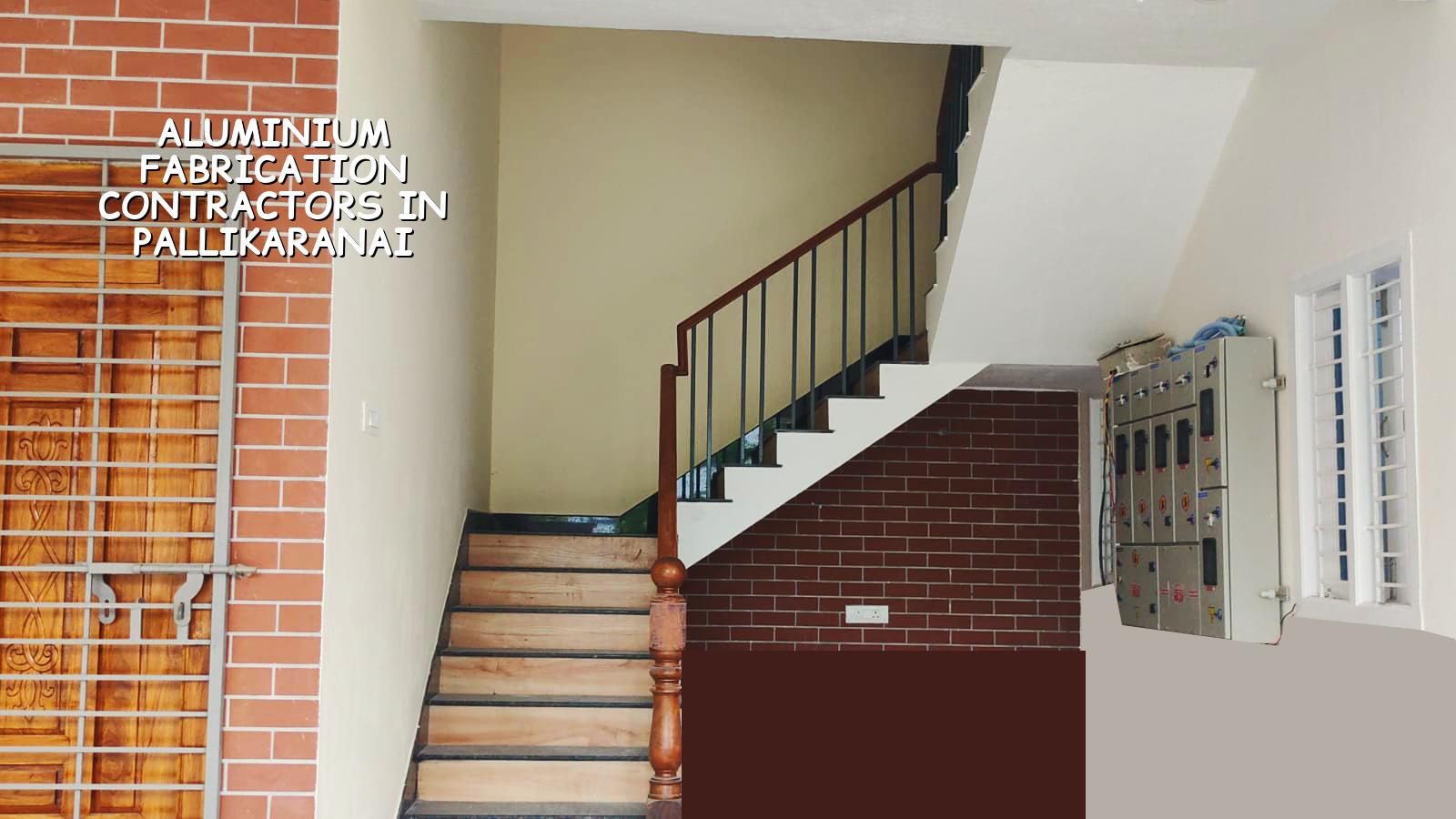
Pallikaranai changes the job
Pallikaranai is not a place where you can treat every fabrication detail like a generic city-centre install. Parts of the area sit on soft, water-retaining ground, and many sites see slow drainage after heavy rain. That means the fabrication drawing has to respect movement, dampness and access. A light aluminium frame is useful here, but only if the supports are fixed to sound concrete and the sill or base detail keeps standing water away from the metal.
We also look at how the plot is reached. Some roads are easy for a small load vehicle, while some internal lanes make it awkward to bring in long sections without bending them on the way. If the work is for a home near a low pocket or a site that already had flooding, we talk about base levels, fixing heights and water splash points before we talk about decorative profiles. That saves the common mistake: fabricating beautifully and then discovering the first storm has exposed the lower edge to constant moisture.
Another real local point is approval and coordination. If the work is part of a larger building job, the fabricator cannot work in isolation. The opening sizes, anchoring points and final level have to suit the structural frame, plaster line and floor finish. On a Chennai site, those details are rarely the same from one plot to the next, even when the sketch looks similar.
What good aluminium work needs
For external and semi-external work, aluminium fabrication is less about fancy profiles and more about correct section choice, accurate cutting and sound fastening. A gate frame, grill panel, handrail or partition should be checked for alignment, joint quality and the way the load reaches the base. In our work, we ask for the drawing first, then the opening measurement, then the fixing plan. If that order is reversed, the site ends up adjusting around the metal instead of the metal fitting the building.
Where aluminium is the right choice
Aluminium is useful where you want a cleaner finish, lower maintenance and less risk of red rust than ordinary mild steel. It works well for decorative grills, balcony infill, window frames, lightweight partitions, canopy members and some interior features. It is not the answer for everything. A heavy driveway gate, for example, can demand a different frame logic and stronger hinge support than a slim decorative screen. If the member is too light for the span, it starts to flex, and once flex starts, the welds and fixings pay for it.
The finish also matters. Powder coating, anodised finish and polished looks all behave differently in real use. In a place with dust, damp corners and frequent washing, the cheapest visible finish is often the one that ages first. We would rather tell you that up front than pretend all coating systems are equal.
- Measure the opening — confirm height, width, plumb and the actual floor level; this takes one site visit and avoids rework.
- Check the base — inspect concrete edges, anchor points and the line where water can sit; poor bases need repair before fixing begins.
- Prepare the drawing — finalise section sizes, joint details and finish, usually within 1 to 3 days for a simple residential item.
- Fabricate and test-fit — cut, assemble and align in workshop conditions before taking the work back to site.
- Install and seal — fix anchors, check level again and seal the edges so rainwater and dust do not enter the joint.
How to verify the contractor before you pay
People searching for fabrication work usually want to avoid two things: ugly joints and surprise extra charges. The easiest way to protect yourself is to ask for the same few documents and details every time. Do not accept a quote that only says “aluminium work” without saying what grade or section is being used, what finish is included, and what the fixing method is. A fair contract describes the opening size, the item count, the finish, the hardware, the coating, the installation responsibility and the payment stages.
Ask for a BOQ. Not a verbal estimate, a BOQ. That sheet should list the item, quantity, unit rate and scope note. If a contractor refuses that level of clarity, he is asking you to carry the risk for his assumptions. Also ask who measures on site, who fabricates, who installs, and who will return if a shutter rubs after the first rain. The answer should be plain. If it is not, stop there.
- Section size is written clearly, not hidden behind “standard” wording.
- Finish type is stated, including powder coating or anodising where applicable.
- Fixing method is named: anchors, brackets, chemical fixing or embedded plates.
- Warranty terms mention workmanship and what happens if alignment changes.
- Site measurement is done after plaster and floor levels are reasonably final.
- Payment is linked to measurement, fabrication and installation milestones.
Cost drivers and common trade-offs
For aluminium fabrication, the price is not one flat number. It moves with profile thickness, finish, item size, hardware, access to the site and how much cutting and bending the job needs. As a Chennai reference point, fabrication work usually lands somewhere between ₹1,200 and ₹2,500 per sq ft for interior works or specialised fit-out type scope, but a specific aluminium item is still settled by BOQ because square-foot rates can hide a lot. Soil, foundation type, number of floors, span, finish level and site access can change the real figure on a bigger building job, and on small work the hardware list can swing it just as much.
The trade-off is simple. If you choose a lighter, cleaner aluminium section, you gain lower maintenance and easier handling. The downside is that the item must be designed with proper support, or it will feel flimsy. If you ask for a thicker section and heavier hardware, you gain stiffness, but you pay more and you may lose the neat look that made you want aluminium in the first place. We tell clients to spend on the hidden parts first: fixing, finish and alignment. Those are the places where low bids usually fail.
One mistake we see often is mixing interior expectations with exterior exposure. A decorative element that looks fine in a hall may age badly near an open edge or a damp wall. Another mistake is approving a sample without checking the actual opening at site. Ten millimetres sounds small until the shutter jams on the day of installation.
| Item | What to specify | What goes wrong if it is vague |
|---|---|---|
| Gate or grille frame | Section size, span, hinge support, finish | Flexing, sagging and poor closing line |
| Handrail or balcony work | Height, anchor spacing, edge detail | Wobble, loose brackets and water entry |
| Partition or screen | Profile, panel type, joint line, trim | Visible gaps and rattling on use |
| Exterior finish | Powder coat shade, coating thickness, edge sealing | Fading, patchy look and early corrosion at fixings |
Approvals, site work and the order things should happen
For a standalone aluminium fabrication job, you may not need a separate building approval, but the work still has to fit the project’s licensed drawings and site conditions. If it is part of a larger residence, the opening sizes and external projections must match the approved architectural and structural layout. In the Chennai metropolitan area, the licence authority depends on where the plot sits, while CMDA planning rules sit above that. If the site is part of a bigger build, we confirm the paperwork first so the fabrication does not clash with the structural frame or the final floor level.
On a real site, the correct order is boring, but it works. You measure after the masonry and plaster are stable, you check the floor finish level, you confirm the fixing method, and only then do you fabricate. Skipping that order is how people end up trimming expensive sections on site or living with a gap that should never have been there.
The usual schedule for a residential fabrication item is straightforward:
| Stage | Typical time | Notes |
|---|---|---|
| Site measurement and discussion | 1 visit | Done after the opening is close to final |
| Drawing and BOQ finalisation | 1 to 3 days | Depends on item count and finish |
| Workshop fabrication | 3 to 7 days | Longer if there are custom bends or coating |
| Installation and touch-up | 1 to 2 days | Access and weather can extend this |
How we work
We handle fabrication as part of the building process, not as a loose side job. Our in-house civil engineers, structural engineer and architect review the opening, the support and the finish together. A site engineer is on site every working day, and if you cannot visit, we send weekly photo updates by WhatsApp. For bigger residential or commercial work, we write the BOQ before any contract is signed and keep the payment linked to milestones, so you know what is due and why. If you want to talk through a job in Pallikaranai, call +91 97107 13838 or email info@shalomconstruction.com.
Frequently Asked Questions
If you are planning aluminium fabrication work in Pallikaranai, start with the opening, the fixing point and the finish. Get those right and the rest is straightforward. Get them wrong and the item looks new only until the first wet season.
Aluminium Fabrication Contractors in Pallikaranai
Send us the opening size or a site photo, and we can discuss the BOQ, fixing method and finish before you commit to the work.
Request a Quote Call +91 97107 13838