


Aluminium Fabrication Contractors in Adyar
If you need aluminium fabrication contractors in Adyar, you're probably looking at a gate, grill, railing, partition, or a small shed that has to fit an older plot and still look clean from the road. In Adyar, the work is rarely just about cutting and welding sections; it has to suit the site, the salt in the air, and the way the building already sits on the plot.
We handle fabrication with the same discipline we use on building sites: correct measurements, proper fixing points, and a finish that survives real use. If you want to compare material options, understand what affects cost, or know what a fair specification should include, this page will help before you place an order.
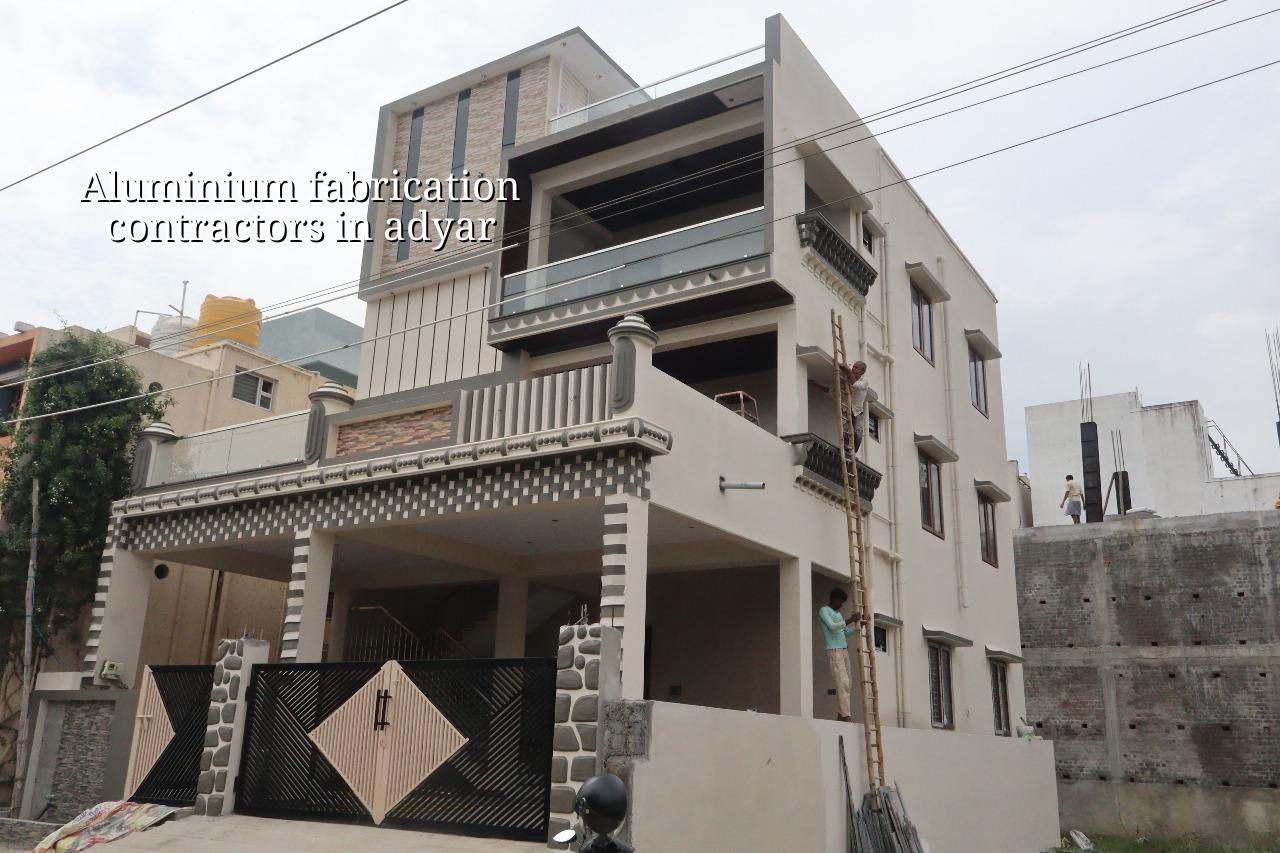
Why Adyar changes the job
Adyar is not a place where you can treat exterior metalwork as a standard item and hope it lasts. It is an established, upscale part of South Chennai, with older houses, newer extensions, tree cover, and many plots where access for fixing and carrying material is tight. That means the actual work starts with measurement, edge conditions, and fixing details, not with the cutting machine.
The other point is exposure. Near the coast and the Adyar estuary side, fittings need better attention to corrosion protection, fasteners, and the way sections are joined. If the wrong screws or brackets are used, the failure shows up in the first monsoon season as staining, loosened joints, or rattling panels. People often ask for the cheapest option first. In this locality, that usually becomes the expensive option later.
Site reality matters too. On some plots the road is narrow, parking is difficult, and neighbours are close enough to hear every drill. So fabrication has to be measured, delivered, and fixed with less mess and fewer revisions. A neat job here is not about shine alone. It is about line, level, and how the piece ages after a few wet months.
What we fabricate and how we build it
For aluminium work, the right specification depends on use. A window grill panel, a partition frame, a balcony enclosure, and a small canopy are not made the same way. We look at span, exposure, fixing surface, and the load the item will carry. For structural work we stay within the limits of the drawing and the intended use; for architectural items, appearance still has to come second to joint strength and weather resistance.
Material choices that matter
Aluminium is chosen because it resists rust better than plain steel, is lighter to handle, and can be used in places where you want a cleaner profile. That said, the wrong alloy section, poor thickness, or careless fastening can still fail. A good job usually has straight sections, proper corner treatment, corrosion-resistant fasteners, and a finish that matches the setting rather than shouting at it.
In our work, the shop drawing is not a decoration. It is the control document. It shows the exact size, joint position, fixing points, and where the work will meet masonry, RCC, or another frame. If this is skipped, the site carpenter and the fabricator start adjusting by eye, and that is where most alignment problems begin.
- Site measurement — We measure the opening, check plumb and level, and note the fixing surface. This usually takes one visit, more if the opening is irregular.
- Drawing and approval — We prepare the fabrication sketch or detailed drawing, confirm size and finish, and freeze the scope before cutting starts.
- Cutting and assembly — Sections are cut to size, assembled on a flat surface, and checked for square. This stage decides whether the final item sits true or twists later.
- Fixing and sealing — The fabricated item is installed with proper anchors, screws, sealant, and edge protection. On exposed edges, we pay more attention to water entry points.
- Final inspection — We check movement, fastening, finish, and alignment. If the item is a railing, door frame, or grill, we also look at hand contact points and sharp edges.
How to choose a fabricator without regret
If you are comparing aluminium fabrication contractors in Adyar, don't start with the quotation alone. Ask to see what they will actually make, what metal section they will use, and what they will do where aluminium meets masonry or RCC. A fair contractor should be able to explain the fixing method in plain language. If that answer is vague, the job will probably be vague too.
- Ask for a drawing or sketch with actual sizes, not just a verbal promise.
- Check the section thickness and the finish type before you pay the advance.
- See what fasteners and anchors will be used for coastal or semi-coastal exposure.
- Confirm whether surface preparation, sealant, and touch-up work are included.
- Make sure the quotation lists installation, transport, and removal of debris.
- Ask who takes responsibility if the piece is out of square or not fitting on site.
There is a trade-off people usually miss. A lighter, slimmer section looks neat and may cost less, but it can feel weak on a wider opening or in a wind-exposed location. A heavier section lasts better in many cases, but it can look bulky if the design is careless. We would rather tell you where the section must be stronger than pretend every opening can take the same design.
Cost, finish and what changes the rate
For aluminium fabrication, the price is never just about the metal. It moves with section size, thickness, finish, fixing method, design complexity, site access, and whether the item needs extra corrosion protection. On a narrow Adyar street, even a small job may take more labour to carry, lift, and fix. A detailed BOQ is what settles the actual figure before any contract is signed.
We do not publish a fake total project price for fabrication because every opening and every item is different. What we can say is that the finishing level, the number of joints, and the site conditions change the labour content far more than most people expect. If the job is mixed with other work, such as interior modifications or a balcony enclosure, it should be coordinated early so the frame lines up with the surrounding civil work.
| Item | What affects the rate | What you should check |
|---|---|---|
| Window grill or safety panel | Section thickness, opening size, number of joints | Square frame, clean welds or joints, proper anchoring |
| Balcony railing | Height, span, finish, exposure to rain and salt air | Firm fixing, no wobble, smooth top edge, corrosion-safe fasteners |
| Partition or screen | Design detail, frame layout, fit to masonry or plaster | Alignment, edge sealing, neat junctions at floor and wall |
| Canopy or light cover | Span, slope, support points, waterproofing detail | Drainage slope, bracket strength, leak-free sealing at fixings |
Approvals, access and the kind of mistake that costs money
Most aluminium fabrication work itself does not need a separate approval, but the building and the plot context still matter. In the Chennai Metropolitan Area, the planning side falls under CMDA, and the local body for the site decides the building licence route. If the work touches a new opening, a balcony change, a canopy, or a structural alteration, we first check whether it is only fabrication or part of a building modification that needs drawings and permission.
The common mistake is to start fabrication before the final on-site dimensions are confirmed. Another one is fixing a neat item to a weak or damp base. The item then looks fine on day one and moves later because the support was never right. On waterfront-facing or salt-exposed sides, cheap fasteners also cause early staining. The metal may be okay; the fixings are what fail first.
For Chennai jobs, we also keep in mind the local building sequence. If the site is part of a larger project, the drawings should be coordinated with the civil team, the architect, and the interior layout. That is exactly how our own team works on projects across residential, interior works, and renovation jobs. It saves you from cutting a finished item twice.
How we work
We start with measurement and a straightforward discussion about use: safety, appearance, weather exposure, and budget. Our in-house civil engineers and structural engineer review the fixing points, and our site engineer checks the work every working day. For clients who cannot visit often, we send weekly photo updates by WhatsApp. If the aluminium work is part of a larger building or renovation package, we align it with the main schedule and the BOQ so the handover is clean. You can call us on +91 97107 13838 or write to contact for a site visit.
Frequently Asked Questions
We keep the work plain and practical because that is what lasts. If you want a fabricator who will check the site first and tell you what the fixing really needs, we can do that.
Aluminium Fabrication in Adyar
Send us your opening size, a photo, or a rough sketch, and we'll tell you what the job needs before you spend on cutting.
Request a Quote Call +91 97107 13838