


Plastering Contractors in Thoraipakkam OMR
If you're searching for plastering contractors in Thoraipakkam OMR, you probably need walls that look straight now and still stay sound after the first monsoon. Plaster is the layer people notice every day, but it only works when the base, mix and curing are handled properly.
We do plastering for new homes, extensions, terraces, compound walls and repair work across Chennai. In a place like Thoraipakkam, the right plaster choice is not just about finish; it is about cracking, damp patches, corner protection and whether the wall will hold paint without giving trouble later.
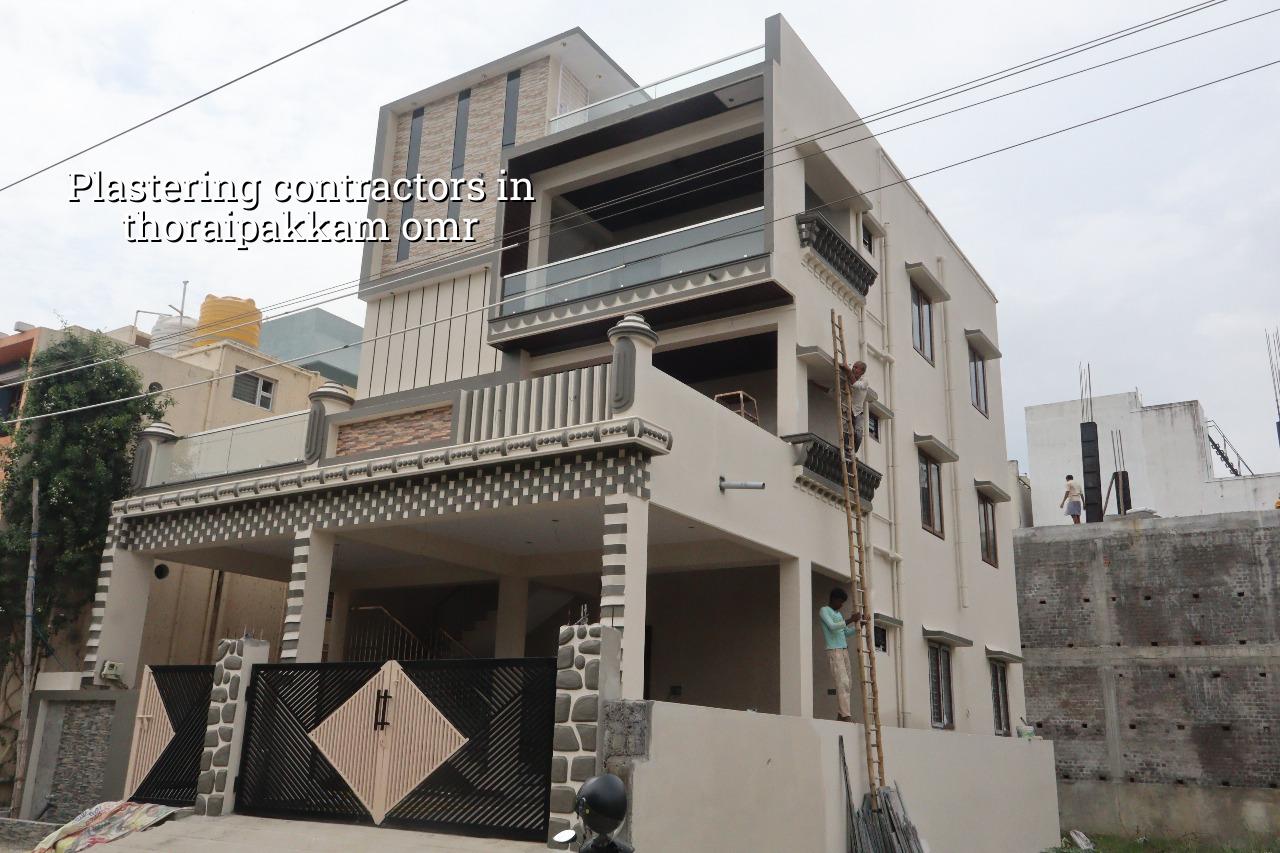
What Thoraipakkam asks of a plastered wall
Thoraipakkam sits in the OMR belt where apartments, villas and independent houses keep coming up on narrow internal streets and active sites. In many pockets, the problem is not only workmanship; it is the way a site gets exposed to dust, sudden rain and materials waiting too long before use. A wall that looks fine on day one can show hairline cracks later if the surface was not prepared, the mix was too rich in one spot and too lean in another, or the base was not dampened correctly before application.
We also see a simple site issue here: people want painting to start too early. Fresh plaster needs time. If you close the work before curing and drying are done, the paint traps moisture and the surface starts blistering. That is a common mistake on fast-moving OMR projects, and it is one we push back on.
On roads around Thoraipakkam, access can be tight and neighbours are close. That affects where sand is stacked, how water is brought in for curing and whether the scaffold can stay in place without disturbing the next plot. Good plastering on these sites is as much about site discipline as it is about trowel work.
How we handle plastering work
For plastering, the details matter more than people expect. We inspect the masonry for honeycombs, loose joints, protruding mortar and dust before starting. On RCC surfaces, we check whether the shuttering marks, fins and grooves need hacking or bonding treatment. On blockwork and brickwork, we look at joint depth and alignment, because a bad base cannot be hidden by a thick coat of plaster.
What a correct specification looks like
For internal walls, the finish has to be even enough for putty and paint, but we do not chase a glassy look by overworking the mortar. For external walls, the mix and curing discipline matter more, because sun and rain punish weak surfaces quickly. We use proper corner beads or edge treatment where needed, and we keep openings and service conduits aligned so the plaster thickness does not vary wildly from one side to the other.
Most clients ask for a smooth finish. Fair enough. But smooth does not mean soft. A well-done wall should feel dense, not powdery. If you tap it, it should not sound hollow in patches. That hollow sound usually means poor bonding or a hidden void under the coat.
- Surface inspection — We check masonry, RCC and joints first. This usually takes half a day on a small house and longer if repair work is involved.
- Preparation and hacking — Loose material is removed, grooves are cleaned and the surface is dampened before plastering starts. Skipping this is where many cracks begin.
- Application in levels — We set line and level, then apply the coat in panels so the wall does not wave. This stage runs over one to several days depending on area.
- Curing and correction — The surface is cured properly and checked for edges, hollows and shrinkage cracks. Minor corrections happen before paint work begins.
What to ask before you hire anyone
If you're comparing plastering contractors in Thoraipakkam OMR, ask for the actual mix, the curing plan and how they handle joints between RCC and masonry. A fair contractor should be able to tell you what they will do at beam junctions, around window frames and near plumbing chases. If the answer is vague, the wall will usually show it later.
Do not compare only on per-square-foot labour. The cheap quote often leaves out surface preparation, scaffolding, corner finishing or curing labour. Those omissions are where a low price becomes an expensive repainting job. We have seen owners spend more on rectification than they saved on the first quote.
- Ask whether the quote covers surface hacking, cleaning and curing water.
- Check if internal and external plaster are priced separately.
- Confirm how beam-to-wall junctions will be treated.
- Ask what happens if the wall needs local patch repair before painting.
- Get the area measurement basis in writing, not just a lump rate.
- Look for a BOQ before anyone starts work.
Rates, area and timing
Plastering rates move with wall condition, thickness, height, access and whether the work is only labour or part of a larger package. For interior work tied to standard finish levels, the broader Chennai market usually falls within the interior works band of ₹1,200 to ₹2,500 per sq ft when it is part of a larger fit-out, but plastering by itself is normally measured and priced as a separate labour and material head in the BOQ. We do not guess the final figure on a public page. The BOQ settles it before any contract is signed.
On a small independent house, plastering may take a few working days if the masonry is ready. On a larger villa or a building with repair areas, it can run longer because curing, surface corrections and edge detailing are not optional. The mistake people make is trying to compress drying time. That saves nothing. It only moves the problem to paint stage.
| Work head | What affects it | What we check before quoting |
|---|---|---|
| Internal wall plaster | Wall finish, joint quality, room height | Plumb, surface roughness, openings, conduits |
| External wall plaster | Exposure, scaffold access, rain and sun | Curing access, edge protection, water source |
| Ceiling plaster | RCC surface, overhead working time | Bonding, shutter marks, safety access |
| Repair plaster | Old paint, cracks, hollow patches | Extent of removal, base condition, patch lines |
How we work on site
We keep our technical work in-house, and a site engineer is on site every working day. For plastering, that means the surface is checked before the first coat, not after the wall has already been covered. Our structural engineer and architect stay involved when a wall condition affects junctions, openings or renovation areas. If you cannot visit every day, we send weekly photo updates on WhatsApp and keep the BOQ tied to the actual work done.
If you want to speak with us about a plastering job in Thoraipakkam, call +91 97107 13838 or write to info@shalomconstruction.com. You can also visit us at No. 45, 2nd Main Road, Abirami Nagar, Koladi, Thiruverkadu, Chennai – 600077.
Frequently Asked Questions
If you want the wall finish to hold up through paint, furniture fixing and the first monsoon, the plaster stage deserves real supervision. We would rather tell you not to rush it than send a crew to patch the same wall twice.
Plastering Contractors in Thoraipakkam OMR
Send us your drawings, wall photos or a site location, and we can review the plaster scope with a BOQ before you commit.
Request a Quote Call +91 97107 13838