


Masonry Contractors in Vandalur
When you call masonry contractors in Vandalur, you’re usually not asking for a grand design. You want walls that stay straight, mortar joints that don’t crack in the first season, and a team that can work around a live site without turning it into a mess.
That sounds simple until the blockwork meets the footing level, the rain starts coming sideways, or the brick stack is kept too close to the edge and starts soaking up water. We’ll cover what matters on a Vandalur plot, what a fair masonry scope includes, and what you should inspect before a brick is laid.
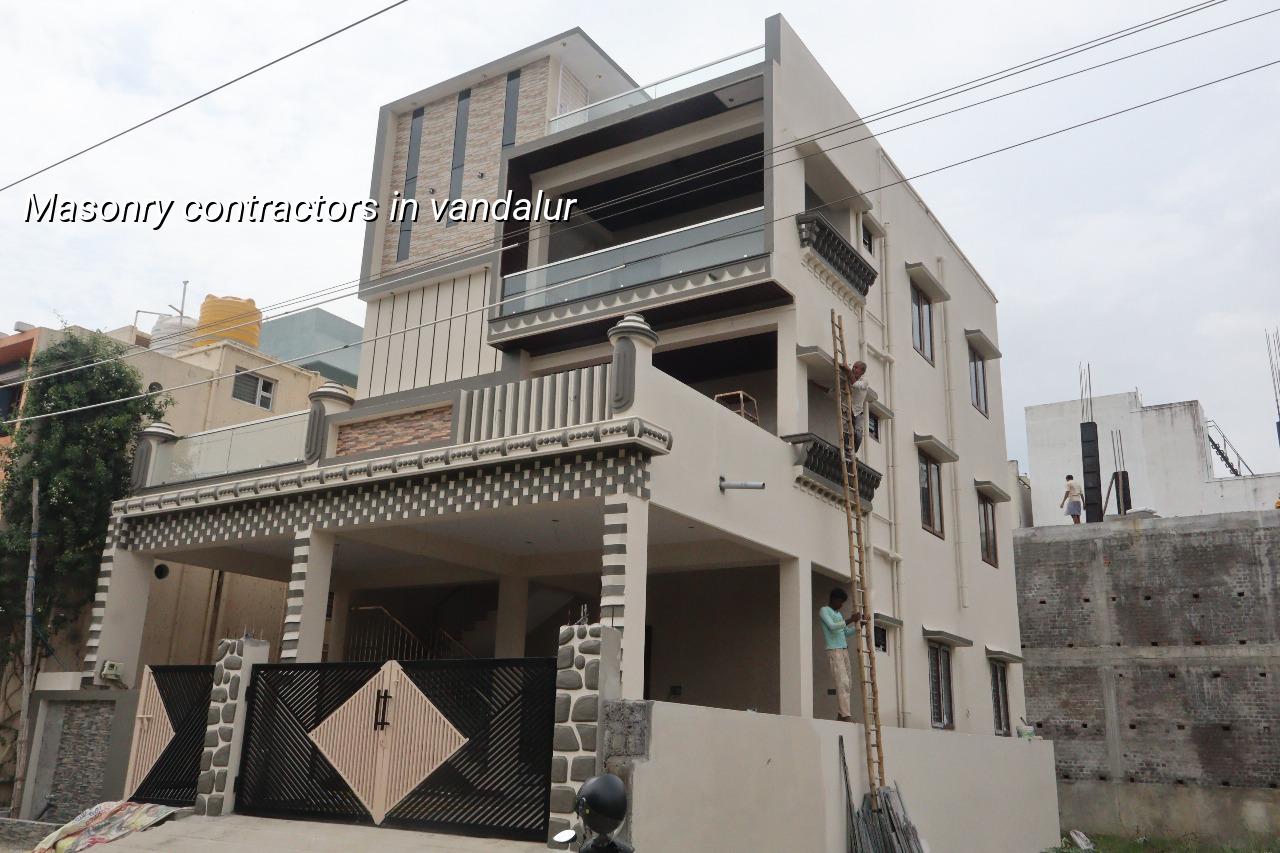
What Vandalur sites change
Vandalur sits on Chennai’s southern growth side, where many plots are still part of larger layouts or newly divided holdings. That means you often get enough access for material unloading, but you also get a mix of ground conditions from plot to plot. On one site the foundation wall is straightforward. On another, a low edge or a soft patch makes the first course of masonry more sensitive than people expect.
The other practical point is rain. During the northeast monsoon, unprotected block stacks, sand piles and fresh work can take a beating. We see clients lose time because they treated masonry as “just wall work” and left the site without proper curing, storage and level control. In a place like Vandalur, those small lapses show up quickly as uneven joints, damp patches and rework near openings.
How masonry should be handled
Good masonry is not only about the bricks or blocks. It starts with line, level and bond. The first few courses decide whether the wall will sit true or wander by the time it reaches lintel level. For RCC framed houses, masonry has to respect the structural frame, movement joints where needed, and openings for doors, windows and services. For compound walls and load-bearing portions, the tolerances get even tighter.
We work to Indian practice used on Chennai projects: proper soaking of bricks where required, correct mortar proportion for the work, full bedding under units, clean jointing, and curing that doesn’t get skipped because the site is busy. IS 456:2000 governs the RCC portions around the masonry, while NBC 2016 and the structural drawing control how the wall fits into the building as a whole. If the soil report asks for a different foundation type, the wall detail changes with it. The masonry team cannot ignore that.
Where walls fail first
Most masonry defects begin at details people think are minor. A window sill without the right slope, a wall built before the frame has settled enough, a lintel pocket filled carelessly, or service chases cut after plastering. In our experience, people blame the brick when the real problem is sequencing. The wall was asked to do too much, too early, with too little supervision.
- Set out the wall lines — verify centre lines, openings and plinth levels before work starts; this usually takes half a day for a house floor.
- Check material before unloading — bricks, blocks, sand and cement are inspected on arrival; one bad truck can spoil the week.
- Build the first courses carefully — this is where line and level are fixed, and it may take a full working day on a small floor.
- Continue with checks at opening points — lintels, sills, ducts and service holes are matched to the drawings as the wall rises.
- Cure and protect the work — fresh masonry is watered and shielded from rain and impact for several days, especially in the monsoon.
How to verify a masonry contractor
If you are comparing firms, don’t start with price alone. Ask for the drawings they will work from, the mortar mix they intend to use, the brick or block specification, and the names of the people who will actually be on site. A contractor can promise “good finishing” all day. What matters is whether the site engineer can explain why a wall is kept back from the frame in one place and tied into it in another.
A fair masonry contract should spell out the scope, material responsibility, payment stages, curing responsibility, and who pays for rework if the wall is built against the approved line. It should also say what is excluded. If plaster repair, scaffolding shifts, shuttering around openings, or debris removal are left vague, those items reappear later as arguments. That is usually when the budget starts slipping.
- Ask for the BOQ and check whether brickwork, blockwork and plaster patching are separated.
- See the drawing set they will follow, not just a WhatsApp photo of one wall.
- Confirm who checks plumb, line and level every day on site.
- Ask how fresh work is protected during rain and overnight gaps.
- Find out whether service openings are marked before the wall reaches lintel height.
- Check what the contract says about cracked, hollow or displaced masonry.
Rates, materials and what moves the cost
Masonry is priced by the type of work, the access to the plot, the wall height, the number of openings, and whether the job is brickwork, concrete blockwork, compound wall work or repair. For Chennai residential work, the labour and material figure is not a fixed number until the BOQ is done. A wall on a clean, open site will cost differently from a wall inside a narrow approach with no place to stack material.
We don’t quote a total project price here, and we shouldn’t pretend one number fits every Vandalur plot. What we can say is that the final figure changes with soil and foundation type, number of floors, span, finish level and site access. Once the BOQ is written, the real cost becomes visible. Before that, most “cheap” offers are only cheap because something important has been left out.
| Work type | Indicative rate | What usually changes it |
|---|---|---|
| Standard residential construction | ₹1,900 – ₹2,300 per sq ft | Soil, foundation choice, site access, floor count |
| Mid-premium residential | ₹2,300 – ₹2,800 per sq ft | Finish level, spans, openings, detailing around masonry |
| Commercial shell and core | ₹1,800 – ₹2,400 per sq ft | Structural grid, service shafts, movement and access |
| Plastering and masonry repair | Case-specific, BOQ based | Extent of damage, patch size, curing and access |
Approvals and site sequence
If your masonry work is part of a new build in the Chennai metropolitan area, approvals have to be sorted before the walling starts. CMDA governs planning in the metro area, while the building licence comes from the local body for the plot. For Vandalur, that is typically a municipality or town panchayat route depending on exact jurisdiction. The paperwork usually includes patta, EC, FMB sketch, approved drawings, structural stability certificate and drainage details.
There is no shortcut around that. A wall built early and then changed later costs more than doing the paperwork properly first. Near railway or other controlled zones, extra checks can apply. If the plot falls under a special body, we confirm it before the work order is issued. That is cheaper than rebuilding the front compound after a failed scrutiny.
| Stage | Typical time | Why it matters |
|---|---|---|
| Document check and BOQ | 3 to 7 days | Fixes scope before money is committed |
| Site set-out and material staging | 1 to 2 days | Keeps line, level and storage under control |
| Primary masonry work | 1 to 3 weeks per floor zone | Depends on openings, access and crew size |
| Curing, patching and inspection | Several days | Reduces cracks, hollow joints and edge damage |
How we work on masonry jobs
We keep the technical work in-house with civil engineers, a structural engineer and an architect, and a site engineer is on site every working day. For a masonry package, that means we don’t leave line and level to chance, and we don’t hand over a wall while hoping the next trade will fix it. We issue a detailed BOQ before any contract is signed, and our payment stages are tied to milestones. If you can’t visit often, we send weekly photo updates by WhatsApp.
If you want us to look at a Vandalur site, start with the drawings and the plot details. We’ll tell you what is reasonable, what needs checking, and what should never be rushed. Call +91 97107 13838 or write to info@shalomconstruction.com. If you need our office, it’s No. 45, 2nd Main Road, Abirami Nagar, Koladi (Landmark: Ratna Chamber), Thiruverkadu, Chennai – 600077.
Frequently Asked Questions
Good masonry looks ordinary when it is done well. That’s the point. If you’re planning a new build or fixing a bad wall, we’d rather inspect the plot and tell you the truth than sell you a neat-sounding number.
Masonry Contractors in Vandalur
Send the drawing set and plot details, and we’ll help you work out the masonry scope, BOQ and site plan before you commit.
Request a Quote Call +91 97107 13838