


Masonry Contractors in Thoraipakkam OMR
If you need masonry contractors in Thoraipakkam OMR, you’re usually looking at walls, repairs, or a build stage where one bad line shows up for years. Blockwork that goes out of plumb, a parapet that cracks, or plaster that debonds after one monsoon is rarely a “small” defect.
We handle masonry with the same discipline we use on structural work: correct setting out, proper bonding, curing, and a BOQ that tells you exactly what is included before anyone starts. On OMR, that matters because sites are tight, concrete work runs alongside finishing trades, and the weather will expose any sloppy workmanship fast.
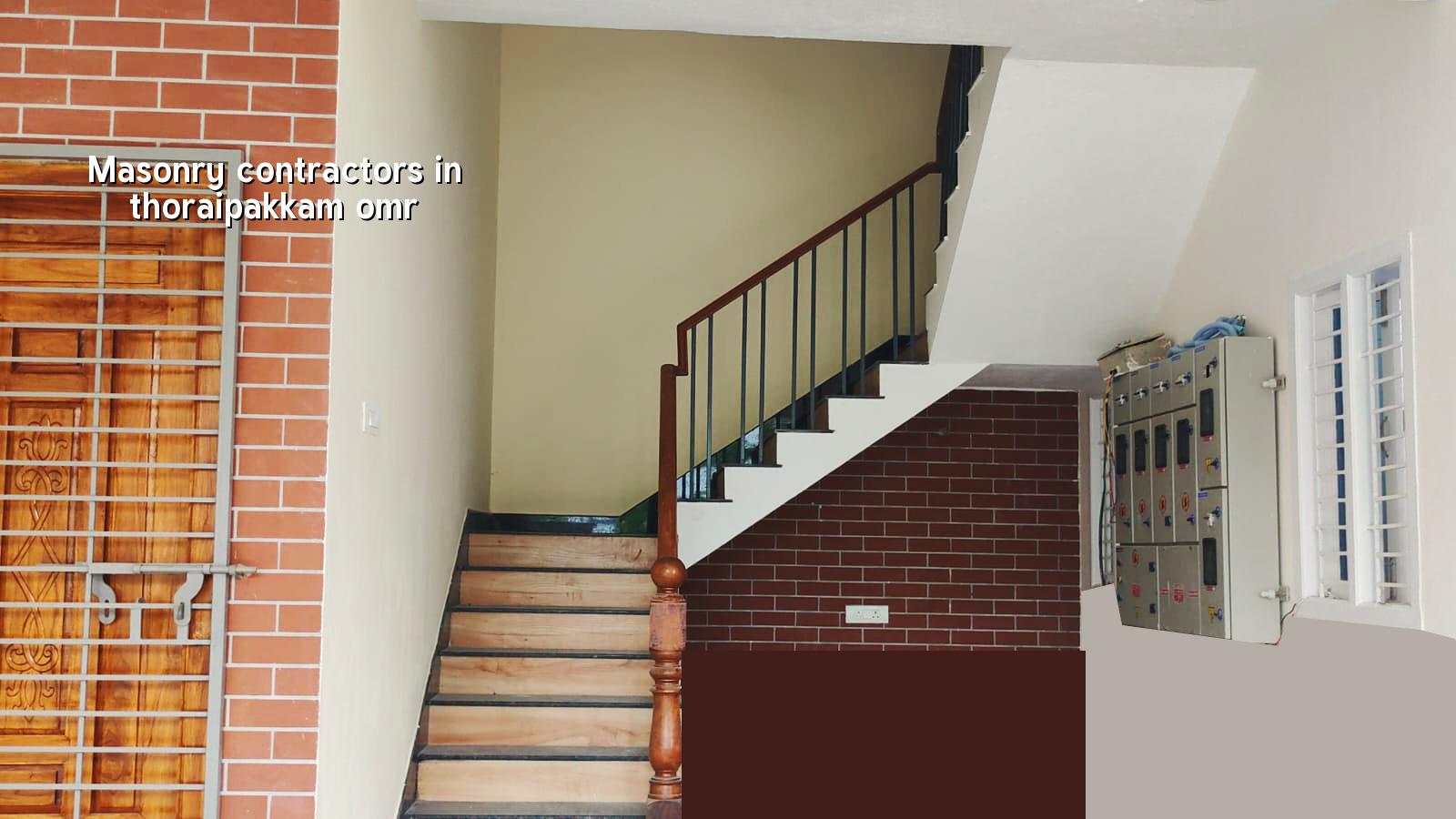
What changes in Thoraipakkam sites
Thoraipakkam sits on the OMR belt where you see a mix of apartments, villas, office buildings, and compact residential plots. That means masonry work often happens on sites with limited stacking space, active neighbour traffic, and a schedule that has to fit around other contractors. Material should not arrive “sometime in the morning”; it should arrive when the site is ready to receive it. Otherwise sand gets contaminated, blocks chip, and workers start improvising to keep moving.
The other local issue is water. Parts of the OMR corridor sit low enough that drainage and rainwater movement matter from day one. If your plinth level, external paving, or parapet details are casual, masonry cracks show up earlier than they should. In Chennai, rain does not wait for the finishing stage to be ready.
We also see a lot of mixed work here: new blockwork next to repair patches, opening changes in existing buildings, and compound walls added after the main building is already occupied. Each one needs a different approach. A new wall can be set out from scratch. A repair wall has to match existing levels and movement. A compound wall has to stand up to wind, water, and the reality of how people lean, park, and open gates.
How good masonry is built
Masonry is simple to look at and unforgiving to execute. The line, the bond, the mortar mix, the curing, and the interface with RCC all have to work together. If one of them is wrong, the wall may still stand, but it won’t behave properly. Most homeowners notice it first as hairline cracks, hollow plaster patches, or a door frame that never seems to sit right.
Blockwork, brickwork and plaster are not the same job
Blockwork is about straightness, alignment, and keeping the wall plane true. Brickwork can handle more detail in small areas, but it needs care with mortar thickness and joint consistency. Plaster is a different trade again; it hides the masonry only if the substrate is sound. If the wall below is bad, plaster only delays the complaint.
We usually insist on checking three things before a masonry line goes up: the setting-out mark, the level reference, and the opening positions. A wall can be beautiful and still be wrong if the door opening has drifted by 20 mm. That is the sort of mistake that turns into repeated carpenter work later.
- Set out the wall line — 1 day for small work, longer if there are openings, returns, or compound wall corners.
- Check levels and plumb points — done before the first course, then again as the wall rises.
- Lay masonry in lifts — the wall is built in controlled stages, with joints kept even and bonds maintained.
- Allow curing and inspect interfaces — 3 to 7 days of curing attention, especially where masonry meets RCC columns or beams.
- Plaster after the wall settles — only after the wall is stable and the MEP sleeves and chases are verified.
What to check before you hire anyone
If you’re comparing masonry contractors, don’t start with the rate per square foot. Start with the documents and the method. A cheap wall that needs repair is expensive. A fair wall built right is usually the better buy. This is where many people get misled: they compare only labour rates and forget to ask how the contractor measures work, who checks levels, and what happens if the wall line needs correction.
- Ask for a BOQ or written scope that names the wall type, block size or brick type, mortar mix, and plaster thickness.
- Check whether the contractor is including scaffolding, curing, waste removal, and loading/unloading of material.
- See who marks the wall lines on site and who signs off openings before masonry starts.
- Ask how verticality is checked every day. A site without line and level checks will drift.
- Confirm whether cracks at RCC junctions will be treated with mesh or another specified detail.
- Get the payment stages in writing. Labour paid too early tends to move faster than quality allows.
Where masonry fails first
The failure pattern is usually predictable. Cracks appear at RCC-masonry junctions when the connection detail is weak or the plaster is rushed. Long vertical cracks show up when openings were set badly or the wall was forced to meet a wrong dimension. Damp patches appear where external walls, parapets, or bathroom walls were not detailed for water exposure. On Thoraipakkam sites, we also see damage from stacked material placed too close to new walls. That extra load does more harm than people think.
Here is the honest part: not every crack means structural danger. Some are finish defects, some are movement at junctions, and some are a sign that the wall itself was built badly. The job is to tell the difference early. A patch over a bad wall is not a repair plan. It is a delay.
| Work item | What should be specified | What usually goes wrong |
|---|---|---|
| Blockwork | Block size, mortar mix, bond pattern, line and level checks | Walls drift out of plumb, joints vary, openings shift |
| Brickwork | Brick quality, soaking practice, joint thickness, curing period | Loose joints, uneven courses, early shrinkage cracks |
| Plastering | Surface prep, thickness, corner beads, curing method | Hollow patches, crazing, corners breaking away |
| Compound walls | Footing detail, column spacing, coping, drainage and finish | Lean, cracks at posts, water staining, early weathering |
Rates, approvals and site reality
Masonry is usually priced by area or by item, but the real figure depends on wall height, access, material type, scaffolding, finish level, and whether the work is new or on an existing building. For Chennai, the broader construction rates we use as reference are ₹1,900 to ₹2,300 per sq ft for standard residential construction, ₹2,300 to ₹2,800 for mid-premium, and ₹1,200 to ₹2,500 per sq ft for interior works. Masonry-only work will sit inside the BOQ for the project, not as a guessed total. A detailed BOQ settles the real figure before contract.
On the approvals side, Thoraipakkam falls under the Chennai Metropolitan Area, so CMDA is part of the picture. The actual building licence comes through the local authority for the plot, and documents commonly needed include patta, encumbrance certificate, FMB sketch, approved drawings, structural stability certificate, and drainage details. Near the airport side of Chennai, height clearance can also become relevant on certain plots. We check what applies to your site before anyone pours a foundation or starts a wall.
There is also a practical point that people miss: masonry work cannot be isolated from drainage, electrical chases, and openings. If those trades are not coordinated, the mason cuts around them later and the wall loses quality. That is why we keep the site engineer involved every working day.
How we work on a masonry job
We start with a site visit and a scope check, then we prepare the BOQ and confirm what is included. Our in-house civil engineers and structural engineer review the work, and a site engineer is present on working days to control line, level, and material use. If you cannot visit often, we send weekly photo updates on WhatsApp. If you want to talk through a repair or new wall, call us on +91 97107 13838 or write to info@shalomconstruction.com. Our office is at No. 45, 2nd Main Road, Abirami Nagar, Koladi, Thiruverkadu, Chennai – 600077, and our team can coordinate from there.
Frequently Asked Questions
If you’re comparing masonry quotes, keep the conversation on scope, measurements, and finish expectations. The cheapest number on paper can become the most expensive wall on site.
Masonry Contractors in Thoraipakkam OMR
Send us your plan, a sketch, or a site location. We’ll review the masonry scope and give you a BOQ-based quote or arrange a visit.
Request a Quote Call +91 97107 13838