


Floor Tile Contractors in Washermenpet
If you need floor tile contractors in Washermenpet, the real question is not only who can fix tiles, but who can make them stay flat in a dense north Chennai site where access is tight and the work has to survive daily use.
We look at the base, the tile body, the adhesive, the grout and the movement joints together. Miss one of those and the floor starts sounding hollow, opening at the edges or staining at the joints before the work has even settled.
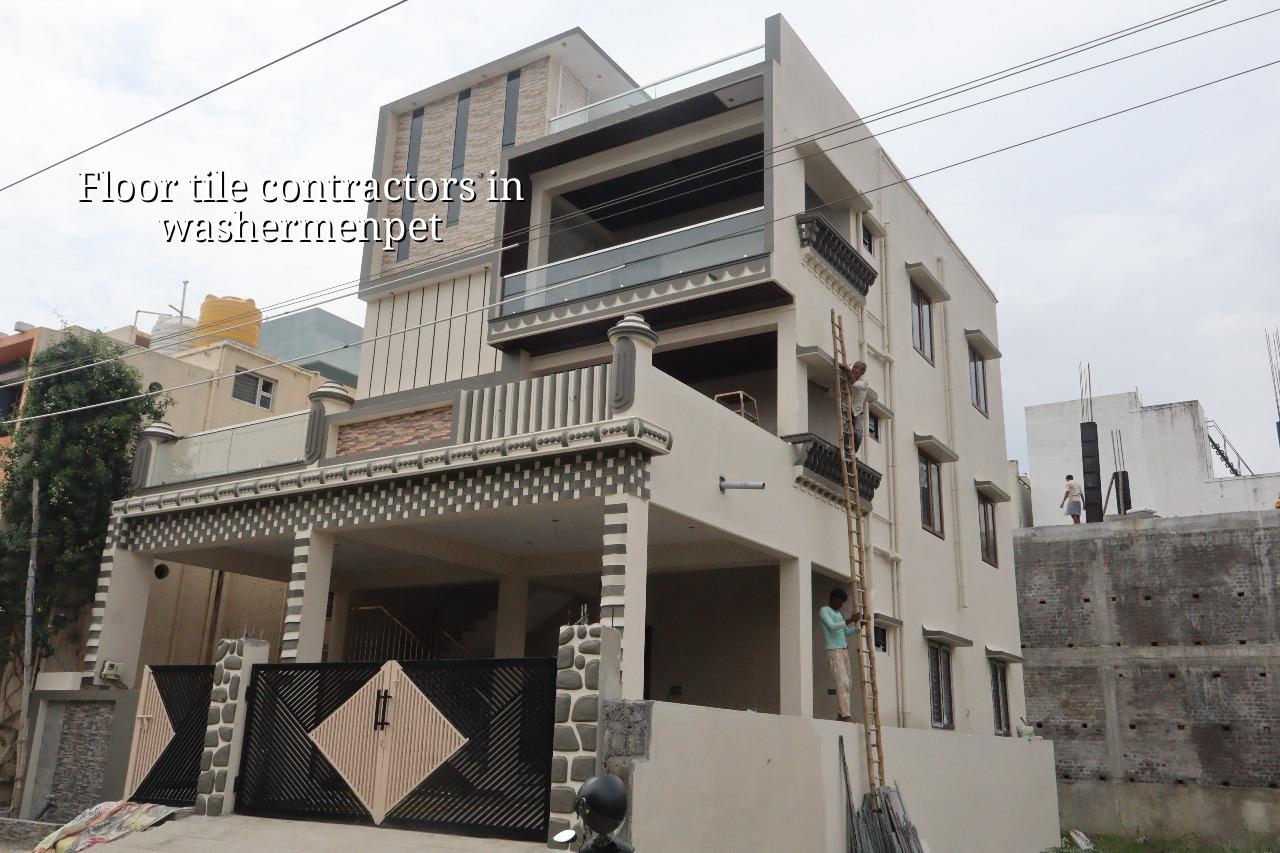
What Washermenpet changes on site
Washermenpet is old, dense and active through the day. Most sites do not have generous staging space, so tile bundles, sand, cement and cutting work need planning from the first visit. On streets near the harbour side, the air carries more salt, so the edge details, skirting and grout quality matter more than people expect. A neat tile job is not just about the finish you see on day one; it is about how the floor behaves after mop water, monsoon dampness and constant foot traffic.
In a place like this, we also watch the approach road and loading timing. A lorry may not stop right at the gate, and material often has to be shifted by hand. That affects tile breakage, labour time and the way we sequence rooms. If you try to rush one room while another is still curing, you usually end up with marks, uneven lines or patch repairs later.
The tile work that lasts
Floor tiling looks simple until you open up an old floor and see why the earlier work failed. The base may be dusty, the screed may not have the right slope, or the earlier layer may have been bonded with weak mortar. For a new floor, we start with level checking, then verify the surface strength, then decide whether the floor needs a screed correction before tiles go down. For a replacement floor, we inspect for damp patches, cracked screed and loose plaster at the wall edge.
Materials and the failure points
Most failures come from the wrong combination of surface prep and adhesive, not from the tile brand alone. A vitrified tile on a weak bed will still fail. A ceramic tile with poor joint filling will still collect dirt and start lifting at the corners. In north Chennai houses, people often want a glossy finish for easier cleaning, but gloss shows lippage and dust more quickly than a matt or satin surface. The choice is visual, yes, but it is also practical.
For homes and shops, the usual sequence is base preparation, layout marking, adhesive application, tile setting, joint finishing and curing. Where the floor sees water daily, such as utility rooms or shop wash areas, we pay extra attention to slope and edge sealing. That is one reason we do not treat floor tiles as a decorative add-on. They are part of the building envelope.
- Site check and measurement — one visit to measure levels, room sizes and access, usually the same day or next working day.
- Base preparation — dust removal, crack repair and screed correction, usually 1 to 3 days depending on area.
- Layout and dry marking — tile lines, cut positions and room centre marks, usually half a day for a typical house floor.
- Tile laying and joint work — fixing, alignment checks and grouting, often 2 to 5 days for a normal floor area.
- Curing and handover — cleaning, protection and final inspection after the adhesive has set, usually within 24 to 48 hours for light foot use.
How to choose a tile contractor
People usually compare price first. That is natural, but it is not enough. A floor with the wrong slope or poor joints will cost more to correct than a careful job would have cost at the start. The better way is to ask what base prep is included, what adhesive they use for your tile type, how they handle cuts near walls and columns, and what happens if a tile is chipped during fixing.
- Ask for the tile brand, size and finish they are quoting for, not just a vague “floor tile work” line.
- Check whether screed correction, crack filling and surface cleaning are included before fixing starts.
- Ask how they handle edge cuts, skirting and doorway transitions, because that is where many floors look careless.
- See if the contract mentions adhesive, grout, wastage allowance and protection after laying.
- Confirm who measures levels on site and who signs off the final alignment.
- Ask for the payment stages in writing. A fair contract has milestones, not a lump demand upfront.
Rates, materials and what moves the price
For floor tile work, the rate is not just labour. It changes with tile size, tile type, base condition, cutting complexity, room count and site access. In a Washermenpet home with narrow access, hand shifting and extra cut work can add time. If the base is uneven or damp, the prep cost also rises. We always say the BOQ should decide the real figure before contract signing, because a floor that looks cheap on paper can become expensive once the hidden work appears.
For most residential flooring, the broader Chennai construction rates are not the right benchmark unless you isolate the flooring head. Interior works in general sit at ₹1,200 – ₹2,500 per sq ft, but tile fixing itself is priced by area, layout difficulty and specification. If you are comparing two quotes, check whether both include adhesive, grout, labour, cutting waste and final cleaning. They often do not.
| Work head | What is usually included | What changes the rate |
|---|---|---|
| Standard floor tile fixing | Labour, setting, alignment, basic grout | Tile size, room shape, cut work, access |
| Base correction | Screed patching and level correction | Existing slope, cracks, damp patches |
| Premium finish | Better joints, finer cuts, stronger edge care | Tile cost, finish level, lippage tolerance |
| Replacement work | Removing old tiles and refixing new ones | Demolition dust, disposal, damaged substrate |
Where people go wrong
There are four mistakes we keep seeing. First, the old floor is left dirty and the new tile is fixed on top of weak dust. Second, the layout is started from one wall without checking the room centre, so the cuts look uneven at the far end. Third, people choose a glossy tile because it looks clean in the shop, then hate the slipperiness in the house. Fourth, they skip protection after laying and let other trades walk over the fresh floor.
The honest limitation is simple: not every cracked or damp floor should be tiled over immediately. If the slab itself is moving, if there is active seepage, or if the base is badly dished, tiles are the wrong first answer. You fix the cause first. Otherwise the new floor becomes a cover for the same defect.
How we work on a tile job
We begin with a site visit, a level check and a short written BOQ. Our in-house civil engineers and site engineer look at the substrate, the room use and the access before we quote the work. If the job is part of a new house, we coordinate it with the main construction sequence. If it is a repair or renovation, we first decide whether the existing base can be salvaged. You can speak with us at +91 97107 13838 or write to info@shalomconstruction.com. Our office is at No. 45, 2nd Main Road, Abirami Nagar, Koladi, Thiruverkadu, Chennai – 600077.
Frequently Asked Questions
If you want the floor done once and done properly, send us the room size, a few site photos and the tile type you have in mind. We will tell you what the floor really needs before anybody starts mixing mortar.
Floor Tile Contractors in Washermenpet
Call us for a site visit or a BOQ-based quote, and we will check the floor before we fix the first tile.
Request a Quote Call +91 97107 13838