


Floor Tile Contractors in Thirumazhisai
If you are comparing floor tile contractors in Thirumazhisai, the real question is not who says yes fastest. It is who will leave you with a floor that stays level, sounds solid underfoot, and does not start lifting at the edges after one monsoon.
That is what this page is for. We are going to pin down the tile choice, the fixing method, the likely cost band, and the checks that matter before the first bag of adhesive is opened. If you are building new, redoing an old floor, or deciding between ceramic and vitrified tile, you should have enough here to ask better questions.
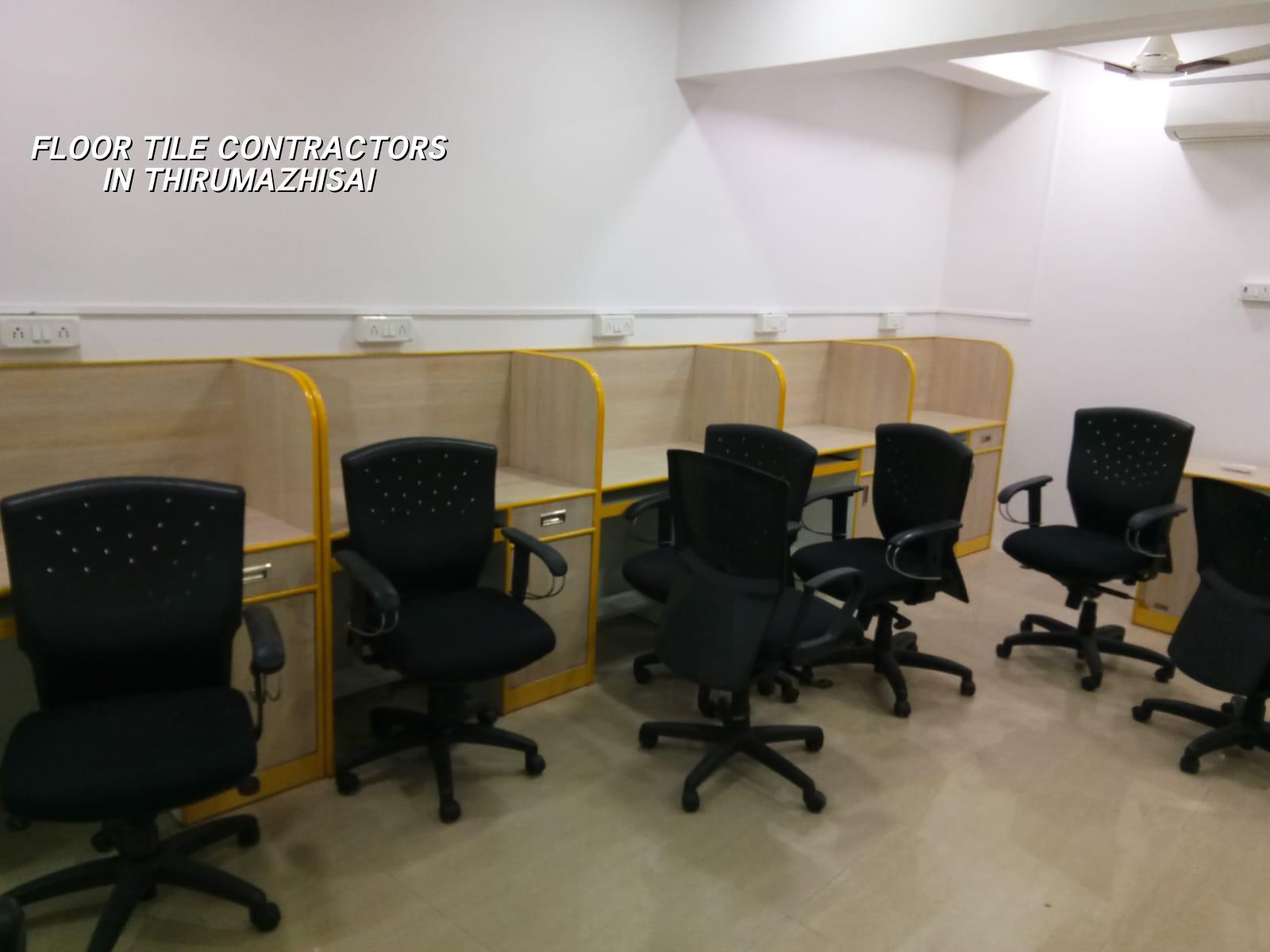
What makes Thirumazhisai different on site
Thirumazhisai sits on Chennai's western side, where many plots are newer, some streets are still getting regularised, and a lot of houses are built in phases. That matters for flooring. On a fresh plot, the slab may look dry and ready, but the moisture in new concrete still has to be checked before tile laying. On an existing house, we look for hollow patches, old adhesive residue, uneven screed, and cracks that move with the slab. A tile job can fail even when the tile itself is good.
The other local reality is access. In parts of Thirumazhisai, you may have enough space for stacking material, but not always for careless unloading. Tiles break in transit more often than people admit. A contractor who knows how to stage boxes, protect corners, and move material without dragging grit across the slab saves you money before fixing even begins.
Ground conditions also shape the work. In western Chennai, some plots are firmer than the low-lying southern belts, but that does not mean every floor is automatically ready for tile. If the base layer is not cured properly, or if a wet area has poor slope, the tile will reflect that mistake. We always treat flooring as a system: base, slope, adhesive, grout, movement joints, and the final cleaning all matter together.
How we choose the right tile system
For most homes, the decision starts with how the room is used. Bedrooms do not take the same abuse as kitchens, stair landings, or a small commercial front room with constant foot traffic. Ceramic tile can be sensible in low-traffic rooms if the finish and batch are right. Vitrified tile is common when people want better wear resistance and a cleaner joint line. In wet zones, slip resistance matters more than shine.
What we check before fixing
We do not start by asking which tile is the cheapest. We start by checking the slab level, the thickness available for finish build-up, the door clearances, and whether the existing floor has any sound issue. If the base is hollow, laying over it is a mistake. If the height is tight at the main door or balcony threshold, the tile thickness and screed depth need to be matched before work starts. People often discover this only after the tile is already on site.
For adhesive fixing, the substrate has to be clean and sound. Dust, laitance, and old paint all reduce bond. In wet areas and on large-format tiles, a correct adhesive is safer than cement slurry alone. We follow the manufacturer's coverage and curing time, and we check for lippage with a straight edge. A floor can look fine from standing height and still trip you at the joints.
- Site survey and measurement — We check room dimensions, levels, door clearances, and existing floor condition. This usually takes one visit.
- Tile selection and batch check — We verify shade, size variation, edge finish, and slip resistance before unloading the full lot. Small variation is normal; mixed batches are not.
- Base preparation — Loose mortar, dust, grease, and old adhesive are removed. If needed, a screed correction is done and allowed to cure.
- Tile laying and alignment — Tiles are fixed in line, joints are kept even, and slopes for bathrooms or balconies are set before the adhesive hardens.
- Grouting and curing — Joints are filled, the floor is left to cure, and heavy movement is kept off it for the stated period.
- Final check and handover — We inspect soundness, edge finish, cleaning, and any touch-up points before we call it complete.
What a fair contractor should show you first
If the page title says floor tile contractors in Thirumazhisai, you should still ask for proof of method, not just a promise. A serious contractor will show you the tile brand or approved sample, the adhesive type, the joint width, and how corners and thresholds will be handled. For a small house, these details decide whether the floor feels neat or rushed.
- A written tile size, shade, and finish note before purchase
- Base level correction plan if the slab is uneven
- Adhesive or bedding method stated clearly, not guessed on site
- Movement joint plan for larger rooms and long corridors
- Wet-area slope detail for toilets, utility spaces, and balconies
- Batch handling plan so replacement tiles match the lot already fixed
There is also a habit many homeowners pick up from bad advice: they compare only tile price per box. That misses the cost of waste, cutting, adhesive, skirting, grout, and base correction. A cheaper tile can become the expensive option if the size variation is poor or if the finish makes the room harder to maintain. In a house where elders or children walk barefoot, the finish should be judged by use, not by showroom shine alone.
Cost, rate bands, and the parts that move them
For flooring work in Chennai, the labour and material rate changes with tile type, room size, base condition, and access. A simple layout with standard ceramic or vitrified tile is usually cheaper than a mix of designer tiles, borders, and multiple cut lines. Wet areas and staircases also take more time. We do not quote a project total from memory. We prepare a BOQ so you can see what is material, what is labour, and what is a necessary extra.
As a working guide, flooring often sits inside the wider interior works range of ₹1,200 to ₹2,500 per sq ft, but that is only a broad bracket for fit-out work. Your actual floor tile rate will depend on the tile you choose, the condition of the slab, and whether the job includes removal of existing flooring. If the base needs correction, that is a real cost driver. So is access on a tight street, because carrying material by hand adds time and risk.
| Work item | Typical scope | What changes the rate |
|---|---|---|
| Basic tile fixing | Standard room floor with prepared base | Tile size, joint pattern, cutting, and room shape |
| Wet-area flooring | Toilet, utility, balcony or wash area | Slope work, drainage point, waterproofing interface |
| Old tile replacement | Removal, surface prep, new fixing | Breakage, debris removal, base repair, matching levels |
| Large-format tile work | Big tile sizes with tighter visual finish | Handling, substrate flatness, adhesive coverage, lippage control |
The honest limitation is this: a tile job is not the right fix when the slab itself is moving or the roof below is leaking. In that case, we first find the cause. A tile laid on a failing base just hides trouble for a short while. The common mistake is to pay for a finish before paying for the structure underneath it.
Where the work usually goes wrong
Most bad floors do not fail on day one. They fail after cleaning cycles, after the first wet season, or when furniture is moved across them. If the adhesive was spread too dry, sound pockets appear. If the base was dusty, the bond weakens. If the slope in a bathroom is lazy, water sits at the door and the grout line stains. If the layout was not planned, narrow slivers appear at one wall and the room looks unbalanced forever.
This is why we insist on a practical inspection order. First the base. Then the level. Then the tile batch. Then the joints. If the sequence is reversed, you end up trying to solve a structural problem with grout. That never works.
How we work
We handle flooring as part of our wider interior works and renovation service, with our civil engineers and site engineer checking the job from measurement to handover. If the floor is part of a new house, we can coordinate it with the residential build. If it is a refresh, we study the existing condition first so you know what can stay and what has to come out. For a BOQ-based quote or a site visit in Thirumazhisai, call us at +91 97107 13838 or write to info@shalomconstruction.com. Our office is at No. 45, 2nd Main Road, Abirami Nagar, Koladi (Landmark: Ratna Chamber), Thiruverkadu, Chennai – 600077.
Frequently Asked Questions
Good tile work is quiet. You notice it when the room feels even, the joints do not fight your eye, and the floor still looks right after months of mopping. That is the standard we work to.
Floor Tile Contractors in Thirumazhisai
Send us your room size, a photo of the existing floor, or a rough sketch, and we will tell you what needs fixing before tile work begins.
Request a Quote Call +91 97107 13838