


Floor Tile Contractors in Kundrathur
Floor tile contractors in Kundrathur are usually called when a new house is nearing handover, a kitchen floor has started sounding hollow, or an old room needs better cleaning and a cleaner edge line. In Kundrathur, the real question is not only who will lay the tile, but who will set the base right so the floor stays flat after the first monsoon.
We handle tile work with the same eye we use on structure and finishing. That matters, because most tile complaints start below the tile: uneven screed, dusty substrate, skipped curing, or a rushed slope near wet areas. If you want the floor to look straight on day one and still look straight after a year, the method matters more than the catalogue photo.
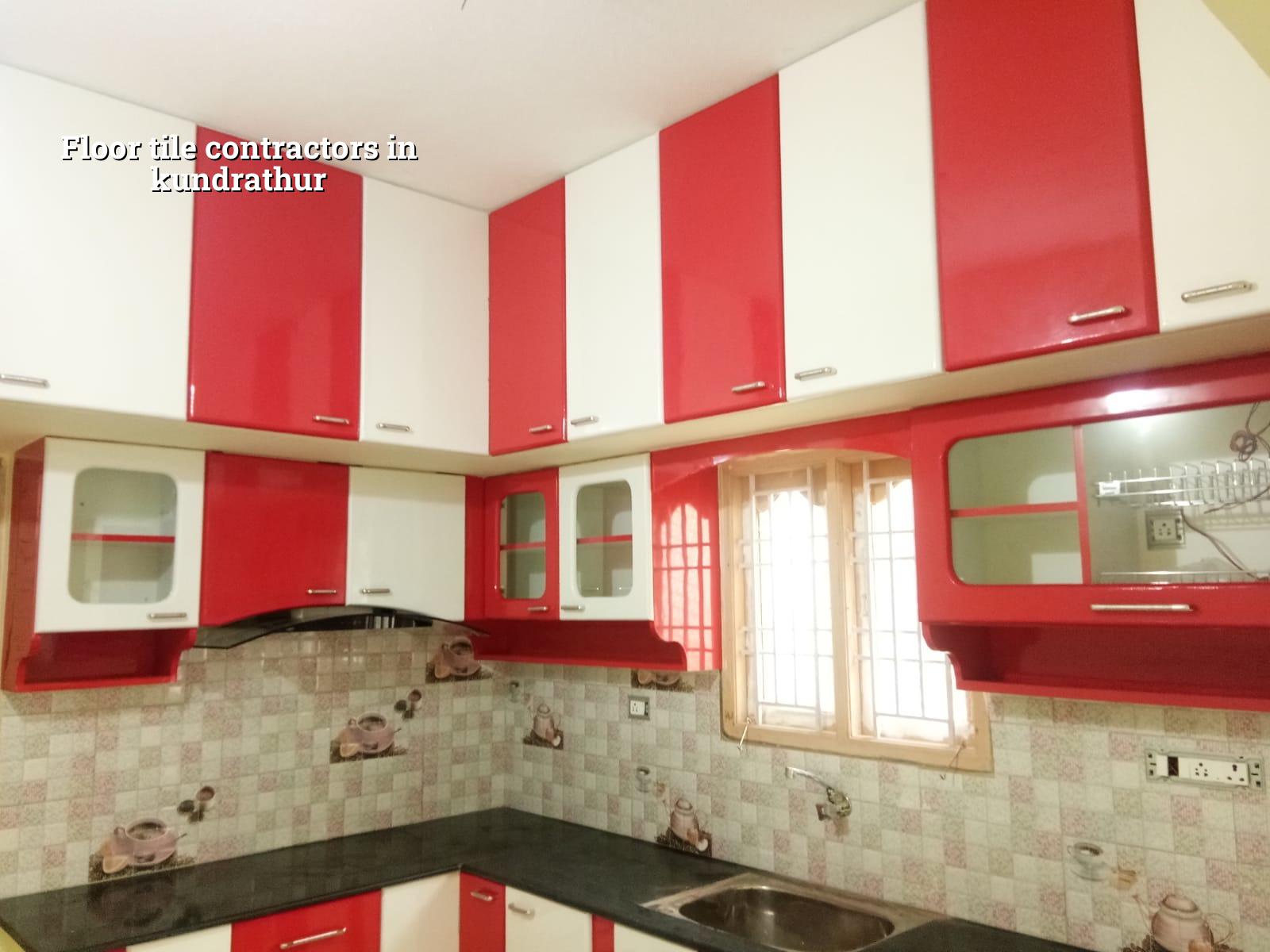
Kundrathur site conditions change the work
Kundrathur sits on the west side of Chennai, where many plots are still turning from open layouts into finished homes. That usually means mixed site conditions: one plot has decent access for bags and tiles, the next has a narrow approach where labour has to move material by hand. Some streets are still seeing new construction, so dust control, stacking space and timing for concrete mixer or tile delivery become part of the job, not a side issue. Because the area is outside the Corporation, the approval route and local site practice are usually through the municipality or town panchayat route, and the plot details decide the finish level more than any brochure promise.
What people in this side of the city often need is practical flooring, not decorative excess. A family may want vitrified tiles for easy cleaning, a kitchen that can take spills without staining, or a bathroom floor that drains properly instead of holding water at the edge. Those are different choices. The wrong tile can look fine in a showroom and still become slippery, noisy or hard to maintain in a home that sees daily use and wet footwear during the rainy months.
How we fix the base before the tile
Tile work is only as good as the base below it. We check the slab or screed for level, dust, hollows and moisture before we start. If the floor is not prepared, the tile adhesive or mortar bond fails in patches, and the first sign is usually a hollow sound when you tap it. In kitchens and bathrooms we look harder at slope, because water that sits in one corner keeps working on the joints and weakens the finish.
What a correct floor buildup needs
The usual sequence is simple, but each step has to be done properly. The base is cleaned, the level is checked, the cutting plan is marked, and the layout is started from a reference line so you don't end up with a sliver tile at the doorway. Joint width, tile size and the direction of the room all matter. In a long hall, running the grid along the longer side usually gives a calmer look. In a small bedroom, careless centering can leave awkward cuts at both edges.
- Check the substrate — We inspect the slab or screed, remove loose dust and mark hollow patches. This takes a few hours for one room, longer if repair is needed.
- Correct the level — Low spots are filled and slopes are planned for wet areas. If skipped, the tile line follows the defect.
- Set the layout — We mark the reference grid, decide cut positions and confirm tile direction before fixing starts.
- Fix and beat in the tiles — Tiles are laid with the right adhesive or mortar, pressed properly and checked for lippage as we go.
- Grout and clean — Joints are filled after the setting period, then the floor is cleaned so the final shade reads correctly.
What makes one tile job better than another?
People often compare only the tile brand. That misses the bigger differences. A good tile floor depends on substrate preparation, tile thickness, joint alignment, cutting accuracy, edge finishing and the movement joint plan where long stretches demand it. Bigger tiles look premium, but they are less forgiving on a wavy floor. Cheaper tiles may save money upfront, yet if the batch has size variation you spend more time hiding mismatch lines. In a busy home, especially where shoes, furniture and water are part of daily life, the practical choice is the one that balances finish, maintenance and repairability.
We also tell clients where not to save. Saving on the adhesive or on base correction is false economy. Saving on polishing detail around thresholds is false economy too. If you want the floor to last, spend first on the layer no one sees.
- Ask for the tile size, finish and batch shade before work starts.
- Check whether the floor will be laid over a prepared screed or directly on slab.
- Confirm the grout colour and joint width, not after fixing but before it begins.
- Look at cut placement near doors, pillars and wall edges.
- Ask how hollow patches will be handled if the existing floor is being re-tiled.
- For bathrooms and utility floors, confirm the slope direction and outlet point.
Labour rate, material choice and where the money goes
For tiling work, the labour part is only one part of the picture. Tile size, room shape, cutting work, base repair and site access all affect the final figure. On Chennai work, the rate is usually not discussed as a vague promise; it is fixed from a detailed BOQ after the room condition is checked. For interiors and fit-out, the site condition often changes the labour time more than the tile itself. We do not quote a total project price on a public page because the floor condition decides too much of it.
When the scope is only labour, the tile owner supplies the material. When it is material-plus-labour, we confirm the tile grade, quantity and waste allowance before buying. The mistake many people make is to buy exact square footage and forget cuts. In actual work, waste allowance matters. Corners, skirting and broken pieces during handling always add up.
| Work Type | Indicative Rate | What Changes It |
|---|---|---|
| Floor tile labour only | Varies by room condition | Base level, tile size, cutting and access |
| Standard residential construction | ₹1,900 – ₹2,300 per sq ft | Soil, foundation type, floors and finish level |
| Mid-premium residential | ₹2,300 – ₹2,800 per sq ft | Finish choice, detailing and span |
| Interior works | ₹1,200 – ₹2,500 per sq ft | Scope, material grade and site access |
Our inspection points before we start
Before fixing a single tile, we look at a few practical points on site. These are the things that decide whether the finish will hold up or become a complaint later. If you are comparing floor tile contractors in Kundrathur, this list is a useful check on what the contractor is actually paying attention to.
- Surface level and hollowness on the slab or screed
- Room dimensions against tile size and cut position
- Wet-area slope and outlet direction
- Door threshold height and transition to adjoining rooms
- Dust, curing condition and moisture on the base
- Access for material movement and waste removal
How we work on tile jobs
Our in-house civil team looks at the floor the way a builder should: base first, finish second. A site engineer is on site every working day, and when a client cannot visit we send weekly photo updates by WhatsApp. For tile work inside a larger residential or renovation project, we coordinate with the structural and finishing sequence so the floor is not damaged by later work. If you want us to check a room or price a tiling package with proper BOQ detail, call +91 97107 13838 or write to info@shalomconstruction.com. Our office is at No. 45, 2nd Main Road, Abirami Nagar, Koladi, Thiruverkadu, Chennai – 600077.
Frequently Asked Questions
If you're comparing options for tile work in this part of Chennai, don't start with the tile display alone. Start with the base, the cuts and the slope. That's what you live with.
Floor Tile Contractors in Kundrathur
Send us your room size, floor photo or site location, and we'll help you work out the right tile method, the likely labour scope and the next step.
Request a Quote Call +91 97107 13838