


Electrical Contractors in Chromepet
Electrical contractors in Chromepet are usually called when a house is being rebuilt, a flat needs a full rewire, or a new shop needs safe power from day one. In this part of GST Road, the work is not just about pulling cable. It is about load planning, neat routing, earthing, and making sure the board does not become a future fire point.
If you are comparing contractors, you probably already know the pain points: tripping MCBs, loose sockets, hidden joints, fan points added later, and bills that grow because no one planned circuits properly. This page will help you judge the scope, ask the right questions, and see what a proper electrical package should include before you sign anything.
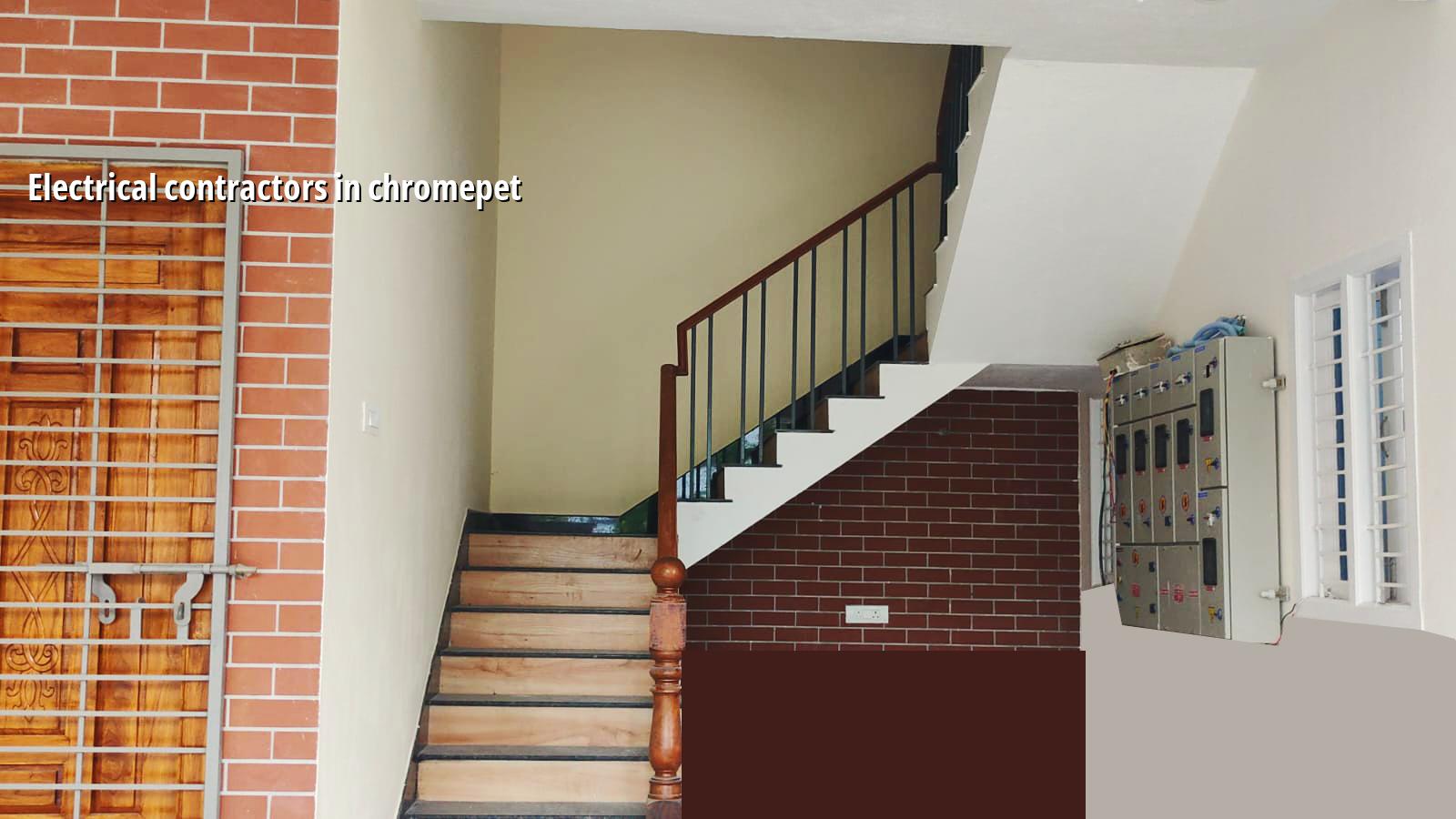
What Chromepet sites need
Chromepet has a dense mix of older houses, apartment blocks, rental units and commercial frontage along the railway and GST Road belt. That mix changes the electrical job. A 25-year-old house often has undersized wiring, mixed copper and aluminium patches, and boards tucked into awkward corners. A newer flat may be cleaner, but the problem shifts to load sharing, inverter backup, AC points and enough spare ways in the distribution board.
Access also matters. On a narrow residential street, material storage is limited and you cannot keep a shuttered shop open for the whole day while the main supply is off. That means the sequence has to be planned. We look at where the meter sits, how cables will run, where wet areas are, and whether the board can be placed where a person can actually reach it in an emergency.
Chromepet is also close to the airport side, so height-related work on larger buildings can bring extra checks from the authority side depending on the plot and the building height. We do not guess that part. We verify the plot situation, the building use, and the local approval route before we start the electrical layout.
How we plan the wiring
Good electrical work starts with the connected load, not with the fan and light points. We count the real appliances you plan to use: ACs, geysers, fridge, washing machine, water motor, oven, induction cooktop, work-from-home points, and outdoor lighting. Then we split them into sensible circuits. That is how you avoid one overloaded line feeding half the house.
Standards and practical details
For residential work, we follow the wiring and protection principles that fit IS 732, IS 3043, IS 694, IS 1554 and the relevant provisions of NBC 2016, while the building structure itself continues to follow the RCC and load standards used on the project. Earthing is not a paper item for us. It is a live safety system. The earth continuity has to be good, the resistance has to be checked, and the board has to be labelled so that someone can isolate a fault without trial and error.
We also pay attention to cable size, conduit routing, and the bending radius at corners. A cable forced through a tight bend or buried behind a wet wall will give you trouble later, usually when you are least ready for it. In Chennai heat and humidity, poor joints and loose terminations fail faster than people expect.
- Site check and load note — We inspect the rooms, board location, and appliance list. This usually takes one site visit and a short client call.
- Layout and circuit split — Points, switches, DB ways, earthing and concealed routes are marked. For a normal house, this is the stage where most mistakes are prevented.
- First-fix work — Conduit, boxes, chase filling and cable runs are done before plaster or gypsum work closes the wall. This is the messier stage and it cannot be rushed.
- Second-fix and testing — Switches, sockets, fixtures, MCBs, RCCB/ELCB protection, and final testing come last. We test before handover, not after the client has moved in.
What to ask a contractor before you hire one
People usually compare electrical contractors on price first. That is understandable, but it is not enough. A low quote can hide cheap accessories, no separate earthing for sensitive equipment, fewer circuits than needed, or no proper testing before handover. The question is not only what they can install. It is what they will refuse to compromise on.
- Ask for a circuit plan, not just a point count.
- Ask what wire brand and conductor size will be used for lights, sockets, geysers and ACs.
- Ask how many earth pits or earth connections are planned and how they will be tested.
- Ask whether an RCCB/ELCB will be included for shock protection.
- Ask how the contractor handles wet areas, outdoor points and the main board.
- Ask for a BOQ before work starts so the payment matches the actual scope.
- Ask who will be on site during first-fix, because one missing box can waste a full day.
The fair contract is the one that names material scope, labour scope, make and rating of accessories, testing, and the number of revisions allowed after layout approval. If a contractor is vague about all of that, the final bill usually becomes the place where the real price shows up.
Cost, scope and what changes the rate
For electrical work, there is no honest single rate for every house. The price moves with the number of points, wire quality, concealed or surface routing, number of circuits, main board size, earthing arrangement, and how much demolition or rework is needed. In a fresh residential electrical package, the cost often sits inside the wider interior or construction budget rather than as a separate flat figure.
For fit-out or renovation, the practical range is often closer to the interior works band in Chennai, which is ₹1,200 to ₹2,500 per sq ft, but that is only a starting point for the overall scope. A small rewiring job can cost more per square foot than a larger new house because the old wiring has to be removed carefully and the wall finishes repaired afterward. That is why we prepare a detailed BOQ before the contract is signed.
| Work head | What moves the price | What a proper BOQ should show |
|---|---|---|
| Wiring and conduits | Cable size, concealed or surface route, number of circuits | Point-wise cable quantity, conduit length, box count |
| Main board and protection | MCB count, RCCB inclusion, phase requirement | DB schedule, rating of each protective device |
| Earthing | Soil condition, number of earth points, building size | Earth pit details, test method, connection list |
| Fixtures and fittings | Brand, finish, LED type, fan regulators, weatherproofing | Item list with make, model class and quantity |
If your project is a home in Chromepet, the dangerous saving is usually on hidden work. Concealed wiring, proper earthing, and the main board are the places where you should not chase the cheapest quote. Saving on decorative plates or choosing a simpler light fitting is fine. Saving on the protective devices is where the risk starts.
Why the local site conditions matter
Chromepet is not a place where you can assume easy electrical work just because it is close to a main road. Many plots sit in tight residential pockets where materials have to be carried by hand, not wheeled in neatly. That affects labour time. If the power has to be cut for a changeover, neighbours will also notice, so the shutdown window has to be short and planned.
There is another local issue that clients underestimate: older homes here often have been altered in stages. A room may have one board from the original construction, one added later, and a few sockets fed from an extension line done by a different hand years ago. When we inspect such a site, we look for mismatched cable sizes, mixed colour coding, brittle insulation, and overloaded loops. Those are not cosmetic defects. They are fault paths.
For buildings near the airport side or for taller structures, the approval and safety coordination can involve more than just the wiring contractor. The electrical layout has to fit the approved building use, the board position has to make sense for maintenance, and the external services must be placed so that they do not create later clearance problems. That is why site-specific checking matters more than a generic checklist copied from another locality.
How we work
Our team handles the technical work in-house, with civil engineers, a structural engineer and an architect coordinating the job instead of passing it around. On electrical items, we plan the board, point layout and protective devices with the rest of the build so you do not get the usual clash between architecture and services. A site engineer is on site every working day, and if you cannot visit, we send weekly photo updates on WhatsApp. If you want to talk through your scope, call +91 97107 13838 or write to info@shalomconstruction.com. Our office is at No. 45, 2nd Main Road, Abirami Nagar, Koladi (Landmark: Ratna Chamber), Thiruverkadu, Chennai – 600077. You can also see our residential, renovation and interior works pages if your job is part of a larger project.
Frequently Asked Questions
When the wiring is planned properly, you stop noticing it. That is the point. If you want a site visit in Chromepet, we can inspect the board, the load and the route before any work starts.
Electrical Work in Chromepet
Share your floor plan, photos of the existing board, or just the list of appliances you want to run. We will help you shape the scope and prepare a BOQ-based quote.
Request a Quote Call +91 97107 13838