


Demolition Contractors in Vepery
If you need demolition contractors in Vepery, the first question is not how fast we can break the building. It is what must come down, what must stay live beside it, and how we keep the neighbour wall, transformer line, and narrow access from becoming the real problem.
Vepery has old buildings, tight streets, and very little tolerance for sloppy dismantling. We handle demolition with a proper sequence, written scope, and site controls that suit a dense central Chennai plot rather than a vacant edge-of-town site.
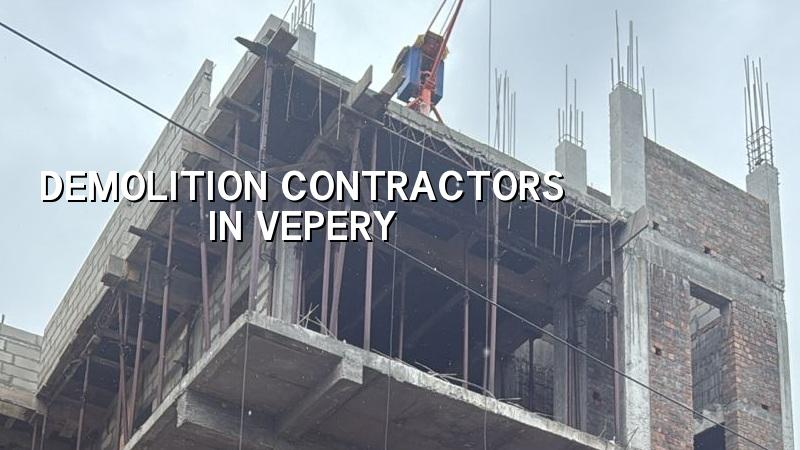
What Vepery sites ask for
Vepery is not the place where you can assume a truck will park outside, debris will fall neatly into a heap, and the work can run all day. It is a historic central neighbourhood with mixed old housing, commercial pockets, and streets that often leave no room for staging. On a demolition job here, access control is part of the work, not an afterthought. If the plot shares a wall with an occupied building, we plan the dismantling sequence from the top down so vibration and sudden releases stay under control.
That also means the approval path matters. Depending on the exact plot location, the building licence may come from the Greater Chennai Corporation or the relevant local body, while CMDA rules still sit behind the planning side. If the structure is near other services or abutting a busy road, we check for utility disconnection, safe material loading, and whether the owner needs extra clearances before the first slab is touched.
In older central areas like this, people often call us after a cracked wall, a redevelopment decision, or a tenant eviction matter. The common mistake is to start breaking without a clear sequence. That is how you get falling masonry, damaged adjoining property, and a site that becomes harder to clear than to demolish.
How demolition should be planned
Demolition is not just pulling down a building. We first look at structural type, age, adjoining ownership, access width, service lines, and whether the building has to be partly retained. An RCC framed house behaves very differently from a load-bearing masonry structure, and a shop front with a slab over it needs a different sequence again. We also check whether the work is simple mechanical demolition, careful manual dismantling, or a mix of both.
What we inspect first
Before a single brick is removed, we look at where the load is going, which walls are doing real structural work, and what might fall when one support is removed. In an older Vepery building, you can find patched repairs, added mezzanine floors, and service lines that do not match the original drawing. Those are the details that change the method.
If the site is close to occupied neighbours, we keep vibration and dust under watch. If the structure is partly in bad condition, we decide whether manual dismantling is safer than machine work. That choice usually costs more in labour, but it is cheaper than repairing a damaged boundary wall next door.
- Site survey and marking — 1 to 2 days to identify what stays, what goes, and where debris will move.
- Utility isolation — 1 to 3 days to disconnect power, water, and any active service lines before work starts.
- Controlled dismantling — typically 3 to 10 days for a small building, depending on size and access.
- Debris segregation and loading — runs alongside demolition so reusable material, metal, and rubble are separated.
- Final clearing and handover — 1 to 2 days to leave the site ready for surveying, excavation, or rebuilding.
Manual, mechanical, or both?
People usually ask for the cheapest method. That is fair. But cheap is not the same as sensible. Mechanical demolition is faster on open sites, yet in a dense lane it can be the wrong choice because the machine needs room, the falling debris needs a safe drop zone, and the operator needs clear sight lines. Manual dismantling is slower, but it gives control where the site has none.
The honest trade-off is this: if you want speed, machine work helps, but only when the plot is open enough and the surroundings are forgiving. If your site is hemmed in by neighbours, a staircase block, or a wall you cannot disturb, manual dismantling wins. We sometimes use a mixed method, starting with careful hand stripping of doors, windows, wiring, and slab edges, then moving to heavier removal once the risky parts are out.
- Check whether the building is RCC framed, load-bearing, or partly altered after the original construction.
- Confirm the approach width for labour, scaffolding, and debris removal.
- Ask for a written method statement, not just a breaking estimate.
- See how the contractor plans dust suppression and debris carting.
- Confirm that the adjoining owner will be protected before work begins.
- Make sure utilities are disconnected and documented.
Permits, dust, and the real cost drivers
For demolition in Chennai, the cost depends on what stands on the plot, how tight the site is, how much manual work is needed, and where the debris has to go. A small one-storey structure in an open site costs very differently from an old multi-room building in a congested street. Soil does not drive demolition pricing much, but access does, because difficult access means slower loading and more labour.
As a rule, demolition rates are quoted by structure and by scope, not as a neat national average. Where people get cheated is when the contractor gives a vague low figure and then adds charges for labour, loading, transport, or special handling after the work starts. A proper BOQ and written scope prevent that. If you later need rebuild work, we can also align the demolition stage with our residential or renovation teams so the next step is not delayed by a bad handover.
For older central Chennai sites, the real cost driver is often the site itself. Narrow roads mean smaller vehicles. Smaller vehicles mean more trips. More trips mean more time, more coordination, and a higher chance of neighbour complaints if the work is not supervised every day.
| Demolition type | Best for | What affects the price | Typical risk if done badly |
|---|---|---|---|
| Manual dismantling | Dense streets, shared walls, fragile adjoining structures | Labour time, hand loading, debris segregation | Cracks in neighbour walls, unsafe falls |
| Mechanical demolition | Open plots, clearer access, larger single structures | Machine access, operator time, clearance for loading | Excess vibration, uncontrolled debris spread |
| Selective demolition | When part of the building must remain | Protection work, careful sequencing, extra supervision | Damage to retained portions |
| Site clearing after demolition | Rebuild-ready plots | Debris volume, carting distance, disposal method | Delay in the next construction stage |
How we verify a contractor before work starts
If you are comparing demolition contractors, don’t ask only for the price. Ask how they will isolate services, who supervises each day, and what they do if they discover a concealed beam, tank, or adjoining crack. A fair contractor should show the scope in writing, explain the sequence, and say clearly what is excluded. That is what you need before payment starts.
We also advise you to check whether the contractor has planned for documents and handover. For a demolition job, the owner may need proof of safe completion, debris removal, and a clear site before the next survey or foundation work begins. If the building sits in a regulated or busy zone, ask who will deal with the local body and how long they expect the paperwork to take.
The wrong choice is usually the contractor who promises a one-line quote and starts quickly. The better choice is the one who slows down enough to inspect the site properly. That is where the hidden costs are found.
How we work
We handle demolition with our in-house civil team, a structural engineer, and site supervision every working day. We prepare the scope before we quote, keep the payment stages linked to milestones, and update you by WhatsApp if you cannot be on site. For central Chennai plots, that daily supervision matters more than a glossy promise. If you want to talk through a Vepery site, call +91 97107 13838 or write to contact us; we can review the site, the access, and the next build plan together.
Frequently Asked Questions
When a demolition site is handled properly, you notice it in the small things: the neighbour stays calm, the rubble leaves in order, and the next contractor can start without guessing what happened on day one. That is the standard we work to.
Talk to us about demolition in Vepery
Send the site details, and we’ll review the structure, access, and clearance plan before we quote. We can also coordinate the next rebuild stage after demolition.
Request a Quote Call +91 97107 13838