


Building Inspection Services in Mogappair
Building inspection services in Mogappair are for the moment you notice a crack, damp patch, or a floor that no longer feels right underfoot. You do not need a sales pitch then; you need a civil engineer to look at the building, separate cosmetic issues from structural ones, and tell you what must be fixed first.
We inspect homes, apartments, and mixed-use buildings in Mogappair with the same order we would use on our own work: first the visible symptoms, then the load path, then the water entry points, and finally the repairs that actually solve the problem. If you are planning a purchase, a renovation, or a lender review, this page will help you understand what an inspection should cover and what a fair report should contain.
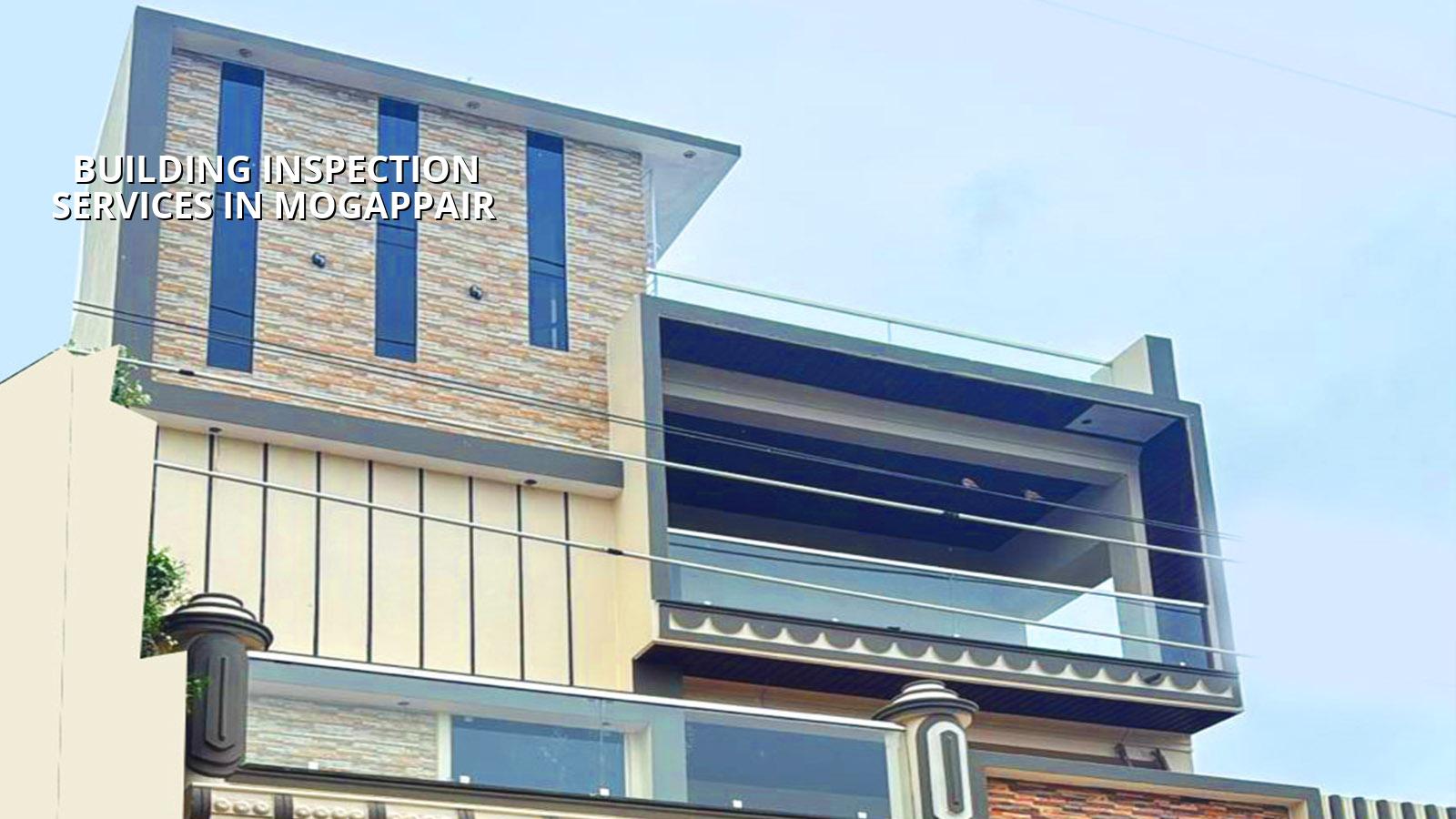
Mogappair and the kind of buildings here
Mogappair is a planned part of west Chennai, with regular plots, apartment blocks, and a fair number of older independent houses that have been altered over time. That matters during inspection, because many defects here are not from a single failure; they come from small changes made over years, like closing a balcony, adding a loft tank, changing plumbing runs, or raising the floor finish without checking drainage. Wide roads help access, but they do not prevent internal water seepage, settlement at service trenches, or cracks where old and new masonry meet.
The ground here is not the same story everywhere. In one street the building may sit on firm enough soil for a straightforward footing layout, while another plot may show a softer layer that asks for a different foundation decision. We never guess that from the road. If the inspection points to settlement, we look for patterns in cracks, floor slope, door distortion, and plinth dampness, then decide whether the next step is repair, testing, or a structural redesign under residential construction or renovation scope.
What we inspect and why it matters
A proper building inspection is not a quick walk-through with a torch. We check how the building carries load, where water enters, whether any member has already lost section, and whether the visible issue is hiding a larger one. Chennai’s climate does not forgive ignored seepage. Once water reaches reinforcement or stays trapped behind plaster, the repair cost grows faster than most owners expect, especially on terraces, toilets, sunshades, and the junctions around external walls.
Parts that deserve a close look
On a typical inspection in Mogappair, we spend time on columns, beams, slab edges, staircases, toilet sunken portions, terrace waterproofing, and the junctions where old masonry joins later additions. We also check settlement signs at the plinth, because the first clue is often a hairline crack near a door frame rather than a dramatic crack in the living room. The inspection also includes service lines if the complaint is seepage, because many owners keep repairing plaster while a leaking pipe inside the wall is still active.
- Document review — We begin with drawings, previous repair notes, and the building’s age. This usually takes the first visit.
- Visual survey — We map cracks, dampness, rust staining, floor slope, and any visible deflection, room by room.
- Member-by-member check — Columns, beams, slabs, stairs, and parapets are checked for distress and repair history.
- Cause finding — We separate structural movement, leakage, poor waterproofing, plumbing failure, and plaster issues.
- Report and next step — You get practical findings, not vague wording, so you can decide on repair, monitoring, or detailed analysis.
How to judge a good inspection report
If you are comparing firms, do not ask only for a “certificate” or a one-page opinion. Ask what was inspected, what was not opened up, and what evidence supports each finding. A fair report should tell you whether the issue is likely cosmetic, maintenance-related, or structural. It should also say when the answer is uncertain and more testing is needed. That honesty saves people from making expensive guesses.
- Cracks are marked by location, width, and direction, not by guesswork.
- Seepage is traced to a source, not only to a stained patch.
- Any recommended repair says why it is needed and what happens if it is skipped.
- If the problem may be foundation-related, the report says whether trial pits or soil investigation are the right next step.
- Structural advice should be backed by drawings, measurements, or observed distress, not by a sales line.
- The report should clearly say what needs urgent attention and what can be monitored.
Inspection sequence, time, and the usual trade-offs
Most owners want one answer quickly: “Is this serious?” Sometimes it is. Sometimes it is a maintenance problem that has been allowed to spread. The trade-off is simple. A fast visual inspection is enough when the symptoms are local and obvious. A deeper inspection takes longer, but it is the right call when cracks are widening, doors are binding, slabs sound hollow over a wide area, or a lender wants a written stability view. Skipping the deeper step can save a day and cost you a repair that was never going to work.
| Inspection stage | Typical duration | What you get |
|---|---|---|
| Initial visit | Same day to 2 days | Site observation, issue mapping, and scope of concern |
| Detailed inspection | 1 to 2 visits | Member checks, measurements, and cause analysis |
| Report preparation | 2 to 4 working days | Written findings, repair priority, and next-step advice |
| Repair planning | Depends on scope | BOQ and method for repair, strengthening, or renovation |
A full inspection is not the same as destructive testing. If the building looks stable and the issue is local, we keep it non-invasive. If the signs point to hidden damage, we tell you what opening-up is justified and what it will prove. That is where many owners get stuck: they want certainty without opening anything, but some answers only appear once you inspect beyond paint and plaster.
Approvals, reports, and when a simple check is not enough
For an existing building in Mogappair, the practical issue is usually not fresh planning approval. It is whether the building is safe to continue using, whether the repair needs an engineer’s report, and whether any change of use, extension, or structural alteration needs a proper drawing set. If you are buying, selling, or renovating, the documents that matter are the same ones that matter on a real job: drawings, previous repair records, photos, measurements, and a clear scope for the next work.
We also see a common mistake. People paint over cracks, patch a terrace once, then wait for the next monsoon. In the second week of rain, the same leak shows up at a different point because the source was never fixed. When the problem is recurrent, the right response is not a better paint film; it is an inspection that follows the water path and checks the substrate.
How we work
We handle inspections with our in-house civil engineers, structural engineer, and architect. A site engineer is on site every working day, and when a client cannot visit, we send photo updates by WhatsApp. For buildings that need repair or strengthening after inspection, we prepare a detailed BOQ before any contract is signed and keep the payment stages milestone-linked. If you need a site visit in Mogappair, call +91 97107 13838 or write to info@shalomconstruction.com; our office is at No. 45, 2nd Main Road, Abirami Nagar, Koladi, Thiruverkadu, Chennai – 600077, and we also work through our contact page for scheduled inspections.
Frequently Asked Questions
If your building in Mogappair has a crack, seepage, or a floor that does not feel right anymore, let us inspect it before the monsoon turns a small issue into a bigger one. We will tell you what is happening, what can wait, and what should be fixed now.
Building Inspection Services in Mogappair
Book a site visit or ask for a BOQ-based repair discussion after inspection.
Request a Quote Call +91 97107 13838