


Best Home Renovation in Karapakkam
A home renovation in Karapakkam starts with one question: what can stay, what must be repaired, and what should be rebuilt before you spend on finishes. If the wall has a crack, the bathroom leaks into the slab, or the kitchen plan never worked for your family, the right sequence matters more than the paint shade.
We work on occupied houses, old independent homes, partial floor upgrades and full-house remodelling. The real job is not decoration first. It is checking the structure, moisture paths, services and access, then deciding the safest way to get the house usable again.
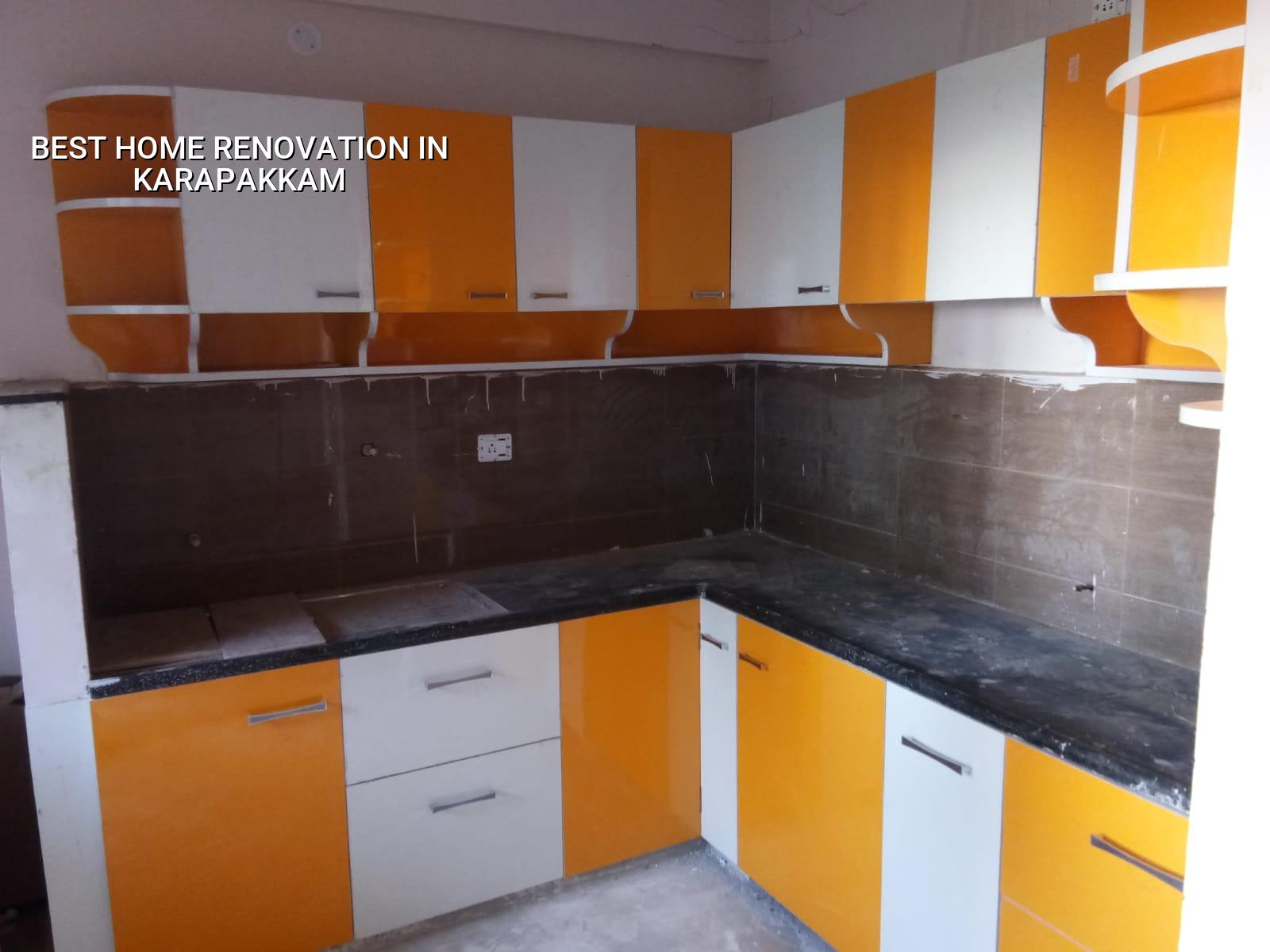
What Karapakkam changes on site
Karapakkam sits on the OMR side of Chennai, where many homes grew in phases. One room gets added, the staircase gets enclosed, wiring gets extended, and the roof or bathroom detail is never revisited properly. That is why renovation here often starts with hidden defects, not visible ones. In a lot of plots, the first thing we check is where water has been entering over the years, because a small seepage line can mean damaged plaster, rusted reinforcement and swelling joinery long before the owner notices a stain.
The other local reality is access. Some streets are easy enough for a small vehicle, but material stacking space is still tight, especially once labour, sand, cement and debris all share the same frontage. In an occupied house, that decides whether we do the work in phases or ask you to vacate for a short stretch. If you ignore access, the schedule slips and neighbours get annoyed. On a renovation job, that can be enough to stop work for a day.
Karapakkam also sees heavy monsoon stress because the broader OMR belt has pockets that hold water. That means floor levels, bathroom slopes, terrace drains and external rainwater paths are not minor details. They are part of the decision, right alongside the tiles.
What we inspect before touching finishes
Renovation is only safe when the existing building is read properly. We start with the parts that tell the truth: cracks, damp patches, rust stains, sagging door frames, leaking toilets, loose parapet plaster and the condition of old electrical lines. For homes that have been altered more than once, we also check whether the earlier work respected load paths or just covered problems up.
Engineering checks that matter
Our in-house civil engineers look at the building as a system. If we suspect structural distress, we do not recommend cosmetic work first. We examine slabs, beams, columns, lintels and junctions, then decide whether the issue is local repair, partial strengthening or a bigger renovation plan. For RCC work, we follow IS 456:2000. For loads and general planning, IS 875 and NBC 2016 guide the technical side. In Chennai, seismic design is not a casual add-on either; IS 1893:2016 matters when structural changes are being planned. If the building needs a stability certificate or a structural opinion for a lender or approval file, that has to come from proper inspection, not from guesswork.
We also look at services. Old concealed wiring, undersized plumbing lines and tired overhead tank arrangements create repeated failure. People often want a bathroom change and a kitchen facelift, but once the lines are opened up, the real problem shows up in the piping route or the earthing. That is normal. It is also why the first estimate for renovation is never the final one until the BOQ is prepared.
- Site inspection — We visit, photograph defects and note access constraints. This usually takes one visit, sometimes two for larger houses.
- Condition assessment — We check moisture, cracks, slab edges, service lines and any prior alterations. A serious issue found here changes the scope, as it should.
- BOQ and sequence — We prepare the item-wise bill of quantities, so you can see what is repair, what is replacement and what is optional.
- Execution in phases — Demolition, civil repair, MEP changes, waterproofing and finishes happen in the right order, with weekly updates if you cannot be on site.
- Final checks — We test doors, slopes, switch points, leak points and finish lines before handover.
How to judge a renovation contractor
If you are searching for the best home renovation in Karapakkam, the real question is not who talks the biggest. It is who can show you a proper process before the first hammer hits the wall. Ask for the scope in writing. Ask what will be removed, repaired, replaced and retained. Ask who is supervising the site each day. A renovation without daily supervision turns into a patchwork of small decisions made by labour alone.
We tell people to ask for the BOQ before signing anything. That document should separate demolition, masonry repair, plaster, waterproofing, electrical, plumbing, tiles, painting and any carpentry or interior work. If everything sits under one line item, you cannot tell where savings are sensible and where a cheap rate is hiding a shortcut.
- Check whether the contractor inspects the existing structure before pricing.
- See if the quotation separates civil repair from interior finishes.
- Ask who will be on site every working day.
- Confirm how debris removal and cleaning are handled.
- Look for a milestone-linked payment schedule, not a lump demand at the start.
- Ask what happens if seepage appears after a bathroom or terrace is opened.
- Read the contract for exclusions, especially electrical rewiring and waterproofing.
Costs, stages and where money goes
Renovation cost in Chennai moves with what you are changing, not with the word “renovation” itself. Light cosmetic work costs far less than a full house with floor replacement, bathroom rebuilds and wiring changes. For interior works, the indicative rate is ₹1,200–₹2,500 per sq ft. Painting with labour and standard emulsion is ₹25–₹45 per sq ft. If the work includes structural repair or major civil changes, the number shifts because the foundation, slab or service route may need attention too. Soil, access, number of floors, span, finish level and site constraints all affect the figure, and the BOQ settles the real cost before any contract.
| Renovation head | What it covers | Typical decision point |
|---|---|---|
| Demolition and removal | Breaking old tile, plaster, partitions and carrying debris out | Needed when hidden work must be accessed properly |
| Civil repair | Crack repair, plaster patching, slab edge and beam touch-up | Chosen after condition assessment, not before |
| Services | Electrical rewiring, plumbing changes, earthing, fixtures | Needed when old lines are unsafe or badly routed |
| Finishes | Flooring, wall finish, painting, carpentry, doors, wardrobes | Picked after the civil and service work is frozen |
A sensible renovation plan usually avoids opening everything at once. That saves money only on paper. In practice, it creates rework. The better trade-off is to open the areas where the defect is real, spend on waterproofing where water actually enters, and leave healthy parts of the house alone. The case against a full gut renovation is simple: it costs more, it takes longer, and if the family is living in the house, it is hard to manage. The case for it is also simple: if the house has repeated seepage, old wiring and several poor additions, partial repairs can become a yearly expense.
How we handle the work
We keep the technical work in-house, so the architect, structural engineer and site engineer are looking at the same problem. A site engineer is on site every working day. If you cannot visit, we send weekly photo updates by WhatsApp. Mr. D. Salamon Ashok Rajan reviews the project direction personally, which helps when the job needs a practical call instead of a polite one. For a renovation enquiry, we usually begin with a site visit and a rough scope discussion, then move to BOQ and schedule only after the existing building has been read properly. You can call us on +91 97107 13838 or write to info@shalomconstruction.com.
Frequently Asked Questions
If your house in Karapakkam needs more than a coat of paint, start with the building, not the finish sample. We can inspect the site, tell you what is worth keeping and prepare a BOQ that shows the real work before you commit.
Home Renovation in Karapakkam
Book a site visit and we will map the repairs, finishes and sequence before you sign anything.
Request a Quote Call +91 97107 13838