


Best Builders in Thiruvanmiyur
If you're comparing the best builders in Thiruvanmiyur, you're probably trying to avoid a costly mistake on a coastal plot where the finish, the concrete cover, and the contract details all matter. That is the right instinct.
Thiruvanmiyur asks for more than neat drawings. You need a builder who understands salt-laden air, tight site access on older streets, and the approval route for your specific plot. We work across Chennai with in-house engineers, a weekly update process, and BOQ-based contracts, so you can compare builders on facts instead of promises.
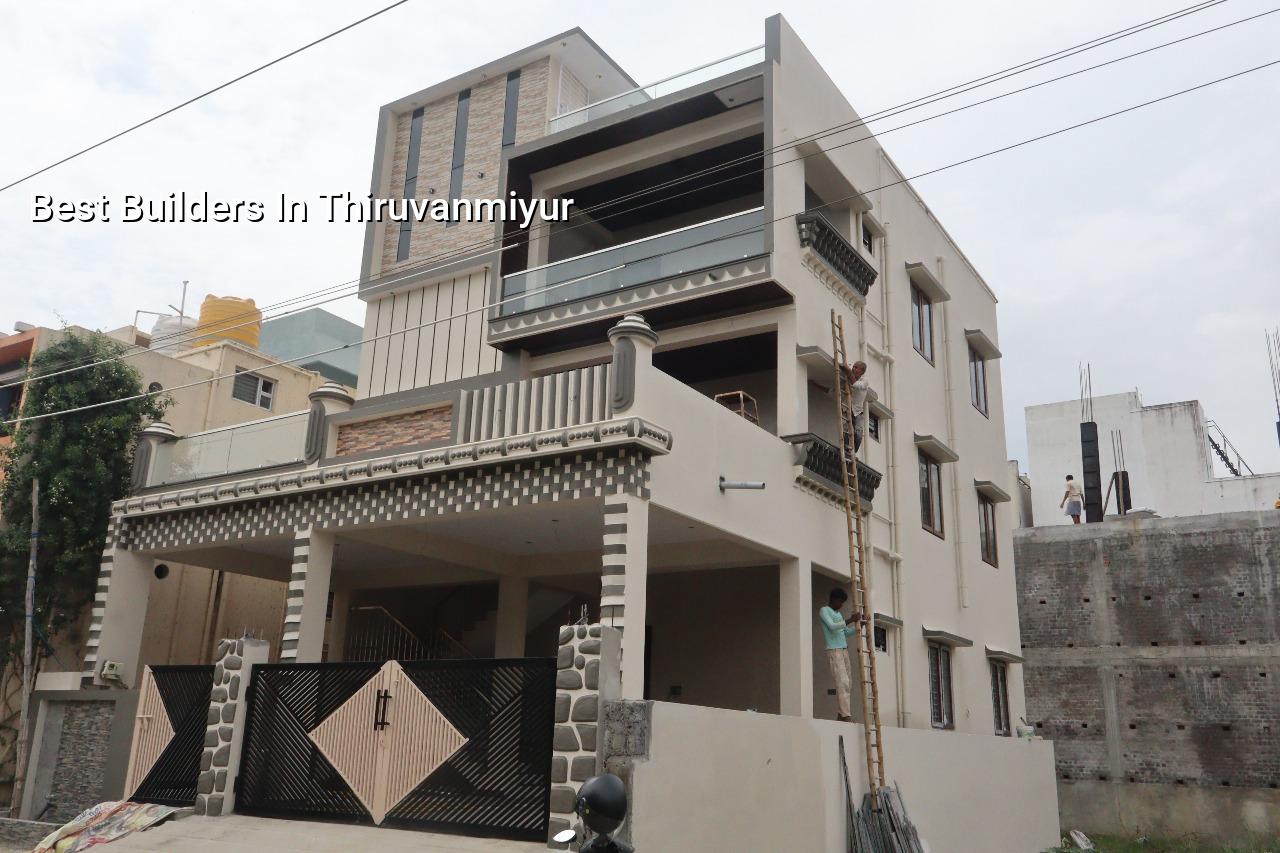
What makes a Thiruvanmiyur project different
Thiruvanmiyur sits on Chennai's coastal side, so corrosion control is not a luxury. For homes near the seafront, we think about reinforcement cover, concrete quality, exterior coating, and how rainwater leaves the site during the northeast monsoon. A neat elevation means very little if the parapet starts staining in a few seasons or the driveway holds water after every hard shower.
The other reality is the street pattern. Many plots here sit in older residential pockets with limited space to stage steel, sand, shuttering, and labour. A ready-mix truck cannot always wait around, and that changes the pour plan. On a cramped site, good sequencing matters as much as good material.
Approvals also depend on the exact plot. CMDA is the planning authority in the Chennai Metropolitan Area, while the building licence comes from the local body that governs your site. For Thiruvanmiyur, we check the authority, the documentation, and any special condition tied to your road width or building height before we promise dates.
How we judge a builder before you sign
People often ask us how to tell a serious builder from a smooth talker. We tell them to ask for the BOQ, the schedule, the payment stages, and the people who will actually be on site. A builder who cannot explain concrete grade, curing, or what happens if a wall line shifts by a few millimetres is asking you to trust style over substance.
Since you are likely comparing firms, this is the test we would use ourselves. Don't look at just the quotation figure. Look at what is included, what is missing, and what gets converted into a variation later. A fair contract should spell out materials, labour scope, milestone payments, structural responsibility, finishing level, and the process for changes you request after work begins.
What to ask for before you decide
Ask for the structural drawing set, the architectural drawings, and the BOQ before you pay an advance. Ask who prepares the foundation design and whether a soil investigation will be done for your plot. In Chennai, that cheap test is worth more than a guess, because soft ground, filled land, or a high water-retaining patch can change the foundation system completely.
If the answer is vague, walk away. Good builders don't hide behind general talk. They show you the sequence, the documents, and the responsibility split between architect, structural engineer, site engineer, and client.
- Site study and soil check — We inspect access, boundary condition, drainage, and soil report needs first. This usually takes a few days, not weeks.
- Concept and drawings — The architect and structural engineer align the plan, beam layout, and service routes. Expect revision rounds here; it saves money later.
- BOQ and contract — We freeze the scope, payment stages, and inclusions before signing. This is where hidden cost usually gets caught.
- Execution and checks — Foundation, RCC, masonry, plastering, services, and finish work proceed with site supervision every working day.
- Handover and closeout — We walk you through snag corrections, documentation, and final measurements before handover.
Materials and workmanship that hold up here
For a coastal Chennai home, the wrong saving shows up fast. Concrete that is too wet, poor cover to steel, weak waterproofing at the terrace, or cheap exterior paint will all make themselves known. Salt and rain don't care about a neat brochure photo.
We keep an eye on the small things clients often miss: bar bending accuracy, shuttering line and level, curing time, slope on bathroom and terrace floors, and the junction between masonry and RCC. The last one causes more cracks than people expect. If the junction is treated casually, a fine crack appears and then water follows it.
What we check on site
A proper site check is not a walk-around with a phone camera. We look at reinforcement placement before pouring, the line of columns, plumbing sleeves before slab casting, slope formation in wet areas, and waterproofing preparation on the terrace. In the second week of monsoon, you can tell who paid attention. Water will find the weakest corner first.
- Reinforcement cover and spacing checked before every RCC pour
- Foundation choice matched to the soil report, not to habit
- Rainwater pipes and terrace slopes planned before plaster starts
- Plinth level fixed with site drainage in mind
- Weekly photo updates shared on WhatsApp for clients who cannot visit
- Milestone-linked payment terms written into the contract
Cost, approvals and the trade-off you have to face
If you are comparing builders on rate alone, the number is only the starting point. For standard residential construction in Chennai, the indicative range is ₹1,900 to ₹2,300 per sq ft, mid-premium is ₹2,300 to ₹2,800, and premium or luxury runs ₹2,800 to ₹3,500+ per sq ft. That rate moves with soil and foundation type, number of floors, span, finish level, and site access. The BOQ settles the real figure before any contract.
The trade-off is simple. A lower quote may look attractive if you want to reduce the first payment. The danger is that it often hides exclusions, lighter specification, or repeated variation claims once work starts. A more disciplined builder may look costlier, but the price is easier to control because the drawings and quantities are clear.
We would not recommend a build if you are not ready to fix the scope early. Thiruvanmiyur sites can already be tight. If you add changing requirements every week, the schedule slips and the finish quality suffers. Homeowners usually feel this in the last 15 per cent of the job, when decisions are rushed and everyone is tired.
| What you should check | Why it matters | What a fair builder shows |
|---|---|---|
| BOQ before signing | Stops hidden extras later | Item-wise quantity and scope list |
| Soil investigation | Foundation must suit the plot | Test before foundation design |
| Site engineer presence | Work quality changes daily | Named engineer on site every working day |
| Payment stages | Controls risk for both sides | Milestone-linked contract terms |
| Approval path | Prevents delays and redesign | Authority identified for that plot |
How we work on a home build
We start with the plot, not the sales pitch. Our in-house civil engineers, structural engineer, and architect handle the technical work, and a site engineer stays on site every working day. The Managing Director, Mr. D. Salamon Ashok Rajan, reviews projects personally. For clients who cannot visit often, we send weekly photo updates by WhatsApp, and we keep the payment stages tied to progress.
If you want to compare notes on a home in Thiruvanmiyur, send the drawings or the plot details first. We can help you see where the scope is unclear and what needs to be confirmed before money starts moving. Call +91 97107 13838 or write to info@shalomconstruction.com. Our office is at No. 45, 2nd Main Road, Abirami Nagar, Koladi, Thiruverkadu, Chennai – 600077.
Frequently Asked Questions
Good building work should feel calm, even when the site is busy. That calm comes from clear drawings, honest quantities, and people who notice the small things before they become repairs.
Talk to us about your Thiruvanmiyur build
Send your plot details or drawings and we'll tell you what needs checking before the contract starts.
Request a Quote Call +91 97107 13838