


Waterproofing Contractors in Thiruvanmiyur
If your ceiling is showing a damp patch after the northeast monsoon, waterproofing contractors in Thiruvanmiyur should be looking at the source, not just painting over the stain. In this belt, leakage often starts at the terrace edge, pipe penetrations, balcony junctions or an old bathroom slope that never drained properly.
You need a contractor who will trace the failure, open the right spots, and say when a coating will help and when the slab or joint needs proper repair. We work that way, because a wrong repair here usually comes back in the next rainy spell.
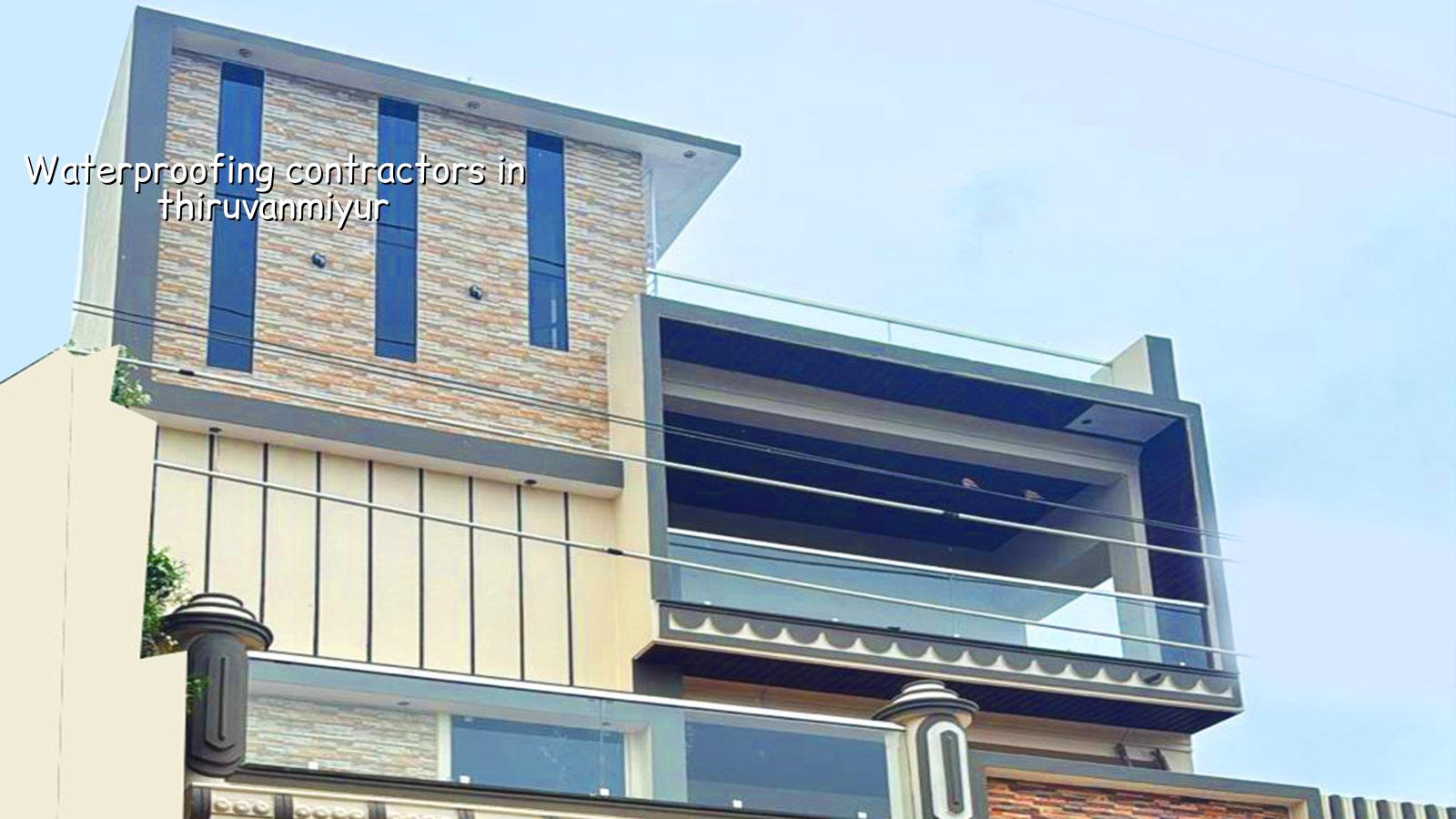
What makes this area different
Thiruvanmiyur sits close to the coast, so wind-driven rain and salt-laden air both matter. That changes the way cracks age, the way steel starts rusting at exposed edges, and the way external coatings fail if the surface preparation is rushed. On terrace jobs, we also watch parapet walls, rainwater downpipe joints and old junction boxes, because those are the places that keep leaking after the “main” surface has been coated.
Many homes here are older independent houses or ground-plus-one buildings with a few repair layers already on them. That means we do not assume the last contractor got the slope right, or that the existing screed is still bonded. If water is ponding on the terrace after a shower, the problem is not cosmetic. It is a drainage decision that should have been made before the finish coat went on.
What fails first
Leakage is rarely a single defect. It usually begins with a hairline crack, a failed junction, a weak sunken slab corner, or a bathroom waterproofing layer that was cut short at the wall. A terrace may look fine in summer and still drip in monsoon because standing water stays for hours on a weak patch and finds the path through a joint or honeycombed pocket.
Where we inspect first
We start with the leak pattern inside the house and work backwards. The stain line on a bedroom ceiling tells us more than a fresh coat of white paint. Then we check the terrace slope, floor waste points, parapet-wall junctions, expansion joints, external cracks and the path of rainwater from the roof edge to the downpipe. In bathrooms, we look at tile joints, pipe collars, sunken slab transitions and the door threshold.
- Visit and marking — We inspect the damaged areas, mark the wet zones and note whether the issue is active during rain or even when the line is idle.
- Surface opening — Loose plaster, weak screed or cracked tile zones are opened only where needed, usually over one to two working days for a typical home repair.
- Substrate repair — Cracks are chased and filled, hollow portions are removed, and slopes are corrected where water is lying. This stage takes the time it takes; rushing it is why many repairs fail.
- Waterproofing application — We apply the chosen system after proper drying, curing and priming. Depending on the area, this may cover a terrace, a bathroom, a balcony edge or an external wall face.
- Ponding and hold test — The treated area is tested with water before handover so we can see whether the leak path has been closed, not just hidden.
Pick the right system, not the loudest one
The right waterproofing method depends on the surface condition, the age of the building, and how the area is used. A terrace that gets foot traffic needs a different finish from a bathroom that stays tiled. A crack at a parapet wall needs a repair detail, not just a membrane. We generally prefer a system that fits the defect, because a thick coat over a bad slope only traps water longer.
The common mistake is buying a branded product first and asking the contractor to “make it work” everywhere. That is backwards. A good contractor explains why one area needs crack treatment, another needs a polymer-modified screed, and another needs only a careful seal at the pipe sleeve. In our experience, the strongest-looking sales pitch often goes with the weakest diagnosis.
- Ask what the leak source is before any quotation is final.
- Check whether the contractor will open weak areas, not just coat over them.
- Confirm how the surface will be dried before application.
- See whether the proposal includes slope correction, crack treatment and ponding test.
- Get the exact scope for terrace, toilet, balcony and external wall work separately.
- Ask what happens if fresh seepage appears after the first monsoon shower.
Materials, preparation and failure modes
Most waterproofing failures come from three things: poor cleaning, weak bonding and skipped detailing at joints. Dust and laitance stop the coating from biting into the slab. Wet patches under a coating trap moisture. Open joints at pipe collars and wall-floor corners let water travel behind the finished layer. If the base is already moving or cracked badly, a surface coat alone will not survive long.
| Area | What usually fails | What a proper repair includes |
|---|---|---|
| Terrace | Ponding, cracked screed, parapet junctions | Surface cleaning, crack treatment, slope correction, membrane or coating, ponding test |
| Bathroom | Floor waste, pipe collars, wall-floor corner | Open weak tiles, seal penetrations, rebuild slopes, watertight junction detailing |
| Balcony | Edge cracks, drain mouth leakage | Edge repair, drain detailing, protective top layer, proper fall to outlet |
| External wall | Hairline cracks, patchy plaster, window sill seepage | Crack sealing, plaster repair, compatible coating, attention to sill and frame joints |
Cost, time and approvals
For waterproofing work, the price is not a fixed number until the inspection is done. What moves it is the size of the affected area, whether tiles must be removed, how much crack repair is needed, how badly the slope has failed, and how easy the site access is. On Chennai projects, labour, preparation time and testing often matter more than the coating material itself.
For broader residential work, our rates stay within the company’s Chennai ranges: standard residential construction at ₹1,900–₹2,300 per sq ft, mid-premium at ₹2,300–₹2,800 per sq ft, premium at ₹2,800–₹3,500+ per sq ft, and interior works at ₹1,200–₹2,500 per sq ft. For waterproofing alone, we do not publish a flat total because the BOQ has to show what is included and what is not. That keeps the final bill honest.
In Chennai Metropolitan Area projects, approvals and repair scope are not the same thing. If the job is only a repair, we may not be dealing with a new building licence. If the work touches structural repair, terrace reconstruction or added built-up area, the approval route may change, and we check that before advising you to start. That is better than discovering a paperwork issue after material is already on site.
How we work on site
We send a site engineer every working day, and the technical work is handled in-house by our civil engineers, structural engineer and architect. For clients who cannot visit, we send weekly photo updates by WhatsApp. The contract carries a milestone-linked payment schedule, and the BOQ is detailed before anyone signs. If your repair sits near a major leak, we will tell you plainly whether a local patch is sensible or whether opening a larger area now will save you from doing it again in six months. You can call us on +91 97107 13838 or write to info@shalomconstruction.com.
Frequently Asked Questions
Some leakage jobs are simple. Many are not. If you want the repair done once, the first visit should tell the truth about the slab, the slope and the joints, not just the paint stain inside the room.
Waterproofing Contractors in Thiruvanmiyur
Send us the leak photos, or ask for a site visit and BOQ-based quote. We’ll inspect the source and tell you what needs opening before any work starts.
Request a Quote Call +91 97107 13838