


Plumbing Contractors in Gerugambakkam
When you need plumbing contractors in Gerugambakkam, the real question is not just who can run pipe work tomorrow. It is who will keep pressure, slope, access and leakage control in mind before the wall gets closed.
We write this page for someone planning a new house, a bathroom repair or a full rework after a leak. In this part of west Chennai, the wrong pipe route or a bad floor trap detail is cheap to install and expensive to live with. We’ll show you what to check, what usually fails, and how a proper plumbing scope is put into a contract.
What Gerugambakkam changes on site
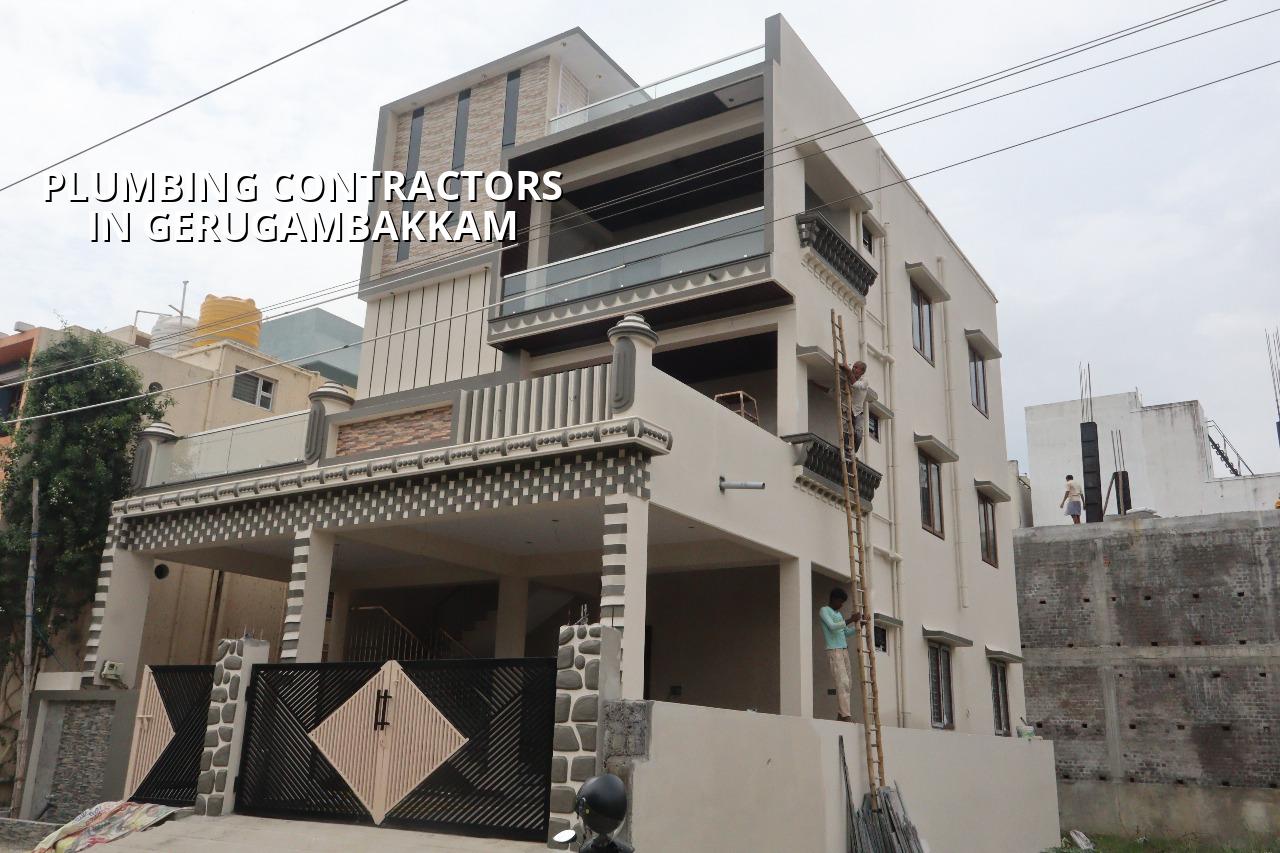
Gerugambakkam is a fast-growing west Chennai locality with a mix of new layouts, independent houses and ongoing builds. The streets are not always wide, and many plots are still being developed in phases, so material stacking, tanker access and debris removal need planning. On a tight site, a plumber who works only by habit can block other trades, trap a line behind a beam or leave no access for future maintenance.
The ground in many west-side pockets is firmer than the low-lying eastern belts, but that does not mean drainage can be treated casually. We still look at finished floor level, rainwater path, sump location and the route taken by the underground drainage line. If the plot is joined to a common drain or a septic arrangement, the line levels have to work before flooring starts, not after tiles are laid.
For a house in a developing layout, the bigger issue is coordination. Plumbing has to fit with the structural drawings, the kitchen and toilet positions, and the municipal or local body connection that is actually available for that street. A neat plumbing drawing can still fail if the floor trap sits in the wrong place or the inspection chamber is too close to a compound wall.
The pipe work that gets people into trouble
Most plumbing failures we are called for are not dramatic. They start with a slow seep at a joint, a bad gradient in the waste line, or a concealed pipe that was tested in air but not under real water pressure. In a new house, the common mistake is to close the wall before pressure testing is complete. In an older home, it is to patch the leak without checking whether the pipe has aged all along that run.
What a correct plumbing scope should cover
For residential work, we normally separate the scope into water supply, soil and waste lines, rainwater lines, sanitary fixtures, the sump-to-overhead tank line, and the external connection to the drain or septic system. Each part fails differently. Supply lines show drips, loose fittings and hidden wet patches. Waste lines show smell, gurgling and slow discharge. Rainwater lines fail in monsoon when leaves, cement dust or bad slope block the path.
Pipe size, material and layout matter more than sales talk. CPVC or UPVC may suit some internal runs, while exposed or serviceable sections need a layout that can be inspected later. We look for proper supports, clean bends, accessible valves and enough room around fittings that will one day need replacement. A concealed valve behind a cupboard panel is acceptable only if the panel can actually be removed without breaking carpentry.
- Mark the routes — 1 to 2 days for a house; we freeze toilet, kitchen, sink and rainwater lines before slab or plaster work starts.
- Fix sleeves, slopes and outlets — 2 to 4 days; pipe passes through beams or walls only where the structure allows it and the line can still be serviced.
- Lay the rough plumbing — 3 to 7 days depending on size; underground drain, concealed supply, vent and tank connections go in before finishes.
- Pressure test and correct — 1 to 2 days; we test water lines and check waste flow so a leak is not buried behind tile and paint.
- Install fixtures and final fit-off — 2 to 5 days; taps, closets, basins, mixers, pumps and accessories are fixed after flooring and wall finish are ready.
How to verify a plumber before you sign
If you are comparing firms, ask for the drawings, the pipe schedule and the BOQ before you pay an advance. A fair contractor can explain where each line runs, what the pipe material is, which fixtures are included and how pressure testing will be recorded. If the answer is only “we’ll manage,” keep asking. That phrase hides most of the risk.
Do not choose on the lowest labour quote alone. In plumbing, the cheap option often trims the things you cannot see: pipe grade, fitting quality, venting, trap detail, supports and testing time. Those are the very things that stop smell, backflow and hidden leakage.
- Ask for the exact pipe material for supply, waste and rainwater lines.
- Check whether pressure testing is written into the quote, not promised casually.
- Confirm who supplies fixtures, valves, traps and grating covers.
- Look for a clear line on wall-chasing, core cutting and making good.
- Ask how inspection chambers and cleanouts will remain reachable later.
- Make sure the plumber coordinates with the civil and tile teams before closing work.
Cost, approvals and the small details that change the bill
Plumbing costs in a house do not come from one flat rate. They move with the number of toilets, the length of concealed lines, the type of fittings, the floor count, the pump arrangement and how easy the site is to access. For a full residential job, plumbing is usually folded into the wider construction BOQ, and that is the right way to do it. A proper BOQ settles the actual figure before the contract is signed.
For Chennai work, the approval side also matters. In a new build, plumbing drawings and drainage details are part of the document set reviewed alongside the architectural and structural drawings. The local body issuing the licence depends on where the plot sits, while CMDA rules and Tamil Nadu rainwater harvesting requirements still shape the final layout. If the plot is near a service lane or a narrow road, the route for sewer connection, tanker access and future maintenance has to be thought through early.
| Plumbing item | What usually affects it | Practical note |
|---|---|---|
| Internal water supply | Pipe length, bends, fixtures, concealed runs | Test before plaster and again before handover |
| Drainage and waste | Toilet count, floor levels, venting, chamber position | Bad slope causes smell and slow discharge |
| Rainwater lines | Roof area, downpipe positions, storage or recharge point | Keep access for cleaning before monsoon |
| Pump and tank connections | Sump size, head height, wiring route, valve layout | Leave room for service after occupancy |
How we handle plumbing work
We keep the plumbing scope inside the main construction team, so the civil engineer, structural engineer and site engineer are all seeing the same drawings. That saves time on site and avoids the old problem where one trade closes a chase and another trade later discovers the pipe was never checked. We prepare a BOQ, write the milestone-linked payment stages into the contract, and keep a site engineer present every working day. If you cannot visit regularly, we can share weekly photo updates on WhatsApp.
For projects in and around Gerugambakkam, we also look at the practical side of access. Materials have to be brought in without blocking the street, and plumbing work has to stay in step with masonry, plaster and tile setting. If you want to discuss a new house, an extension or a repair, call us on +91 97107 13838 or write to info@shalomconstruction.com. Our office is at No. 45, 2nd Main Road, Abirami Nagar, Koladi, Thiruverkadu, Chennai – 600077.
Frequently Asked Questions
Good plumbing is quiet. You notice it only when nothing leaks, nothing smells and the water arrives where it should, every day. If that is what you want, we can help you plan it properly before the first pipe is fixed.
Plumbing Contractors in Gerugambakkam
Send us your plan, a sketch or just the number of bathrooms, and we’ll help you frame a BOQ-based plumbing scope for the site.
Request a Quote Call +91 97107 13838