


Plastering Contractors in Ambattur
If you’re comparing plastering contractors in Ambattur, you’re probably looking at rough blockwork, patchy old plaster, or a new build that still needs a clean surface before paint. The job looks simple from outside. On site, it’s all about bond, mix, line and cure.
In Ambattur, the better question is not who can throw mortar faster. It is who can keep the wall straight, keep corners sharp, and avoid hairline cracks after the first heat cycle and a few wet spells. We’ll show you what good plastering includes, what changes the rate, and where people usually get misled by a cheap quote.
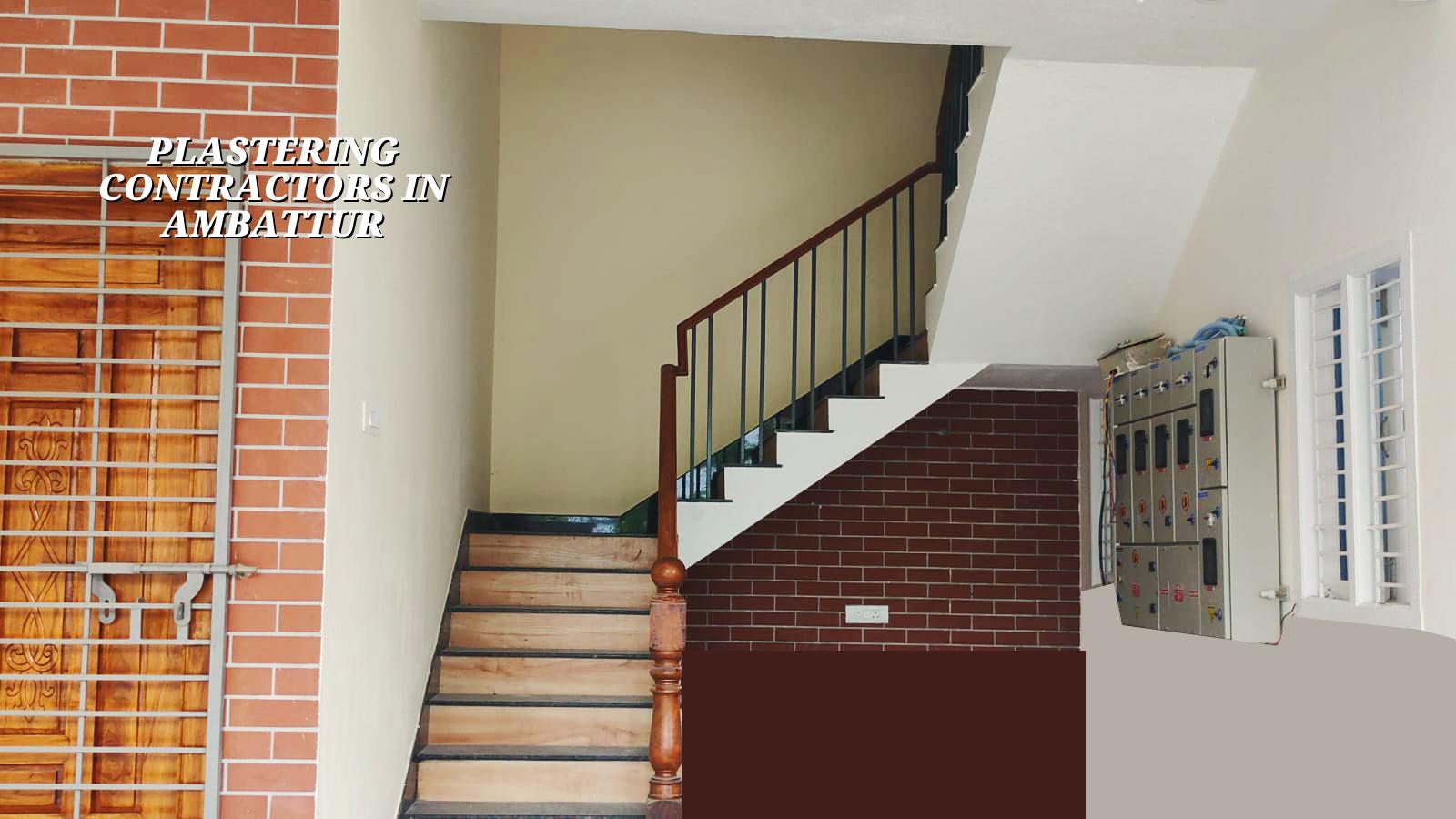
What Ambattur sites ask of plaster
Ambattur is a mixed place. You have industrial buildings, workshops, apartment blocks and independent houses close to each other, and that changes how plastering work has to be handled. Dust from surrounding activity, vehicle movement, and the stop-start rhythm of small lanes all affect how a wall is cleaned, watered and finished before the next trade comes in. On a home site near a busy road, we often see plaster marked by hurried curing or poor edge protection, and those defects show up the first time sunlight falls across the wall.
The other local point is access. Some plots are easy to stage; some are not. If bags, sand and water have to move through a narrow approach, the plastering crew must plan the day so the mix does not sit too long. That sounds small. It is not. Mortar that has started stiffening before it reaches the wall will never finish properly, no matter how much it is trowelled later.
We also look at the base itself. In parts of west Chennai, you can get firmer soil than the low-lying south, but that does not mean every wall is stable enough to ignore cracks or movement. Before fresh plaster goes on, we check whether the crack is only in the skin or whether the masonry underneath has moved. If you cover a moving crack without fixing it, the same line comes back through paint.
How we decide the plaster system
Plastering is not one single mix. We decide it based on the wall type, the finish you want and the service conditions of the room. For internal walls on good masonry, a controlled cement-sand plaster can be enough. For areas that need a flatter finish before putty and paint, the surface preparation has to be better than most people expect. Ceiling work needs even more care because any waviness gets exposed by downlights and side light.
Materials and workmanship that matter
The mix ratio, sand quality, water content and curing period all matter together. If the sand is dusty or the water is excessive, the plaster loses grip and shrinkage cracks start early. If the surface is not hacked, cleaned or dampened properly, the bond fails. If beads and corner lines are not fixed before the main work, the finish looks tired even when the wall is technically covered.
We follow Indian standards on the wider civil side of the job, and we keep the plaster work tied to the actual wall condition, not to a fixed shortcut. Around open verandas or exterior faces, we are extra careful with waterproof admixtures only where they are justified. A bad product used in the wrong place can be worse than no additive at all.
- Surface check and marking — 1 to 2 days. We inspect cracks, hollows and uneven masonry, then mark the areas that need repair before plastering starts.
- Background preparation — 1 to 3 days. The wall is cleaned, the joints are roughened where needed, and the surface is dampened so the mortar can bond.
- Plaster application — 3 to 7 days depending on area. The crew applies the base layer, levels it, checks plumb and line, and finishes corners and junctions carefully.
- Curing and touch-up — 7 days or more. We keep the surface moist, cut out weak patches if any appear, and correct minor defects before the next trade starts.
What good plastering should and shouldn’t do
People often ask for a “smooth finish” and stop there. That is too vague. A good plaster should give you a wall that is straight to the eye, tight at the edges, free from hollowness, and ready for primer without heavy patchwork. It should not crumble when tapped lightly, and it should not show shrinkage cracks as soon as the first hot week arrives. We also tell clients plainly that plaster is not a structural repair. If a wall is badly cracked because the masonry has moved, plaster alone is a cover, not a cure.
- Ask for the wall condition before work starts, not after the quote is accepted.
- Check whether the contractor will repair cracks and voids before applying fresh plaster.
- See how corner beads, reveals and ceiling junctions will be finished.
- Confirm the curing plan for at least the first week after application.
- Ask what happens if a wall sounds hollow or shows damp patches during inspection.
- Make sure the scope says whether scaffold, putty base, mesh and crack repair are included.
Rates, scope and the real cost drivers
For plastering work in Chennai, the price depends on the wall area, thickness, height, access, surface condition and whether you need only labour or a wider civil package. As a broad guide, painting and plaster-adjacent surface work moves in the market with the rates below, but your actual figure is settled only after a BOQ and site check. A bad wall can cost more to prepare than a fair wall costs to cover.
The main cost drivers are simple. Damaged masonry takes more time. High ceilings need more staging. Exterior faces need better protection. If you want a very flat wall for premium paint, more time goes into line and finishing. That is where low quotes become dangerous, because a contractor can look cheap by skipping the labour that produces a usable surface.
| Work type | Indicative rate | What usually changes it |
|---|---|---|
| Standard plastering work | ₹1,900 – ₹2,300 per sq ft | Wall condition, height, access and curing needs |
| Mid-premium finish | ₹2,300 – ₹2,800 per sq ft | Cleaner line, better surface tolerance and more finishing time |
| Premium surface preparation | ₹2,800 – ₹3,500+ per sq ft | More correction work, sharper edges and finer finish expectations |
| Repair and patch plastering | Site-based after inspection | Crack extent, hollow areas and whether underlying masonry needs treatment |
How we handle Ambattur jobs on site
We keep the work practical. A site engineer is on site every working day, and our in-house civil team checks the surface before any plastering starts. If you cannot visit often, we send weekly photo updates on WhatsApp so you can see the wall condition, the repaired areas and the progress without guessing. For homes, the common mistake is asking for paint-level smoothness before the base is ready. For commercial or industrial buildings, the mistake is trying to save a day on preparation and paying for it later in cracks or patch work.
We use a detailed BOQ before any contract is signed, because that is where the real scope gets settled. If a wall needs crack treatment, mesh reinforcement at joints, or extra preparation at beam-wall interfaces, it should be written down. That is the only honest way to compare one quote with another. You can also read about our wider residential, commercial and renovation work if your plastering is part of a larger build.
Frequently Asked Questions
If you are planning plastering work in Ambattur, send us the wall details and a few site photos first. We can tell you quickly whether the job is a fresh plaster, a repair, or a larger civil patching job that needs more than a simple rate per square foot.
Plastering in Ambattur
Call us for a site check, BOQ-based quote or repair advice before you start the work.
Request a Quote Call +91 97107 13838