


Painting Contractors in Teynampet
If you're comparing painting contractors in Teynampet, the real question is not who promises the lowest rate. It is who can work around tight access, dust control and neighbour timings without turning the building into a mess for two weeks.
In Teynampet, many jobs sit on busy roads, in offices or in older residential blocks where stair access is narrow and work hours are fixed. We use this page to spell out what affects paint quality, what the money goes into, and what a proper scope should contain before you sign.
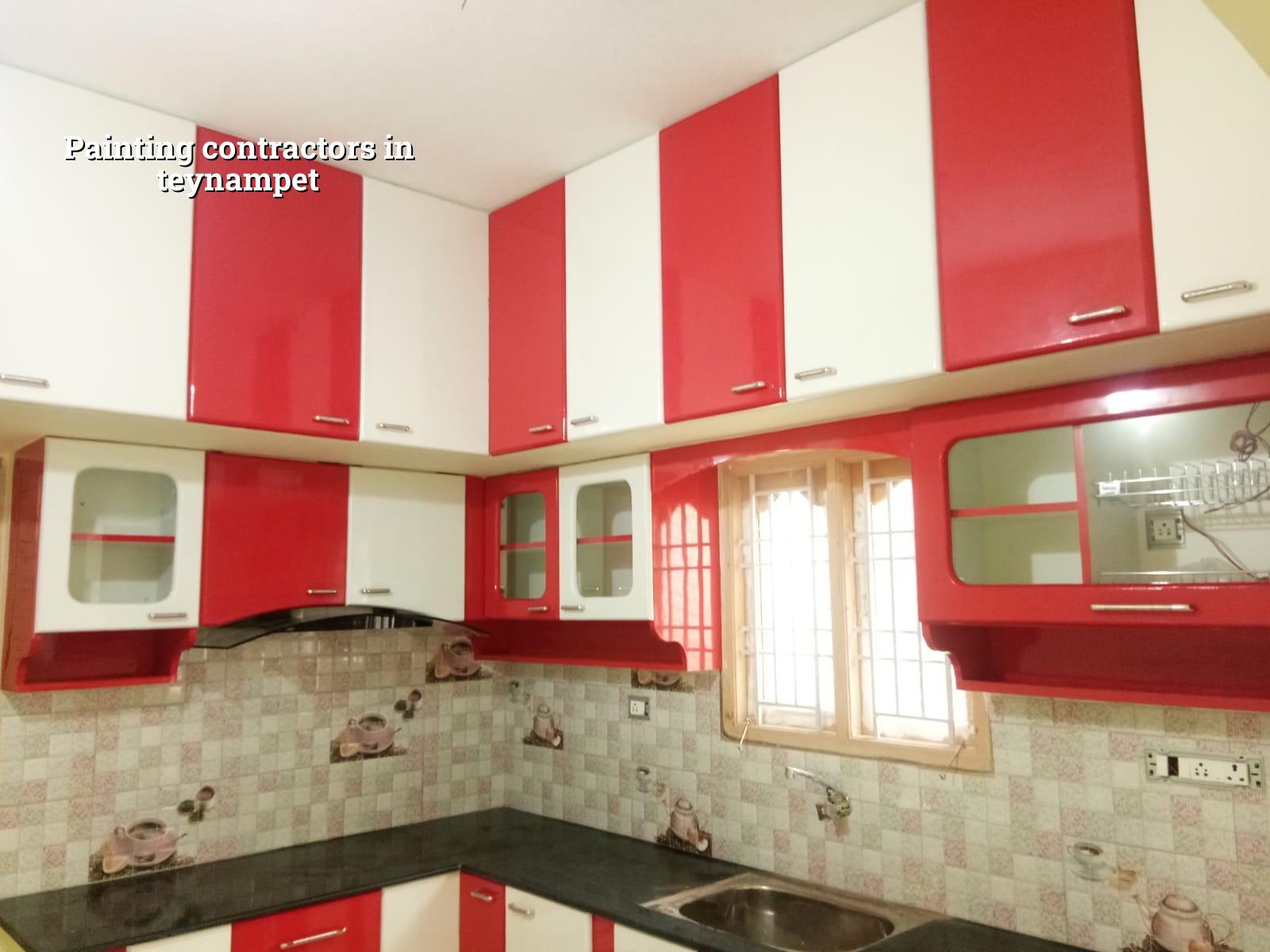
What Teynampet sites ask of paint work
Teynampet is not a place where you can treat painting as a simple finish item. The area has offices along Anna Salai, older apartment blocks, independent houses and mixed-use buildings where work has to happen in stages. Traffic is heavy, parking is tight, and material unloading can be awkward if the building sits behind a narrow frontage. That means surface protection, labour planning and day-to-day supervision matter as much as the paint brand.
On many central Chennai sites, the wall itself tells the story. Hairline cracks from old plaster, damp patches from terrace or bathroom leakage, salt staining on external faces and patch repairs done by different hands over the years. If you only repaint over that, the finish looks good for a few months and then starts failing at the weak spots. In our experience, most complaints begin with the surface prep, not with the top coat.
Surface prep comes before colour
Good painting starts with inspection. We check the plaster for hollow sound, identify seepage lines, see whether old paint is powdering, and decide if putty, crack-filling, sanding or full replastering is needed. On interiors, the usual sequence is cleaning, minor crack repair, primer, putty in coats where needed, sanding, base coat and final finish. On exteriors, the work changes with sun and rain exposure, and the coating has to stand up to moisture and heat.
What fails most often
Peeling paint usually means the wall was damp, dusty or under-primed. Fine cracks often come from movement in old plaster or from joints that were never treated properly. Blistering is usually a moisture problem. Patchy sheen comes from uneven sanding or mixing a fresh coat over a badly aged surface. None of these problems are solved by choosing a brighter shade.
If you are repainting an occupied flat or office, the order of work matters. We don't start with colour selection; we start with the surface condition and the room sequence. That is how you avoid redoing a freshly painted room because the next room's sanding dust has landed on it.
- Site inspection — We check dampness, cracks, old finish and access. This usually takes one visit, sometimes two if we need to open a concealed problem.
- Surface repair — Cracks, joint lines and weak plaster are treated first. On many jobs this is the longest part, because shortcuts here show up later.
- Primer and putty — The wall is sealed and levelled in the number of coats the surface actually needs, not a fixed promise.
- Sanding and masking — Doors, switches, hardware and floors are protected. This step decides how clean the finished house looks.
- Top coats — Interior or exterior finish is applied in sequence with drying time between coats. We plan this around weather and occupancy.
Pick the finish for the room, not for the brochure
People often ask for the same paint everywhere because it sounds simpler. It isn't always smarter. A bedroom wall, a kitchen wall, a stairwell and an exterior parapet each face a different kind of wear. Smooth matt finishes hide minor wall defects better. Higher-sheen finishes clean better in spots that get touched often. Exterior coatings need better weather resistance, especially where rain and sun hit the wall directly.
For a family house, the common trade-off is between visual smoothness and practical cleaning. A more polished finish looks neat, but it will also show roller marks, surface waves and patchwork if the wall prep is poor. A slightly softer finish can be more forgiving on older plaster. For offices, the question is usually maintenance. The best finish is the one you can keep presentable without closing the space every few months.
- Ask for the exact scope: interior, exterior, terrace parapet, grille, woodwork and metalwork should be listed separately.
- Check whether crack filling, putty and primer are included or billed as extras.
- See how dust protection is handled for floors, furniture and switches.
- Confirm the drying time between coats, especially if the schedule is tight.
- Ask who is supervising the site each day and who signs off on the final finish.
- Get the shade card and finish type written into the BOQ or work order.
Cost drivers and what actually changes the rate
Painting rates in Chennai move with surface condition, building height, access, the number of rooms, the finish type and how much repair work is needed before the first coat goes on. For painting, the indicative rate is ₹25 to ₹45 per sq ft for labour with standard emulsion. That is only a starting point. A detailed BOQ settles the real figure before any contract, because a wall with seepage and cracks is not the same as a fresh, smooth one.
| Work head | What changes it | Practical note |
|---|---|---|
| Interior walls | Putty coats, sanding, room count, occupancy | Occupied homes need more masking and cleaner sequencing |
| Exterior walls | Height, weather exposure, crack repair, scaffold access | North and west faces usually age faster in Chennai sun and rain |
| Wood and metalwork | Rust removal, primer, enamel coats, old finish condition | Gate and grill work often takes more prep than people expect |
| Damp repair areas | Source of seepage, plaster removal, curing time | Never paint over active dampness and call it done |
Approvals, access and how the site is run
For a repainting job, you usually do not need the same approval chain as new construction, but the building rules still matter. In a commercial building, the owner or association may set work hours, lift use and waste movement. In a residential block, neighbour access, staircase protection and common-area cleanliness are the real constraints. If the job is in an older structure with visible cracks or seepage, we first check whether it is just paint work or if there is a structural issue that should be looked at before repainting.
Teynampet sites also demand realistic logistics. Material has to come in on time, ladders or scaffolding have to be placed without blocking the whole frontage, and the daily clean-up has to be done before the building starts its normal routine again. That is where a small project becomes stressful if nobody is supervising it.
How we work on a paint job
We start with a site visit and a scope discussion, then prepare the BOQ so you know what is included. Our in-house civil engineers and site engineer check the surface condition, note damp spots, and decide whether the wall needs only repainting or some repair before paint. The site engineer is on site every working day, and we send WhatsApp photo updates if you cannot visit. If you want to speak with us about a repainting job in Teynampet, call +91 97107 13838 or write to info@shalomconstruction.com. You can also see our residential, commercial and interior works pages if the job is part of a larger scope.
Frequently Asked Questions
Paint should make the building look cared for, not just brighter. If the wall needs repair before colour, that is where the honest work starts, and it is cheaper to do it once than to repaint a failure next season.
Painting in Teynampet
Send us the wall photos, or ask for a site visit and BOQ-based quote. We'll tell you what needs repair, what can be repainted, and what the likely sequence will be before any work begins.
Request a Quote Call +91 97107 13838