


Masonry Contractors in Thiruverkadu
If you're comparing masonry contractors in Thiruverkadu, the real question is not who can lay bricks fastest. It's who can keep a wall straight, bond it properly, and make it survive the first few monsoons without cracking.
We handle masonry with the same habit we use for structure: line, level, plumb, curing, and joint finish all get checked on site. In a place like Thiruverkadu, where new layouts, independent houses and mixed-width streets sit side by side, access and material stacking affect the work almost as much as labour skill.
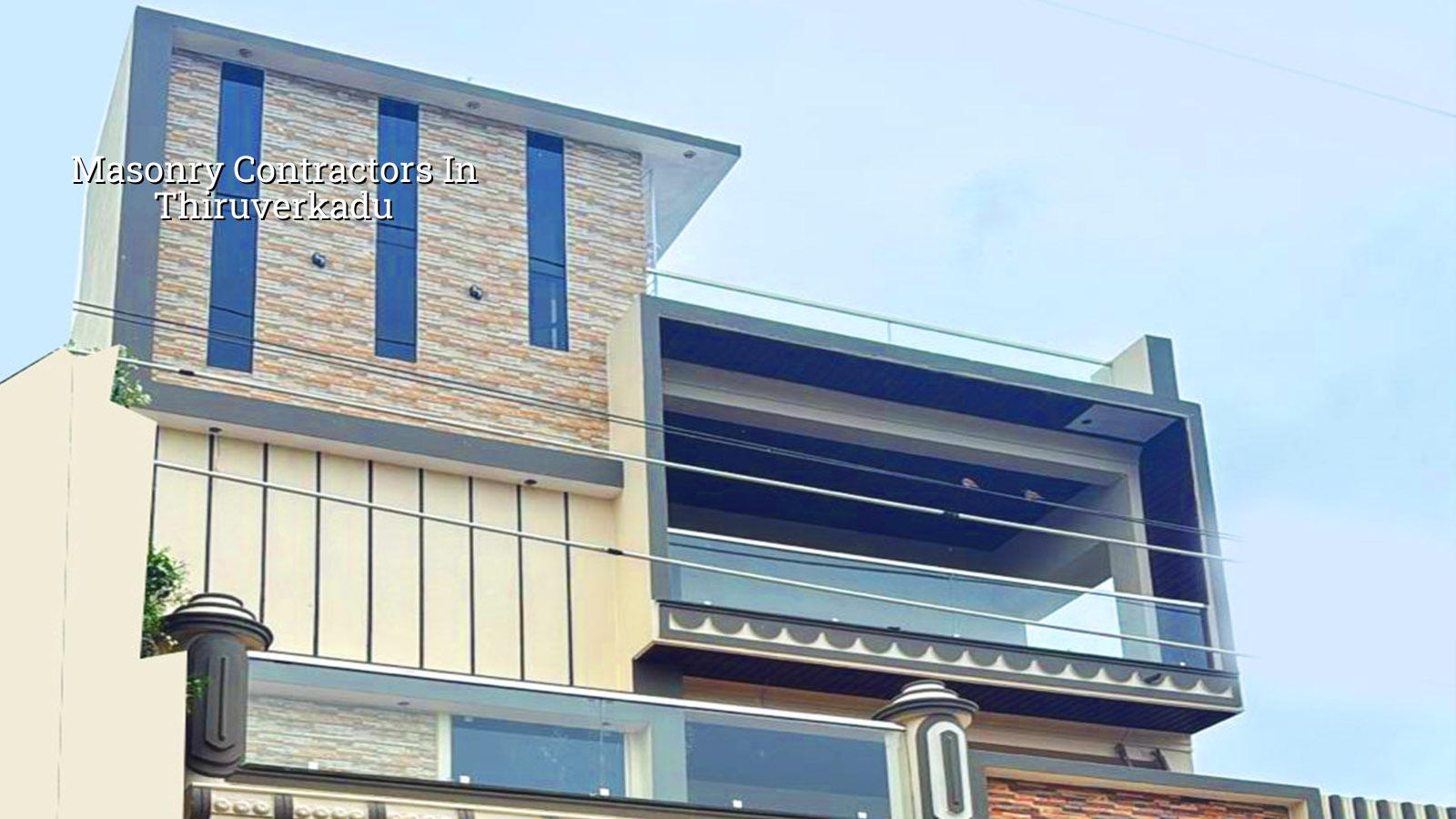
What changes on a Thiruverkadu site
Thiruverkadu is a municipality area on Chennai's west side, and that matters on the ground. Many plots are part of newer layouts, so you may have room for materials, but the approach road can still be tight on the last stretch. On some sites, the issue is not the wall itself; it's getting sand, cement, blocks and water to the work spot without making a mess of the neighbour's frontage.
The other local point is soil and drainage. In west Chennai the ground is often firmer than the low-lying marshy belts, but we still don't guess. If a plot needs a raised plinth, a better damp-proof layer, or a changed wall footing detail because the soil report says so, that decision has to be made before the first course is laid. Once masonry starts, you don't get a clean second chance.
We also see a fair share of house fronts, compound walls, room additions and internal partition work here. That mix changes the work sequence. A compound wall can be built quickly if the line is clear. A full ground-floor or first-floor masonry package needs coordination with RCC columns, lintels, openings, electrical chases and the plastering team.
How we build a wall that stays true
Good masonry is not just stacking units. The wall has to sit on a proper base, the mortar has to be consistent, and every lift has to be checked before the next one goes up. For brick masonry, we keep joints even and filled. For solid blocks, we watch the alignment more strictly because any error shows up fast on the plaster finish.
What we pay attention to
We check the bond pattern, the thickness of mortar joints, the location of openings, and the way the wall ties into the RCC frame. A masonry wall that is not tied correctly can crack at the corner or separate near the column face. That's one of the common mistakes people only notice after painting.
For exposed or external walls, curing and protection matter a lot. Chennai heat dries fresh mortar quickly, and a wall that looks fine on day two can still be weak if it was left dry too early. That's why we don't treat curing as an optional extra.
- Set out the wall line — mark centre lines, opening positions and levels before the first brick or block is laid; usually one half day for a house bay or a compound wall stretch.
- Prepare the base — clean the footing or slab surface, check level, and confirm the damp-proof course detail; this can take a few hours, but skipping it causes the sort of waviness you can't hide later.
- Lay the first course — the first row decides the rest of the wall, so we keep a level and a string line on it throughout the morning.
- Build in lifts — raise the wall in sensible heights, check plumb at each stage, and leave openings, lintel pockets and service chases exactly where the drawings show them.
- Cure and inspect — keep the wall damp, inspect joints and corners, and correct any bowing before plastering starts; for most house work this is a running process over several days.
Choosing a masonry contractor without getting stuck later
If you want the work to last, ask for more than a labour quote. Ask what block or brick will be used, what mortar proportion they follow, how they will handle openings, and who checks line and level. A fair contractor can explain those things without sounding irritated.
Ask for the BOQ too. It should show the wall type, thickness, unit count, mortar assumptions and the payment stages. If someone tries to keep everything verbal, the final bill usually becomes the surprise.
- Confirm the wall type: brick, solid block or AAC block, and where each one is used.
- Check whether the quote includes scaffolding, curing, and cleaning after masonry work.
- Ask how openings for doors, windows and ventilator gaps will be held true.
- See who is responsible for tying masonry into columns, beams and lintels.
- Make sure there is a written payment stage linked to completed work, not just dates.
Materials, mix and failure points
Most wall failures start with a small decision nobody bothered to write down. The wrong block size, a sandy mortar, weak joints, or a hurried first course can create cracks that show up much later. In our work, the material choice depends on the purpose of the wall: external wall, internal partition, compound wall, or a repair patch that has to match old work.
| Wall type | Typical use | What can go wrong |
|---|---|---|
| Brick masonry | Many house walls, internal and external partitions | Uneven joints, poor curing, and misaligned courses |
| Solid block masonry | Faster walling for regular layouts and larger spans | Hollow joints, chips at edges, and poor bonding at corners |
| Compound wall masonry | Property boundary walls and frontage walls | Cracks from weak footing, poor line setting, or no movement joint planning |
| Repair and patch masonry | Openings, damaged edges, or altered rooms | Mismatch with old work, hidden voids, and plaster cracks after finishing |
Approvals and site control around the build
Masonry itself may look simple, but the building around it is not. In the Chennai metropolitan area, the licence route depends on whether the plot falls under Greater Chennai Corporation, a municipality, or a town panchayat. Thiruverkadu is under its own municipal setup, so the paperwork, drawing set and inspection sequence need to match that authority, not some generic city rule.
For the house side, we keep the masonry package aligned with the approved architectural drawings, structural stability certificate and drainage details. If the plot needs rainwater harvesting work, that is planned with the rest of the external works. A wall job that ignores the rest of the file often gets delayed by the next approval check.
We also watch the simple field things: where the sand is stacked, whether the blocks are protected from rain, how the mixer reaches the back of the plot, and whether the neighbour's side needs temporary dust control. These are not small matters. They decide whether the job runs on time or keeps stopping for avoidable reasons.
How we work on masonry jobs
We start with a site visit, measure the actual conditions, and match the drawing to the plot before work begins. Our in-house civil engineers and site engineer stay with the job, and the work is checked every day. If you can't visit often, we send weekly photo updates on WhatsApp. For clients who want the full house package, we can tie masonry into our residential construction, renovation, architectural, or interior works scope. Call us on +91 97107 13838 or email info@shalomconstruction.com if you want us to look at your plot.
Frequently Asked Questions
If you are planning a wall, a compound boundary or a repair job, get the line and material choice right before you start. The cost of fixing a bad masonry decision is usually more than the cost of doing it properly the first time.
Masonry Contractors in Thiruverkadu
Send us your drawing or site location, and we'll tell you what's needed before work starts. We can inspect the plot, prepare a BOQ and discuss a practical sequence for the masonry package.
Request a Quote Call +91 97107 13838