


Flooring Contractors in Koyambedu
When you search for flooring contractors in Koyambedu, you usually already have a site, a finish in mind, and a worry about dust, time, or tiles that won’t stay level. That’s the point we start from.
Koyambedu is not a quiet place to build in. Between the market traffic, heavy vehicles, and mixed commercial buildings, flooring work needs tighter material handling, shorter storage time, and a crew that can finish cleanly without blocking the site or the neighbour’s entry.
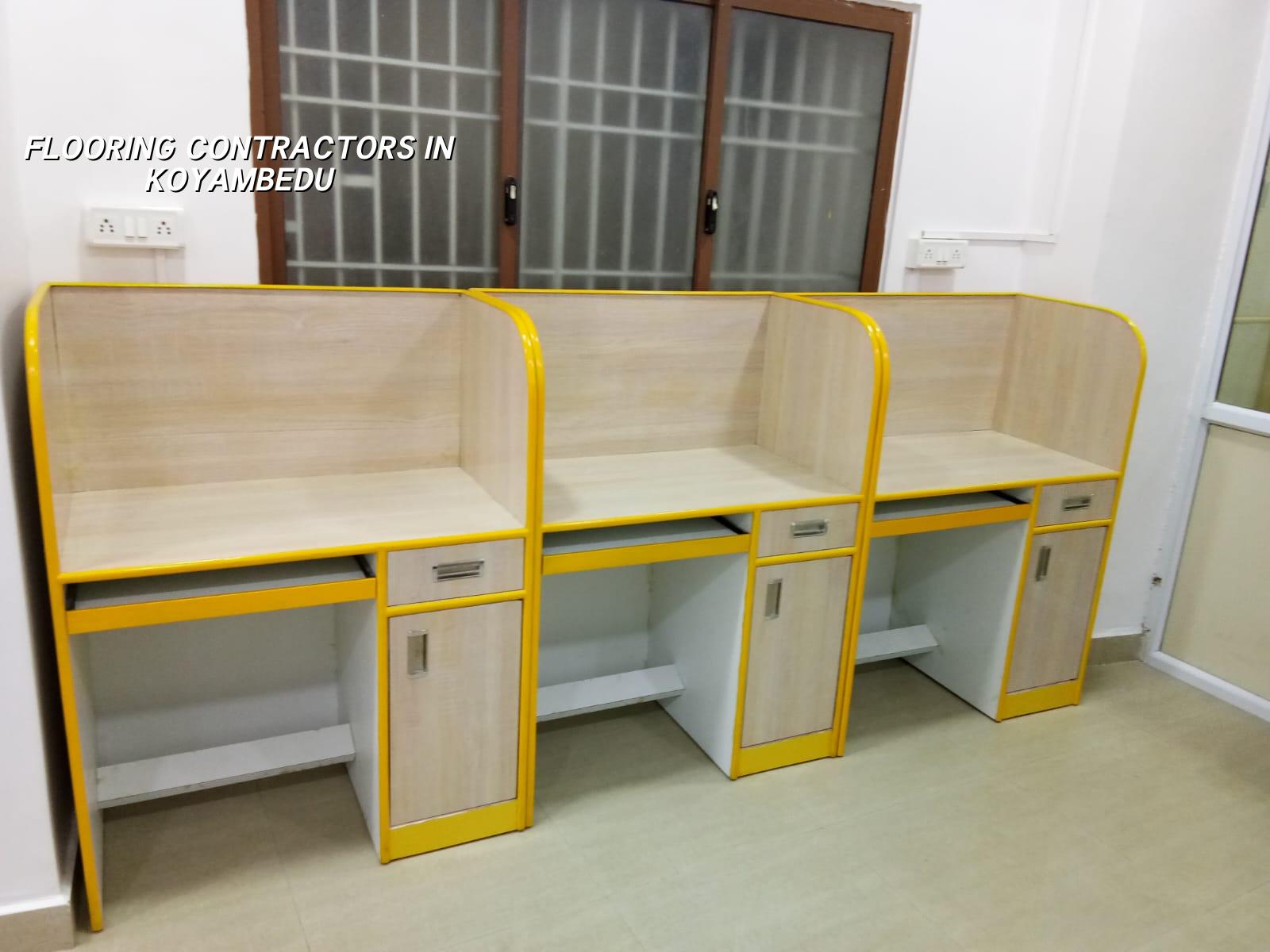
Why Koyambedu changes the job
Koyambedu is a working junction, not a soft residential pocket. Shops, offices, apartments and small industrial units all sit close together, so material unloading has to be planned around traffic and access rather than just labour availability. On upper floors, the slab may be ready but the stair and lift movement decide how fast tile, stone, adhesive and sand actually reach the work area.
For this locality, the real issue is not only which floor finish you choose. It is whether the substrate is dry enough, whether the slab level is corrected before laying, and whether the site can accept wet work without spoilage. If you skip that thought, you get hollow spots, lippage, cracked grout or a floor that looks fine on day one and starts complaining after the first monsoon wetting.
We also see more renovation work here than fresh villa work. Older commercial floors often hide uneven screeds, patched plumbing openings, and previous tile layers with weak bond. A contractor who assumes a flat base will usually cost you more later.
What a proper flooring scope includes
Good flooring is not only the visible finish. It begins with checking the base concrete or screed, measuring level variation, marking high and low points, and deciding whether you need patching, levelling compound, or a fresh bed. Then comes the right fixing method for the chosen material, because a vitrified tile, granite slab and chequered tile do not want the same treatment.
Material and workmanship choices
For homes, vitrified tiles are common because they give a decent finish without too much maintenance. For shops and offices, granite or high-strength tile often makes more sense where footfall is high. In wet areas, the question is not only appearance. Slip resistance, drain slope, joint sealing and edge detailing matter more than the brochure picture.
We work to the site condition first and the finish second. If the slab is moving or the base is weak, no expensive finish will rescue it. In Chennai we also have to think about moisture movement, especially where a slab sits over an open parking area, a terrace or a service zone that sees heat and rain.
- Site check and measurements — 1 to 2 days to inspect levels, room sizes, slope needs and any old floor that must be removed.
- Surface preparation — 1 to 4 days depending on demolition, cleaning, patching and screed correction.
- Layout and dry marking — half a day to 1 day so cuts, pattern lines and joint positions are set before fixing starts.
- Fixing and curing — 2 to 7 days for most rooms, longer for larger areas or stone work, with curing and protection before use.
- Joint filling and handover — 1 to 2 days for grout, cleaning, touch-ups and final inspection.
How to verify a flooring contractor
If you are comparing firms, ask for the things that change the result on your floor, not the things that sound nice in a brochure. A fair contractor should be able to explain the base preparation, adhesive or mortar choice, joint width, curing plan, and how corners and thresholds will be finished. If the answer is vague, the site will be vague too.
This is the section people usually skip because they want a rate quickly. That is how mistakes happen. A low quote can hide thin screed work, poor-quality adhesive, no protection for finished areas, or a payment structure that leaves you exposed when the last 10 percent of work is still unfinished.
- Ask for a written BOQ that lists material brand, size, thickness and finish type.
- Check whether surface preparation is included or quoted as a separate extra.
- Confirm who handles tile cutting, edge trims, skirting and threshold pieces.
- Look for curing and protection in the scope, not just fixing.
- Ask how level tolerance and hollow sound checks will be done before handover.
- Make sure the payment stages are linked to measurable work, not just dates.
Cost, rate bands and what moves them
Flooring cost in Chennai depends on material, base condition, room size, pattern complexity and access. For standard residential flooring work, the indicative rate is usually within ₹1,900 to ₹2,300 per sq ft when the job is part of a normal G+1 residential package. Mid-premium work typically sits at ₹2,300 to ₹2,800 per sq ft. Premium work can go beyond that, especially when stone, special finishes or detailed patterning are involved. A detailed BOQ settles the real figure before any contract is signed.
Do not treat the lowest number as the cheapest job. The floor cost rises fast if the base needs repair, if stairs are involved, if the site has poor access, or if you want expensive slabs with careful matching. The right saving is in choosing a sensible finish and keeping the layout simple. The dangerous saving is in skimping on base preparation, because that is what makes the final floor sound hollow or crack at joints.
| Work head | What changes the rate | What we check before quoting |
|---|---|---|
| Vitrified tile flooring | Tile size, pattern, room count, levelling need | Slab flatness, cutting waste, edge finish |
| Granite flooring | Slab thickness, polish level, joint treatment | Load capacity, base strength, handling route |
| Renovation over existing floor | Removal effort, disposal, patching, dust control | Old bond, hollow patches, door levels |
| Wet area flooring | Slope work, anti-skid finish, drain detailing | Drain positions, waterproofing interface, joint sealing |
What people get wrong with floor work
The most common mistake is to think the tile itself is the floor. It is not. The floor is the substrate, the fixing layer, the finish and the jointing, all working together. If one part is weak, the surface starts failing even when the visible material was expensive.
Another mistake is timing. In a busy locality like Koyambedu, people want the work done between tenants, shop hours or shifting dates. That is possible, but only if the sequence is fixed early. If the electrician, plumber and mason keep reopening the same area after fixing starts, the floor becomes a patchwork of repairs.
We also see people choose glossy finishes for areas that need cleanability, or rough finishes where easy mopping matters. That choice sounds small at the counter. After moving in, it becomes daily irritation.
Approvals, access and site control
For flooring alone you usually do not need a building licence, but the larger project around it may still fall under CMDA rules, the local municipality or the Greater Chennai Corporation depending on where the plot sits. If the work is part of renovation, we first check what approval path the overall project needs and whether there are any conditions tied to the building use, parking or access.
Koyambedu sites often need better logistics than people expect. Material should be brought in at the right hour, stacked where it will not choke movement, and protected from dust from the market side or the road side. When a team has no plan, the site gets cluttered, the floor gets scratched, and cleaning costs rise before handover.
For a normal project, the sequence is simple enough, but it still needs discipline.
- Confirm floor area, room use and final finish before material is ordered.
- Check slab condition and level before any fixing work begins.
- Set a delivery plan for tile, stone, adhesive and consumables.
- Protect completed areas before other trades return to the site.
How we work
We start with a site visit, take measurements, and prepare a BOQ before anything is signed. Our in-house civil engineers and structural engineer look at the base condition, and a site engineer is on site every working day. If you cannot visit often, we send weekly photo updates by WhatsApp. For flooring tied to a larger build, we coordinate the finish with our residential, commercial and renovation teams so the sequence does not get broken. Call us on +91 97107 13838 or email info@shalomconstruction.com if you want us to check the site and speak plainly about what the floor needs.
Frequently Asked Questions
If you need flooring work in Koyambedu, the right first step is not choosing a tile photo. It is checking the base, the access, and the scope in writing.
Flooring Contractors in Koyambedu
Send us your room size, site photos or existing floor condition, and we’ll tell you what the work needs before you spend on material.
Request a Quote Call +91 97107 13838