


Demolition Contractors in Thiruvanmiyur
If you need demolition contractors in Thiruvanmiyur, you usually need one of two things: a full tear-down before new construction, or a careful partial demolition without damaging the portions you want to keep. The wrong team makes dust, cracks, neighbour complaints and delay. The right team controls the order of work, the debris, and the paperwork.
Thiruvanmiyur is not a place where you can treat demolition as simple breaking work. Many plots sit close to occupied homes, roads are busy, and some buildings are older reinforced concrete structures with hidden utility lines. We plan the sequence first, then cut, dismantle, load and clear. That is how you avoid creating a bigger repair bill than the demolition itself.
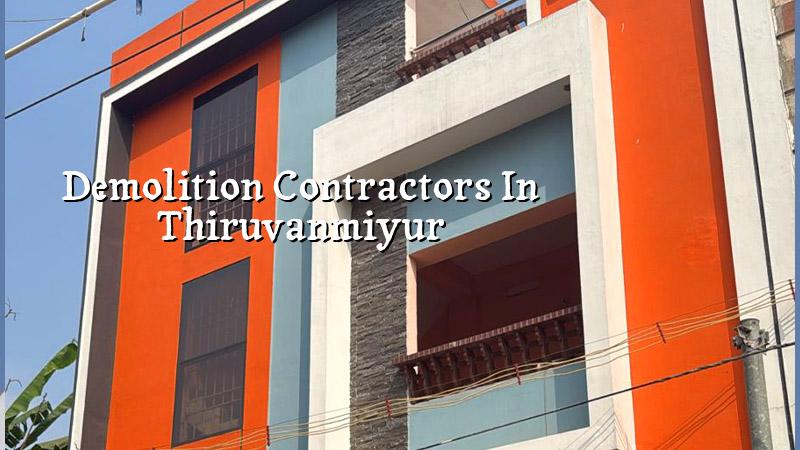
What makes demolition harder here
Thiruvanmiyur has a mix of older independent houses, rebuilt villas, apartment blocks and commercial frontages tied to narrow access roads in some pockets and tighter neighbour spacing than people expect. If your site sits near the coast, the structure may also carry corrosion in steel members, cracked plaster, spalled concrete or patched repairs that hide the real condition. That changes the demolition method. A weak roof slab can collapse differently from a sound one, and a wall that looks ordinary may be acting as a load path.
We also see a practical issue clients underestimate: where the debris will go while work is still on. On a tight Chennai plot, you cannot keep broken concrete on site for long without blocking machine movement, lifting labour cost and upsetting the street. The plan has to include loading points, truck access, and the timing of removal. If those are not fixed before work starts, the site turns messy fast.
How we decide the demolition method
We do not begin with a hammer. We begin by asking what is being removed, what must stay, and what the structure is actually carrying. For a full demolition, we look at wall type, slab span, beam layout, utility disconnections, adjoining structures and access width. For a partial demolition, the order matters even more. You remove in a sequence that keeps the remaining frame stable until the last unnecessary piece comes out.
What we inspect first
The first round is simple and practical: visual condition of slabs and beams, signs of settlement or cracking, stair location, water tank position, compound wall condition, and the path for debris removal. If a building has a doubtful RCC frame, we treat it differently from a masonry house. If there is any suspicion of hidden electrical or plumbing runs, those are isolated before any cutting starts. Chennai sites often surprise people because a wall that seems non-structural may have been altered many years ago, and the old record no longer matches the present layout.
- Site shutdown and marking — Disconnect utilities, mark the portions to keep and set the work boundary; usually 1 to 2 days.
- Soft strip — Remove doors, windows, wiring, fixtures, loose masonry and reusable items; usually 1 to 3 days.
- Controlled dismantling — Bring down slabs, beams, walls or selected portions in planned order; usually 3 to 10 days depending on size.
- Loading and carting — Move debris out continuously so the site does not choke; often runs alongside dismantling.
- Final clearance — Level the site, check the boundary condition and hand over a clean plot for the next stage.
Which demolition choice fits your job?
The big decision is not just full demolition versus partial demolition. It is whether you want a quick break-down or a controlled structural job. Quick break-down is cheaper on paper, but it is risky if you have an adjoining house wall, a live neighbour compound, a staircase that will remain, or a slab you want to preserve for reuse. Controlled work takes more time and more supervision, yet it protects the parts you are keeping.
If the building is old and you plan to rebuild, a full demolition with proper debris carting is usually cleaner. If you are opening up a floor, removing a roof portion, changing wall lines or preparing for structural renovation, then a measured sequence is the safer route. In our experience, people often ask for “just breaking this one portion” and only later realise that the wall they want gone is tied into a beam or supports the landing. That is where a structural check matters.
- Confirm whether the job is full demolition or partial demolition.
- Check if any beam, slab, stair or compound wall must remain in place.
- Ask how debris will be loaded out on your street width.
- Verify utility isolation before cutting starts.
- Get the method statement in writing, not as a verbal promise.
- Make sure the quotation includes carting and disposal, not only breaking.
Approvals, safety and what a proper quote includes
For demolition in Chennai, the local approval path depends on where the plot sits. The planning authority is CMDA in the metropolitan area, while the building licence comes through the local body that covers the site. On some plots, especially around airport-side areas, height or related clearances can matter for the next construction stage. For demolition itself, we still need the job to be cleanly documented, especially when the property is part of a redevelopment plan or has adjoining structures.
A fair demolition quote should state what is included and what is not. It should say whether the contractor is doing labour-only breaking, labour plus debris removal, or a more complete turn-key clearance. It should also mention safety barricading, manual dismantling where needed, machine use where access allows it, and how the removed material will be handled. If someone gives you only a lump sum without saying how the debris leaves the plot, you do not have enough information.
| Scope | What is usually included | What you should confirm |
|---|---|---|
| Full house demolition | Breaking, loading and site clearance | Debris carting route, boundary protection, utility disconnection |
| Partial demolition | Selected dismantling and removal of debris | What stays, temporary supports, sequence of removal |
| RCC demolition | Slab, beam and column breaking by controlled stages | Machine access, cutting method, dust and vibration control |
| Debris clearance only | Loading, transport and disposal | Volume estimate, truck movement, final leveling |
Cost drivers you should check before you sign
Demolition pricing is not a single fixed number because the work changes with structure type, access, height, amount of RCC, debris volume and whether neighbours are close enough to need slower work. For Chennai work, those site conditions matter as much as the built-up area. If access is tight, labour rises. If the structure is heavily reinforced, cutting and breaking take longer. If the road cannot take easy loading, carting becomes a bigger part of the job.
We do not quote a project total on a public page because the real number comes from the measured scope and the BOQ. What we can say is that demolition cost is driven less by the act of breaking and more by the time spent controlling the break, moving material out and protecting what remains around it.
Common mistakes that make demolition expensive
The first mistake is assuming every wall is non-structural. The second is starting without checking where water, power and gas lines run. The third is ignoring debris storage, which clogs the site and slows everything else down. A fourth mistake is hiring only on the lowest labour quote and then paying extra for carting, machine time and clean-up later. That is how the first number becomes misleading.
How we work on demolition jobs
We handle demolition through our in-house civil team, so the person planning the sequence is not separate from the person supervising the site. A site engineer is on site every working day, and when a client cannot visit, we send photo updates by WhatsApp. The contract carries milestone-linked payment stages, and the BOQ is detailed before signing. If the job is tied to a new build after demolition, we can plan that transition through our residential, renovation and structural teams without passing the site from one outside contractor to another. If you want to discuss a demolition in Thiruvanmiyur, call us at +91 97107 13838 or email info@shalomconstruction.com.
Frequently Asked Questions
Once demolition is done properly, the next stage starts with a clean site and fewer surprises. That is the real value of careful work here: you do not inherit cracked neighbours, blocked access or debris still waiting to be removed when the builder arrives.
Demolition Contractors in Thiruvanmiyur
Send us the site details and we will tell you whether the job needs full demolition, partial dismantling or a controlled sequence with debris clearance built in.
Request a Quote Call +91 97107 13838