


Demolition Contractors in Teynampet
If you need demolition contractors in Teynampet, the first question is not who can bring a breaker truck. It is how to bring down the structure without cracking the next wall, choking the lane, or creating a complaint from the building next door.
Teynampet is not a place where you can treat dismantling work like open-land demolition. Access is tight, traffic is constant, and many plots sit among offices, older houses and mixed-use buildings. We plan the sequence, debris movement and dust control before the first slab is touched.
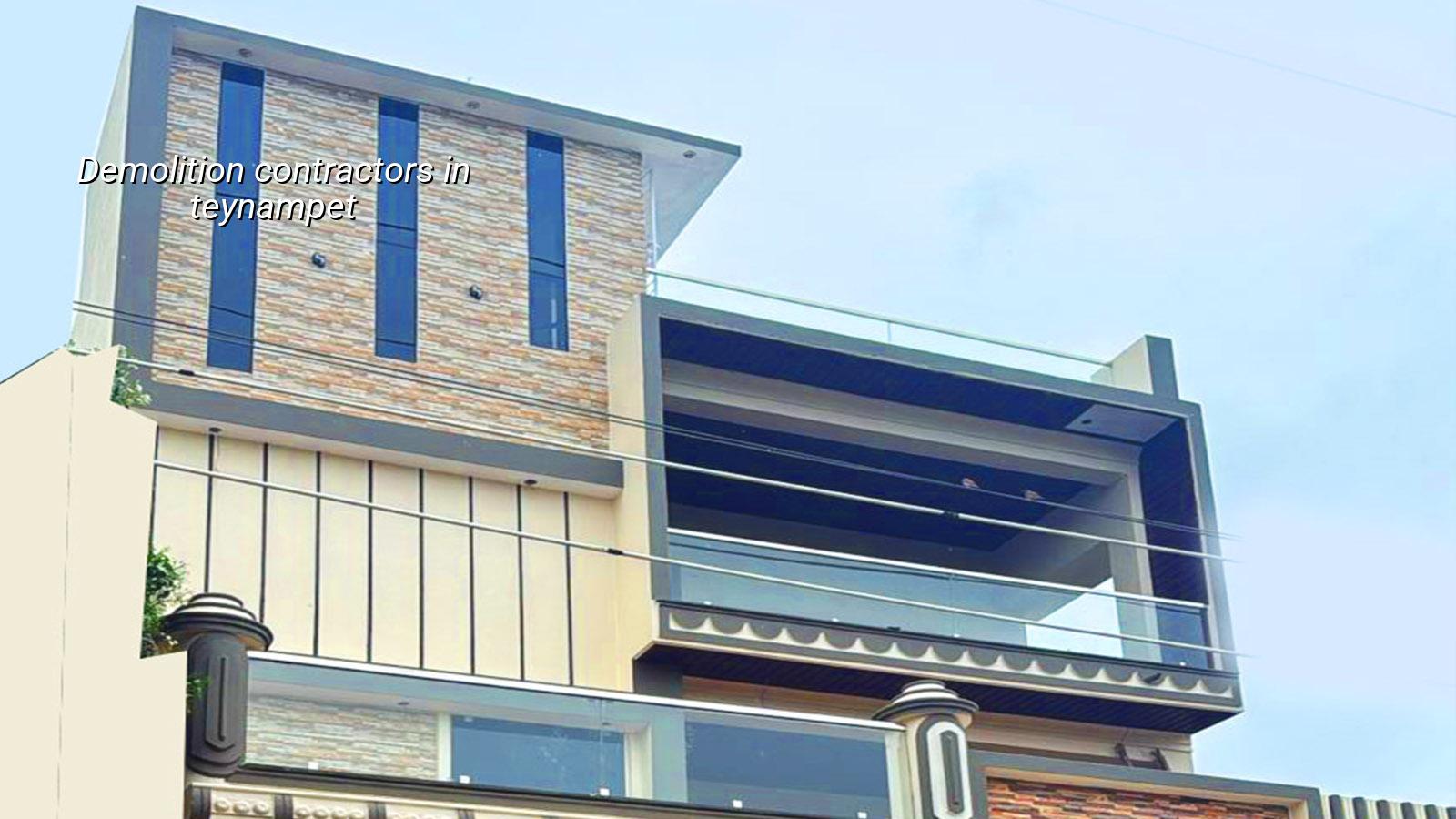
Teynampet site conditions
Teynampet sits on one of the city’s busiest commercial stretches, so the real constraint is logistics. In a narrow side street, one parked lorry can block the whole job. If the building shares a wall, roof slab or compound line with a neighbour, the sequence has to start with protection, not with heavy breaking. We also watch for older RCC frames and patched masonry, because those behave differently during dismantling. A wall that looks thin can still be carrying floor load, and a wrong cut can send a crack into the next property.
The approval side matters too. For a demolition or major dismantling job inside the Chennai city limits, the local body and the planning authority’s requirements have to be checked against the plot and the existing building records. If the building is near a busy road or an office frontage, working hours and debris handling become part of the method statement. That is why we ask for the sketch, ownership papers and photos first. It saves you from stopping work halfway because a neighbour objected or a document was missing.
How we plan a safe dismantling job
Demolition is controlled removal, not random breaking. Before we touch the structure, our engineer checks whether it is a full tear-down, partial dismantling, slab cutting, wall removal or a combination. Old service lines are isolated, reusable items are salvaged where possible, and the order of work is set so the building never loses stability early. In a city like Chennai, the weather also changes the method; the second week of monsoon can turn debris movement into a mess if the site floor was not planned for water and muck.
What we look at first
We inspect the structure type, floor count, visible cracks, party walls, overhead lines, water and sewer connections, and how trucks will approach the site. If the building stands close to the boundary, hand dismantling may be safer for the upper portions. If there is more room and the structure is isolated, mechanical breaking can be used in a staged way. We do not pick the method by habit. We pick it by what the building can tolerate.
- Site survey and risk check — We visit the property, note access, neighbours, utility lines and weak zones. This usually takes one visit, with a written plan after that.
- Disconnect services — Electricity, water and other live lines are isolated before work starts. This is the part people rush, and it is the part that causes the worst accidents.
- Salvage and protection — Doors, steel, fixtures and any reusable items are removed first. Adjacent surfaces and public-facing edges are protected with temporary barriers and dust control.
- Controlled dismantling — The roof, upper slabs, walls and columns are removed in a planned sequence. Small urban sites often need more manual work than people expect.
- Debris segregation and removal — Concrete, steel, wood and mixed waste are separated and taken out without leaving the site buried under rubble.
- Final clearing and check — We leave the plot ready for the next stage, whether that is reconstruction, foundation work or handover to the owner.
Where demolition goes wrong
The biggest mistake is assuming all demolition is the same. A single-storey wall removal in a quiet lane is not the same as bringing down a two-storey old house on a shared boundary in a crowded commercial area. People also underestimate the debris. A small-looking building can produce enough concrete waste to choke the site if removal is not staged every day.
- Starting with heavy breaking before checking whether the wall is load-bearing.
- Skipping utility isolation and assuming “the line is probably dead”.
- Ignoring neighbour protection, which leads to damage claims.
- Allowing debris to pile up inside the plot and blocking the working face.
- Choosing a contractor who quotes only for breaking, not for removal and clearing.
- Not checking whether the building records, ownership papers and local permissions are in order.
There is also an honest limitation here. If the structure is unstable, partly collapsed or badly fire-damaged, demolition has to be handled with extra caution and sometimes with slower manual methods. That takes more time and can cost more than a straightforward tear-down. It is still cheaper than an uncontrolled collapse. We would rather tell you that up front than pretend every site can be finished in the same way.
Cost factors and what really changes the rate
For demolition work, the quote is not just about the square feet of the building. Access, height, material type, boundary conditions, labour intensity and disposal distance all matter. On a tight Teynampet site, the rate can rise because manual work and debris handling take longer. On a more open plot, the same structure may be simpler to remove. The BOQ settles the real figure before any work starts, so there are no surprises halfway through.
We do not publish a fake lump sum for demolition because the numbers change too much from site to site. What we can say is how the job is broken up: survey, protection, dismantling, debris removal and final clearing. If the building has reinforced concrete members, thick masonry or limited access, the labour and disposal effort go up. If the site is easy to approach and the structure is simple, the work moves faster. That is the mechanism, and that is what we explain in the quote.
| Job type | Main constraint | What changes the effort |
|---|---|---|
| Small residential dismantling | Neighbour protection | Shared walls, narrow access, hand removal |
| RCC frame demolition | Structural sequence | Slab, beam and column order, debris weight |
| Partial wall or slab removal | Stability control | Load path, shoring, cutting method |
| Full site clearance | Debris disposal | Truck access, daily removal, segregation |
What you should verify before you sign
If you are comparing demolition contractors in Teynampet, ask for the method, not just the price. A fair contractor should tell you how the building will be isolated, what will be removed first, how debris will leave the site and who is responsible for damage control. We believe a good demolition contract is plain, not clever. It should say what is included, what is excluded, how payments are linked to stages, and who handles permits or local coordination if the job needs it.
Ask to see proof of site experience on tight urban plots, the safety measures for workers and neighbours, and a written schedule for removal. If the quote is vague about debris disposal, that usually means the cheapest part of the job has been priced and the messy part has been left out. That is where people get trapped.
- Method statement with sequence of work
- Debris removal plan and disposal responsibility
- Proof of service disconnection before breaking starts
- Protection plan for adjoining properties
- Milestone-linked payment terms in writing
- Clear list of exclusions and damage responsibility
How we work
We start with a site visit, photos and a practical look at the structure. Our in-house civil engineers and structural engineer review the building, and Mr. D. Salamon Ashok Rajan personally reviews the project direction when needed. A site engineer is on site every working day, and we keep the client informed with WhatsApp photo updates if you cannot be present. For demolition that is meant to lead into reconstruction, we can also align the next stage through our residential or commercial team, so you are not explaining the plot twice. Call us at +91 97107 13838 or write to info@shalomconstruction.com.
Frequently Asked Questions
When a demolition job is planned well, the next builder starts on a clean plot instead of a problem site. That is the real value of doing it properly. If you want us to look at your building in Teynampet, we can start with a visit and a written BOQ.
Demolition Contractors in Teynampet
Send us the site photos or book a visit, and we will tell you what can be demolished safely, what needs protection, and what the debris plan should be.
Request a Quote Call +91 97107 13838