


Concrete Contractors in Siruseri
If you’re comparing concrete contractors in Siruseri, the real question is not who sounds polished on the phone. It’s who can place RCC correctly on an OMR-side site, keep the mix and cover under control, and finish the work without leaving you to fix cracks later.
Siruseri works differently from older inner-city sites. Access is usually better, but the jobs here often sit in apartment belts, villa layouts, and IT-driven developments where schedule pressure is real. We’ll cover the work sequence, the local site issues, the approvals that can matter, and what you should ask before you let any contractor pour concrete on your plot.
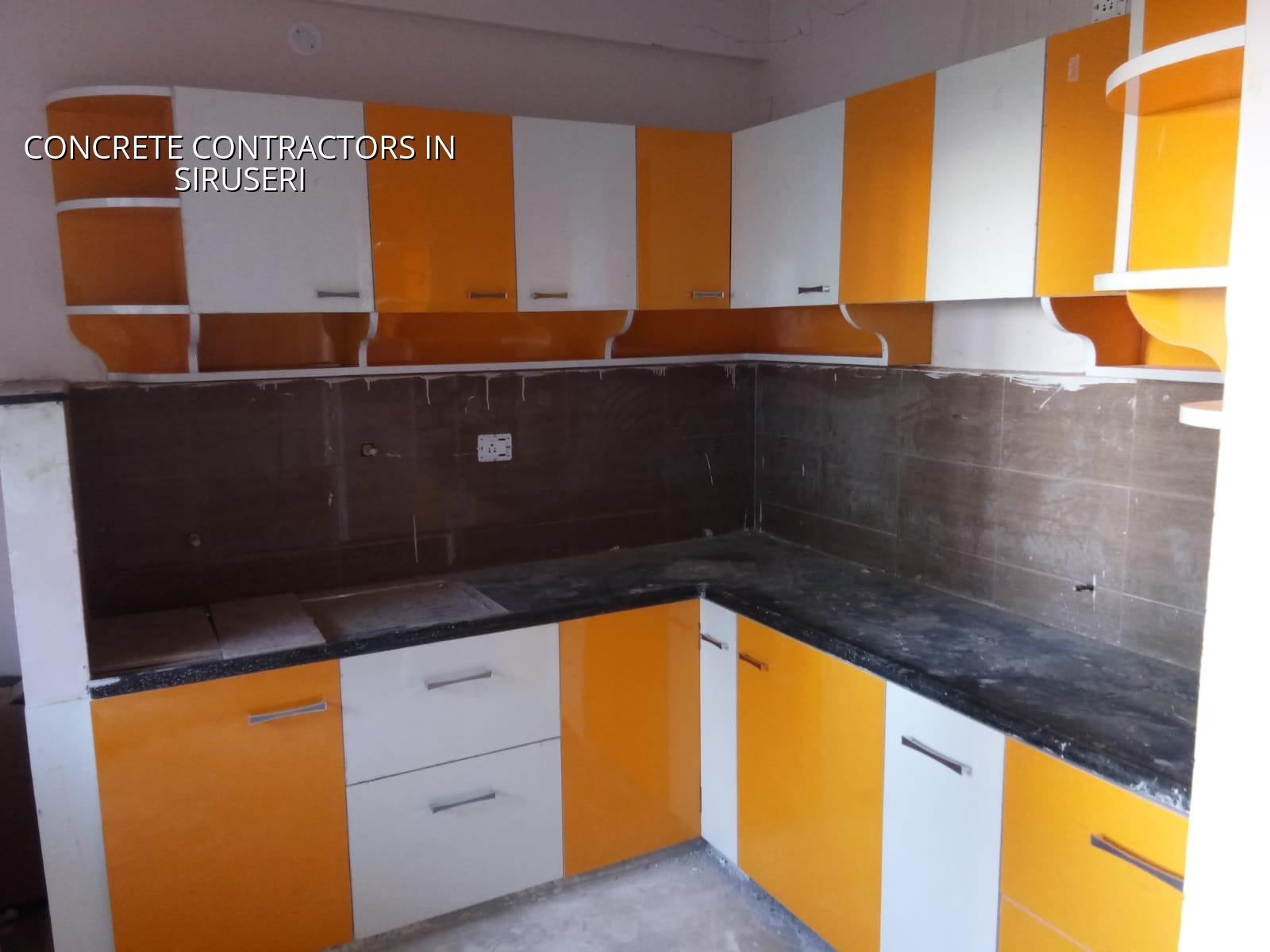
What Siruseri sites ask of the concrete work
Siruseri sits on the OMR side of Chennai, where many plots are tied to apartment projects, villas, and layout-based construction. That usually means regular road access compared with the old city, but it also means tighter timelines, shared boundaries, and a lot of work happening around occupied buildings. A concrete pour here has to be planned around pump access, truck movement, shuttering storage, and neighbour limits. If the site road is narrow or the gate opening is poor, the pour plan changes before the shuttering is even checked.
The other local factor is drainage. OMR-side developments can handle surface water well when the site level is set correctly, but the wrong plinth or a careless site slope can leave water sitting at the compound edge after one hard monsoon spell. We’ve seen people blame the concrete when the real mistake was the site level decided too late. That is the kind of issue you do not want to discover after the column starter is cast.
Siruseri also tends to attract clients who want speed. That is fair, but speed only works when curing, vibration, and bar spacing are not treated as optional. In concrete work, the problem is usually not dramatic. It is a small miss repeated across the site: a weak shutter joint, a rushed pour, a cover block left out, a column left to dry too fast.
What good RCC work looks like
For RCC, we work to Indian standards and to the drawing set, not to habit. IS 456:2000 governs reinforced concrete, IS 875 covers loads, NBC 2016 guides the broader building rules, and IS 1893:2016 matters because Chennai falls in Seismic Zone III. The engineer’s job is to make sure the structure behaves the way it was designed to behave, not just to make it look square on the day of casting.
The details that decide the result
Clients often ask about the mix first. That matters, but it is only one part of the story. A 1:1.5:3 type discussion is useless if the aggregates are dirty, the water is uncontrolled, or the cover is wrong. The actual things that keep concrete sound are bar placement, cover, shuttering alignment, proper vibration, joint treatment, and curing. If those are done badly, even a decent mix can fail early.
We also look at the structural sequence. Slabs should not be loaded too early. Columns should not be hacked for conduit work without approval. Beam pockets, staircase landings, and cantilevers need extra care because those are the points where sloppy workmanship shows up first. On a site in Siruseri, where clients often want to move fast from one stage to the next, we slow the work down where the structure needs it and speed it up only where it is safe.
- Soil check and foundation plan — We start with soil investigation before the foundation design, then choose the footing type based on what the plot actually has. This stage usually takes about 1 to 2 weeks after the report is in hand.
- Shuttering and reinforcement — Column steel, beam cages, and slab bars are checked against the drawings. This is where spacing, laps, and cover are verified. Allow 1 to 2 weeks depending on floor size.
- Concrete pour and vibration — The pour is planned so the truck, pump, and labour all match the site access. A normal floor pour is usually completed in a day, but the preparation behind it takes much longer.
- Curing and striking — Shuttering removal and curing are handled stage by stage. Curing should continue for days, not hours, and the slab should not be treated like a finished room the next morning.
How to verify a contractor before you sign
If you are choosing between firms, the safest way is to ask for proof, not promises. A real contractor will be comfortable showing the BOQ, the structural drawing set, and the payment stages before money changes hands. You should also ask who the site engineer is, how often the engineer comes, and what happens if the drawing and the site condition disagree. That question matters more than most people think.
We tell clients to look at the contract the same way a bank looks at a file. If the agreement is vague, the risk lands on you. A fair concrete contract should say what grade of work is included, how measurements are taken, what steel and shuttering standards are assumed, how deviations are handled, and when payment is due. It should not rely on verbal understandings about “small items” because those are the items that become disputes.
- Ask for the BOQ before signing anything.
- Check whether the structural engineer has reviewed the drawings.
- See how curing, shutter removal, and slab loading are described in writing.
- Confirm who is responsible for material testing and site inspections.
- Read the payment stages, not just the total rate.
- Reject any contract that leaves quality decisions to “site conditions” without limits.
Rates, approvals and the part that changes cost
Concrete work is not priced properly by guessing a total. The rate depends on soil and foundation type, number of floors, span, finish level, and how easy the site is to reach. For standard residential construction, the indicative Chennai rate is ₹1,900–₹2,300 per sq ft. Mid-premium work runs ₹2,300–₹2,800 per sq ft, and premium residential is ₹2,800–₹3,500+ per sq ft. A detailed BOQ settles the real figure before contract signing. That is the only honest way to price a structure.
For Siruseri, approvals usually involve CMDA rules for the Chennai Metropolitan Area, while the building licence depends on the exact local body. If your plot falls under a municipality or town panchayat, the process differs from a Greater Chennai Corporation site. If the road, plot papers, or height need special scrutiny, we check those documents before work starts. Near airport influence areas, AAI clearance can also come into the picture on some plots, so it is better to check early than to fix it later.
| Work stage | What we check | Typical time |
|---|---|---|
| Foundation | Soil report, footing type, level control, starter alignment | 1 to 2 weeks |
| Column and beam frame | Bar size, laps, cover, shuttering, verticality | 2 to 4 weeks |
| Slab casting | Pump access, pour sequence, vibration, finishing, curing start | 1 to 3 days per pour |
| Post-cast care | Curing duration, safe loading, crack watch, surface repair if needed | 7 to 14 days minimum |
How we handle concrete work on site
We keep the technical work in-house, with our civil engineers, structural engineer, and architect involved from the start. A site engineer is on site every working day. For clients who cannot visit often, we send weekly WhatsApp photo updates. The contract carries milestone-linked payments, and we do not sign the final agreement until the BOQ is clear. That keeps the discussion on quantities and methods instead of surprise extras.
In practice, this means we treat a concrete job as a sequence, not a single event. The site is checked, the pour is planned, the reinforcement is inspected, and the curing is watched. If you want to speak to us about a Siruseri plot, we can review the drawings and the site conditions before you decide. Call +91 97107 13838 or write to info@shalomconstruction.com.
Frequently Asked Questions
If you’re comparing contractors for a Siruseri site, we can look at the drawings, the soil report, and the access before you commit. That first review usually tells you more than a week of phone calls.
Concrete Contractors in Siruseri
Send us the drawing set or call us for a site visit, and we’ll talk through the structure, the access, and the BOQ before you sign anything.
Request a Quote Call +91 97107 13838