


Concrete Contractors in Nungambakkam
If you’re looking for concrete contractors in Nungambakkam, you’re probably dealing with a slab, a column, a terrace patch, or a repair that can’t be left half-done. In this part of Chennai, the site is usually tight, the neighbours are close, and the concrete truck has to be planned before the shuttering is even opened.
We’ll set out what the work should include, what can go wrong, how the local site conditions change the job, and where the real cost shifts happen. If you’re comparing contractors, this is the sort of page that helps you ask the right questions before you sign anything.
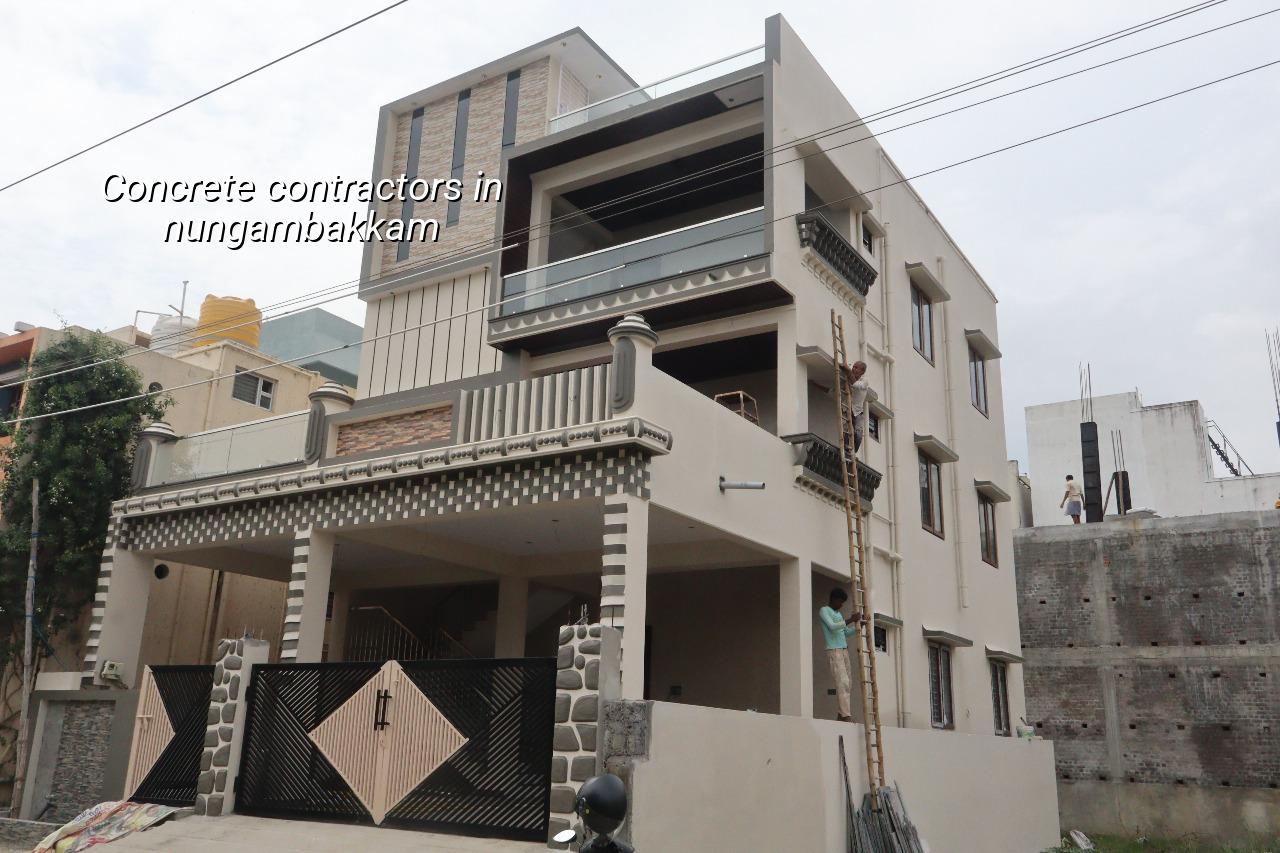
What Nungambakkam sites usually demand
Nungambakkam is not a place where you get open access and easy storage. Many plots sit on older streets with limited parking, and some projects are inside existing buildings where you can’t stage sand, aggregate, or steel the way you would on a fresh layout site. That changes the concreting plan from the first day.
In practice, the real issue is coordination. A pump line may need to run across a narrow frontage, labour has to work around traffic and neighbours, and the pour timing has to match the ready-mix arrival. If the site is a renovation or redevelopment job, we also check what the old structure is actually carrying before any new concrete is poured.
For buildings in central Chennai, the approval trail and the site method matter together. CMDA governs planning in the Chennai Metropolitan Area, while the licence route depends on the local body. That sounds administrative, but it affects when a project can move and which drawings have to be ready before work starts.
What proper concrete work includes
Concrete is not just cement and water. A correct RCC job starts with the structural drawing, bar bending schedule, shuttering quality, cover blocks, mix control, placement, compaction, curing, and then inspection after de-shuttering. If one of those is weak, the surface may still look fine for a while, which is exactly why bad work gets missed.
Code, load and mix control
Our engineering work follows IS 456:2000 for RCC, IS 875 for loads, IS 1893:2016 for seismic design, and NBC 2016 for building requirements. Chennai sits in Seismic Zone III, so the frame and detailing are not treated casually. We also insist on soil investigation before foundation design, because footing type is decided by the ground under your plot, not by guesswork.
The mix itself has to suit the member being cast. A slab pour, a column pour, and a repair overlay are not the same job. Slump, vibration, and curing time matter more than people think. In our experience, the first visible sign of trouble is often honeycombing at the edges or hairline shrinkage cracks where curing was rushed.
| Member or job | What the contractor must control | Common failure if rushed |
|---|---|---|
| Slab casting | Shuttering level, steel cover, pour sequence, vibration | Uneven finish, sagging, cracks |
| Columns and beams | Alignment, bar spacing, joint treatment, compaction | Honeycombing, poor bond, leakage at joints |
| Terrace patching | Surface preparation, bonding, slope, curing | Water ponding and repeat seepage |
| Repair concrete | Cause diagnosis, substrate condition, compatible repair mortar | Patch failure, debonding, visible repair lines |
How to judge a contractor before you sign
If you’re comparing firms, don’t start with the cheapest quote. Start with the BOQ, the structural drawings, and the scope split. A fair contractor can explain what is included in labour, what is included in materials, and what is excluded because it depends on your plot or your finish level. The dangerous quote is the one that looks neat but leaves out the awkward parts.
Ask to see the method for your exact job: how the shuttering will be supported, how the pour will be arranged, who checks cover and levels, and what happens if the ready-mix lorry is delayed. A good contractor has a sequence in mind. A weak one talks only about “quality work” and “fast completion”.
- Ask for a BOQ before the contract is signed.
- Check whether the site engineer will be present every working day.
- See how curing will be done for at least the first week.
- Confirm who checks reinforcement before the pour starts.
- Ask for the payment stages in writing, linked to milestones.
- Confirm whether soil test, structural design and RCC detailing are included.
Where the price changes, and why
For Chennai, standard residential construction usually falls around ₹1,900 to ₹2,300 per sq ft, mid-premium work around ₹2,300 to ₹2,800, and premium or luxury work from ₹2,800 to ₹3,500+ per sq ft. That is a general band, not a quote for your project. Concrete-heavy work moves within those bands based on soil and foundation type, number of floors, span, finish level and site access, and the BOQ settles the actual number before any contract is signed.
For a concrete contract, the biggest cost drivers are the foundation decision, the steel quantity, formwork quality, pump access, and how many times material has to be handled on site. A plot in a cramped street can cost more to execute than a wider one with the same built area, because labour and logistics eat time. Saving on shuttering or curing looks small on paper and gets expensive later.
- Site check and measurement — We verify access, levels and the existing structure, usually in one visit.
- Soil and structural review — We study the plot condition, drawings and load path before deciding the foundation method, which can take a few days.
- Shuttering and steel fixing — The frame is set, checked and signed off before concrete is ordered, often one to two weeks depending on size.
- Concreting and curing — The pour, vibration and initial curing are managed together; the first seven days matter most.
- Inspection and next-stage handoff — We check levels, surface condition and member alignment before the next activity starts.
Why central Chennai makes the job different
Nungambakkam has a mix of older houses, apartments, offices and redevelopment sites. That means no two jobs behave the same way. A new frame on an open plot is one thing; a terrace strengthening job above an occupied home is another. In the second case, dust control, debris removal and vibration control matter as much as the concrete itself.
There is also a practical side to the local approval and access problem. In dense central areas, you cannot assume the same work hours, delivery timing or material stacking space that you get in the suburbs. If a contractor has not worked in tight city sites before, the concrete plan often fails before the pour begins.
We also see a common mistake: people choose a contractor who can “start immediately” rather than one who can explain the sequence. That usually means the quote was assembled faster than the method. The result is missed cover, weak joints, or a repair job that has to be redone within months.
How we work on concrete jobs
We handle the structural side in-house with civil engineers, a structural engineer and an architect, and a site engineer is on site every working day. Mr. D. Salamon Ashok Rajan reviews projects personally. For concrete work, we prepare the BOQ first, then set the milestone-linked payment schedule in the contract, then move to execution. If you can’t visit often, we send weekly photo updates on WhatsApp. If you want to speak with us, call +91 97107 13838 or email info@shalomconstruction.com.
Our office is at No. 45, 2nd Main Road, Abirami Nagar, Koladi (Landmark: Ratna Chamber), Thiruverkadu, Chennai – 600077, and we also work across the city through services like residential construction, renovation, and projects.
Frequently Asked Questions
Good concrete work should be boring after the pour. No surprises, no wet patches, no ugly repairs six months later. If you want us to look at a slab, a repair, or a full structural job in Nungambakkam, we can start with the site and the BOQ.
Concrete Contractors in Nungambakkam
Send us your drawing or call for a site visit, and we’ll tell you what the job needs before you spend on concrete.
Request a Quote Call +91 97107 13838