


Civil Contractors in Teynampet
If you’re comparing civil contractors in Teynampet, you’re usually trying to keep a central-city project moving without getting stuck on access, approvals or neighbour complaints. That is the real test here, not just the rate per square foot.
We handle residential, commercial and redevelopment work across Chennai, and Teynampet needs a contractor who understands tight streets, delivery timing and the way older buildings behave when you start opening them up. This page should help you decide what to ask before you sign anything.
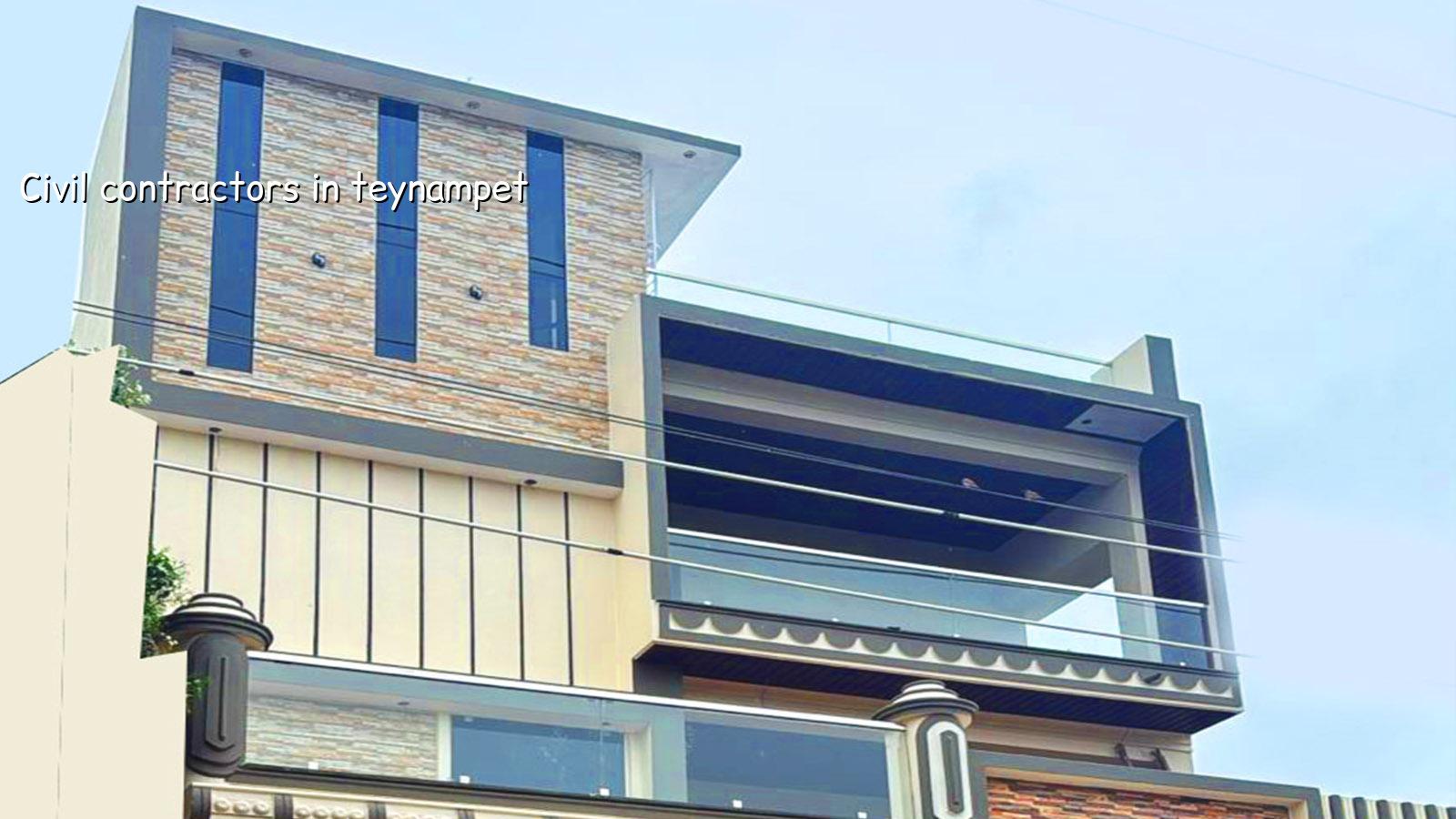
Teynampet work is not like a site on the outskirts
Teynampet sits on the Anna Salai side of the city, so the first headache is rarely the structure. It’s access. You may have traffic pressure, limited place to stack steel, no room for a mixer truck to wait, and people working around offices or apartment traffic. That changes how we plan shuttering, concrete pours and material movement from day one.
For a plot or building in this part of Chennai, the approval route also needs attention. The planning side falls under CMDA where applicable, while the building licence comes from the local body. In central areas that usually means the Corporation side of the process, and on some plots the paperwork is slower than the actual construction. If the building is older, the bigger question is often not “Can we build?” but “What is already carrying load, and what can be altered safely?”
We see one common mistake: people choose a contractor by a site photo and a low rate, then discover later that the contractor has no plan for staging, debris removal, or working around existing occupants. In Teynampet, that kind of oversight creates delays in days, not hours.
What civil work really includes
Civil contracting is the structural and shell work that makes a building stand and stay dry. That means excavation, foundation work, RCC, masonry, slab casting, waterproofing where needed, plastering, basic finishes tied to the civil scope, and coordination with the electrical and plumbing teams so the site does not become a patchwork of broken chases and rework. We design to IS 456:2000 for RCC, IS 1893:2016 for seismic design, IS 875 for loads, and NBC 2016, with soil investigation before foundation design. Chennai sits in Seismic Zone III, so stability is not something to guess at.
What changes the specification
The soil report decides more than people expect. If the log shows softer layers or a site that holds water, we may move toward a raft foundation or a pile system with tie beams. If the ground is firm enough, isolated or strip footings may be the cleaner choice. You cannot decide that honestly from a street name. The test is cheap compared with a foundation that cracks later.
For coastal or high-moisture exposure, the detailing matters too. Even in central Chennai, water ingress and poor cover to reinforcement can shorten the life of the structure. Good civil work is often invisible. What you notice is the absence of damp patches, honeycombing and repeated repairs.
- Survey and brief — we check the plot, access, existing structure and the way you want to use the building. This usually takes a few days, not weeks.
- Soil test and concept — the foundation approach starts here. Skipping it is where many budget overruns begin.
- BOQ and drawings — quantities, scope and finish level are written before contract signing so you know what you are paying for.
- Structural work — excavation, footing, columns, beams and slabs are executed in sequence, with inspection at each stage.
- Plaster, waterproofing and handover — we close the structure, test the wet areas and complete the punch list before handover.
How to verify a contractor before you sign
If you’re comparing firms, don’t ask only for a quotation. Ask for the papers and the process. A good contractor should be able to tell you how the project will be measured, what is excluded, who checks the drawings, and who is on site every day. We’ve had homeowners in central Chennai come to us after a bad start elsewhere, and the pattern is usually the same: no BOQ, vague scope, and payment demands that are not tied to actual progress.
- Ask for a detailed BOQ before any agreement is signed.
- Check who is preparing the structural drawings and whether a structural engineer signs off.
- See the payment milestones in writing, not only in conversation.
- Confirm whether the site engineer will be present daily or only at major visits.
- Ask what happens if the ground condition changes after excavation.
- Read the exclusions carefully, especially for approvals, external works and utility connections.
A fair contract should say what materials are included, what finishes are standard, how variations are priced, how often inspections happen and what documents you receive at each stage. If a contractor refuses to write these things down, the risk is already on your side of the table.
Rates, scope and the money side
For standard residential construction in Chennai, the indicative range is ₹1,900 to ₹2,300 per sq ft. Mid-premium work runs about ₹2,300 to ₹2,800 per sq ft, and premium residential starts around ₹2,800 per sq ft. Those figures move with soil and foundation type, number of floors, span, finish level and site access. In Teynampet, access and working conditions often matter more than the broad area rate. The final number is settled by a detailed BOQ before contract, not by a guess on the phone.
| Project head | What affects it | What to check |
|---|---|---|
| Foundation | Soil, water table behaviour, load and number of floors | Soil report, footing type, structural note |
| RCC frame | Span, slab thickness, beam layout and reinforcement | Design drawings, steel schedule, cube test plan |
| Masonry and plaster | Wall thickness, openings, finish quality | Brick/specification, line and level, curing |
| Finishes | Tile quality, paint system, joinery and wet-area detailing | Brand/spec list, mock-up area, exclusion list |
Saving on the wrong head is a false saving. Foundation, steel quality and waterproofing are not the places to chase the lowest number. You can change a tile later. You don’t want to dig up a footing twice.
How we work on sites like this
We keep the technical work in-house with civil engineers, a structural engineer and an architect. A site engineer is on the site every working day, and clients who cannot visit get weekly photo updates by WhatsApp. Mr. D. Salamon Ashok Rajan, our Managing Director, personally reviews projects, and the contract includes milestone-linked payments with a detailed BOQ before signing. If you want to speak to us about a site in Teynampet, call +91 97107 13838 or email info@shalomconstruction.com. Our office is at No. 45, 2nd Main Road, Abirami Nagar, Koladi (Landmark: Ratna Chamber), Thiruverkadu, Chennai – 600077.
Frequently Asked Questions
If you’re still comparing options, keep the conversation practical. Ask for the BOQ, ask who will stand on the site every day, and ask what happens when the ground or the existing structure surprises us. That’s usually where the truth shows up.
Civil Contractors in Teynampet
Call us for a site visit or a BOQ-based quotation. We’ll look at access, approvals and structural scope before we talk numbers.
Request a Quote Call +91 97107 13838