


Building Repair Contractors in Ayanavaram
If you’re looking for building repair contractors in Ayanavaram, you’re probably past the “small patch” stage. A crack has widened, plaster is hollow, a slab is staining, or one part of the house is behaving differently from the rest.
That is the right time to slow down and inspect properly. In Ayanavaram, many buildings are older, tightly set along busy streets, and repaired in pieces over the years. A good repair job starts with finding the cause, not hiding the symptom.
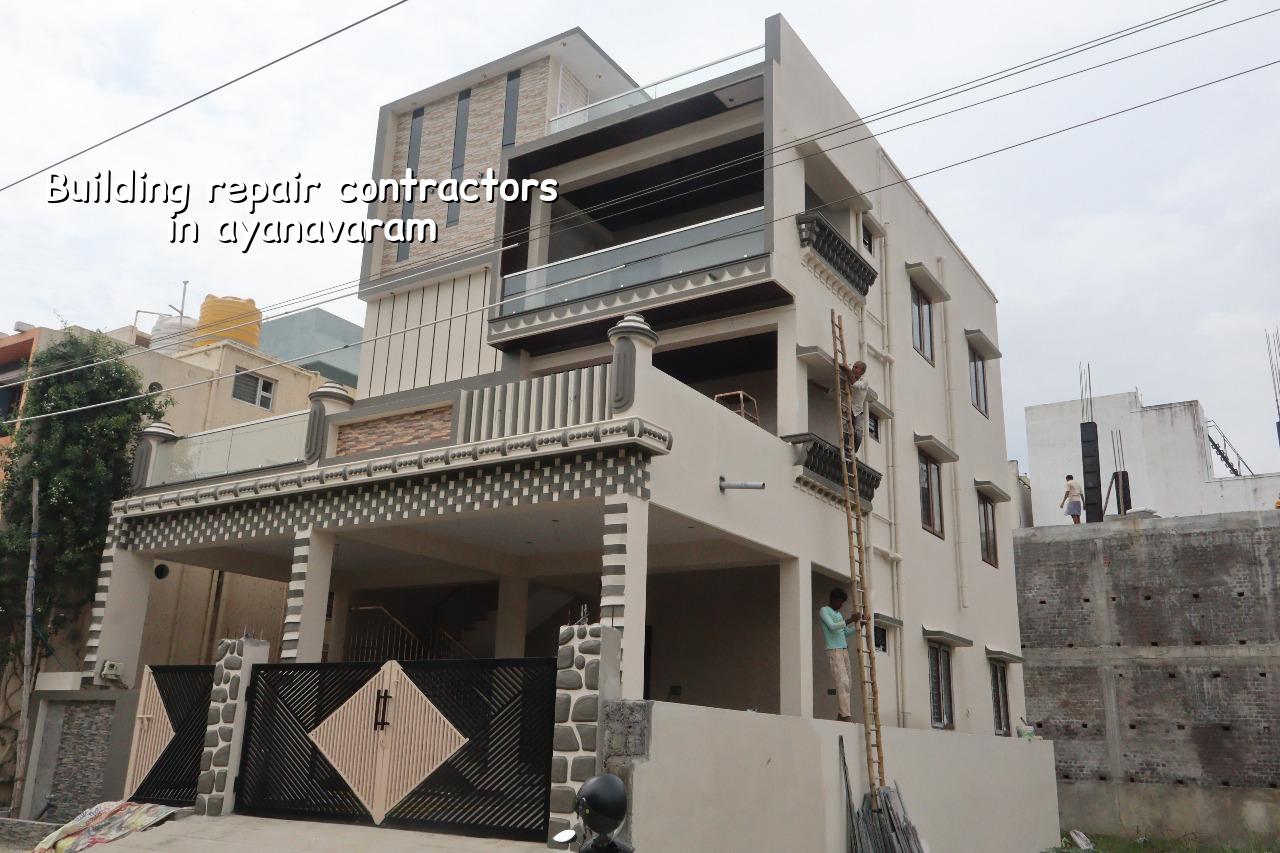
What Ayanavaram buildings usually need
Ayanavaram has a lot of long-settled residential buildings, older commercial fronts, and homes that have seen more than one round of additions or quick fixes. That matters because repair work is rarely just about the visible damage. We often find water entering through terrace cracks, plumbing leaks running inside a wall, or old plaster letting go because the substrate was never prepared well in the first place.
The streets are also tight in many pockets. Material stacking, scaffold placement and debris removal all need planning before work starts. On a narrow lane, the best repair method is often the one that lets you work cleanly without blocking the neighbour, the shopfront or the water line access.
What we inspect first
We begin with a condition check. That means looking at the crack pattern, plaster soundness, seepage lines, terrace waterproofing, plumbing routes, slab edges, balcony slopes and any sign of corrosion at exposed RCC members. If the issue is in the finish layer, the repair is straightforward. If the damage has reached the reinforcement, the scope changes completely.
Crack, leak, or movement
Not every crack is structural. Hairline plaster cracks can come from shrinkage, bad curing or poor joint treatment. Wider cracks that run through masonry, repeated cracks at the same line, or cracks with stepped movement need a structural eye. The same goes for leaks. A wet ceiling below a bathroom is not a painting problem. It is usually a plumbing or waterproofing problem, and sometimes both.
- Site inspection — We check the failed areas, access, and whether you can keep living there during work. This usually takes one visit.
- Cause tracing — We separate surface damage from structural damage, then confirm the source of seepage or distress.
- Repair plan and BOQ — We prepare a clear scope, material list and payment stages before anyone starts breaking.
- Execution and curing — Repairs are done in sequence, with curing and drying time built in. Rushing this stage is where many repair jobs fail again.
How to judge a repair proposal
This is the part most owners skip. They compare only the labour rate. That is risky, because repair work is not a flat-rate activity. One contractor may quote for patching the visible crack, while another is including hacking, corrosion treatment, polymer mortar, waterproofing and repainting. Those are not the same scope.
Ask what was inspected, what is being removed, what is being reinstated, and what happens if the crack or leak reappears. A fair repair proposal should say whether the work is cosmetic, preventive or structural. It should also say what is excluded. If that is missing, you do not have a quote. You have a guess.
- Ask for a written diagnosis, not only a repair rate.
- Check whether waterproofing and plumbing testing are included where needed.
- See if the quote says what gets hacked, cleaned, primed and reinstated.
- Look for curing time and access planning, not just labour manpower.
- Confirm whether painting after repair is included or separate.
- For RCC damage, ask what treatment is planned for exposed steel and loose concrete.
Repair methods that make sense
We use the method that suits the damage. For plaster failures, that may mean removing loose material, treating the base, and redoing the plaster in layers. For terrace seepage, it may mean slope correction, crack sealing and a proper waterproofing system. For structural distress, the work can include passive rust removal, anti-corrosion coating, polymer-modified repair mortar and reinstatement with proper curing.
The repair must match the failure mode. Putting fresh putty over damp plaster is a common mistake. So is painting over a crack that is still moving. Another mistake is covering a leak without checking where the water is actually entering. It looks solved for a month, then the stain comes back bigger.
| Issue | What we check | Typical repair route |
|---|---|---|
| Hairline plaster cracks | Surface movement, curing history, joint lines | Open, fill, mesh where needed, re-plaster or re-finish |
| Terrace seepage | Slopes, ponding, membrane condition, parapet joints | Remove weak layers, correct slope, waterproof, test |
| Wall dampness | Plumbing leaks, external cracks, window edges | Trace source, stop ingress, dry, reinstate |
| RCC spalling | Steel exposure, cover loss, loose concrete | Break to sound concrete, treat steel, repair with suitable mortar |
Why Ayanavaram changes the job
Ayanavaram is dense, old and busy. That means repair work has to respect the site as much as the defect. Many houses sit close to the street, with very little room to store sand, debris or scaffolding. If the building has tenants or a shop in front, work hours may need to be planned around daily use. Noise, dust and access are not side issues here; they are part of the scope.
Older buildings also tend to have mixed history. One portion may have been altered years ago, another portion may have been repaired in a hurry after a leak, and a third portion may still be original. In that kind of building, we do not assume the damage is isolated. We inspect the whole line, because old repairs often hide the real source.
Approvals, timing and what can wait
For simple finish repairs, the work can begin after inspection and scope finalisation. If the building has structural distress, added floors, or major alterations, we look at the applicable local approval route first. In the Chennai Metropolitan Area, the planning side falls under CMDA, while the building licence comes from the local body for the plot. The exact route depends on where your site sits.
Repair timing also depends on weather and occupancy. Terrace waterproofing should not be rushed in the middle of a spell of rain. Internal repairs in occupied homes need cleaner sequencing, because a leak can travel to the floor below while another team is already painting the room. A repair schedule that ignores use is a schedule that will get interrupted.
Here is the simple rule we give owners: fix the source first, then the surface, then the finish. If you reverse that order, you pay twice.
How we work on repairs
We handle repairs with our in-house civil engineers, structural engineer and architect. A site engineer is on site every working day, and the managing director reviews the technical side. We give a BOQ before any contract is signed, and we keep the payment stages linked to milestones. If you cannot come to site every day, we send WhatsApp photo updates so you can see what was opened, what was found, and what was closed.
If you need building repair help in Ayanavaram, call us on +91 97107 13838 or write to info@shalomconstruction.com. Our office is at No. 45, 2nd Main Road, Abirami Nagar, Koladi (Landmark: Ratna Chamber), Thiruverkadu, Chennai – 600077, and we can plan a site visit from there.
Frequently Asked Questions
When a building starts asking for repeated patch work, the real problem is usually not the paint. It is the layer underneath. If you want us to look at it properly, we’ll do that and tell you straight what should be fixed now and what can wait.
Building Repair Contractors in Ayanavaram
Send us the issue, and we’ll plan a site visit or prepare a BOQ-based repair scope before any work starts.
Request a Quote Call +91 97107 13838