


Aluminium Fabrication Contractors in Kilpauk
If you’re comparing aluminium fabrication contractors in Kilpauk, you’re usually looking at a gate, grill, partition, window frame, or a small commercial fit-out where the work has to fit an old site cleanly. In Kilpauk, the details matter more than the brochure.
Most calls we get from this side of Chennai are from people trying to fix one of three things: corrosion on an old frame, a bad previous fabrication job, or a new opening that needs to be measured properly before anyone starts cutting section. This page will help you judge the work, the price drivers, the approval side where it applies, and what a proper scope should contain.
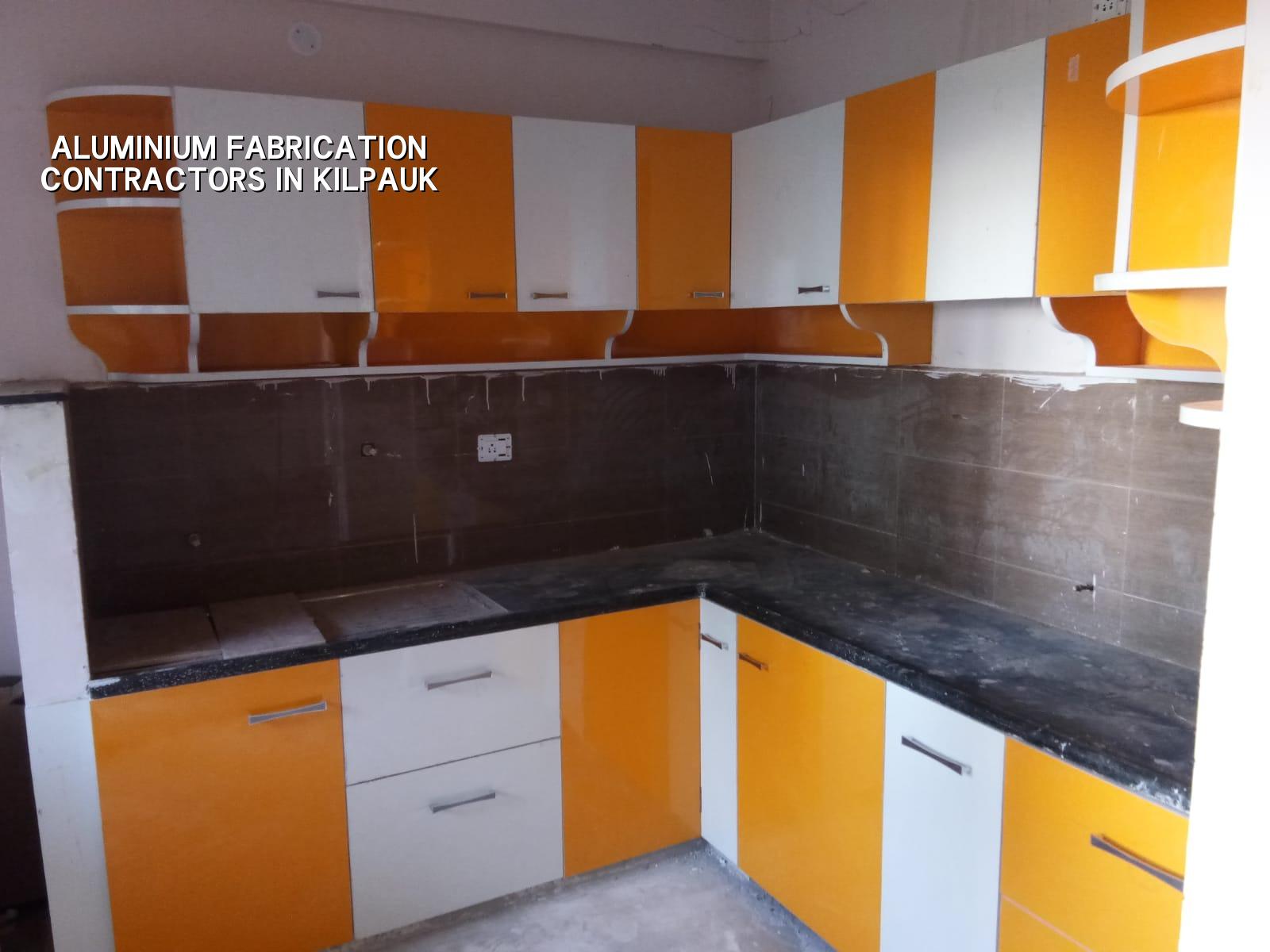
Kilpauk sites are rarely simple
Kilpauk is settled, dense, and full of buildings that have been altered more than once. A lot of work here happens in occupied homes, older apartments, clinics, and ground-floor commercial units near road edges where there is little room to stack material. That changes the job before a single aluminium section is cut. Delivery timing, stair access, noise, and where the fabrication team can keep measuring tools all matter. If the site has an old steel frame or uneven masonry opening, we check the actual plumb and level first. A frame made to a perfect drawing will still fail if the wall is out by 12 or 15 mm and nobody accounts for it.
The other local issue is weathering. In central Chennai, we often see aluminium work paired with old RCC edges, patched plaster, and forgotten sealant lines. Water does not need a large opening. It gets in through a bad corner, a loose fastener, or a silicone joint that was applied on dusty concrete. In a place like Kilpauk, the right decision is usually to measure carefully, fabricate to the real opening, and leave enough tolerance for fixing without forcing the frame into place.
What the work should actually include
Good aluminium fabrication is not just cutting an extrusion and fixing it to the wall. It starts with the profile, the thickness, the finish, the fixing method, and the hardware. For windows and partitions, the sections should suit the span and the load they carry. For grills, railings, and covers, the anchoring must suit the wall or slab edge, not just the size of the item. We design to Indian standards where the structural part matters, and we check the support conditions before we lock the final detail. If the opening needs a shutter, mesh, glass, or ACP panel, the fixing sequence has to be planned so one trade does not damage the other.
What fails most often
The most common failure is not the aluminium itself. It is the fixing. A frame can be straight on the day of handover and still start rattling if the anchors are too few, the wall is hollow at the fixing point, or the sealant line is thin and unclean. Another common issue is mixing the wrong hardware with the wrong environment. Even in inland parts of the city, a cheap hinge, latch, or fastener will show wear fast if the alignment is poor. People often try to save on accessories and later spend again on rework. That is false economy.
For external work, finish choice matters too. Powder coating behaves differently from plain anodised finish. One may suit your appearance better; the other may suit maintenance better. The right answer depends on exposure, cleaning habits, and budget. If you want a deep, uniform look on a visible facade, finish quality matters. If the opening is functional and hard to reach, serviceability may matter more than appearance.
- Measure the real opening — we check width, height, diagonals, wall plumb, and sill level before fabrication; this usually takes one site visit.
- Freeze the detail — section size, finish, glass or panel type, hinges, locks, and sealant method are fixed before cutting begins; one to two days is normal.
- Fabricate and trial-fit — cutting, assembly, welding where needed, and a dry fit on the workshop floor take about three to seven days depending on quantity.
- Fix, seal, and align — the crew anchors the work, checks level, and seals every joint; this is usually one to three days for a small house job.
How to verify a contractor before you sign
If you are comparing firms, don’t ask only for the rate. Ask what section they plan to use, how they will measure the opening, and what happens if the wall is not true. A serious contractor should be able to explain the fixing method in plain words. You should also see a clear BOQ before you sign anything, because aluminium work often changes once the fabricator knows the actual frame count, glass thickness, or hardware grade.
Ask for the exact scope in writing. Does the quote include removal of the old frame, shifting debris, sealant, screws, corner cleats, transport, and installation? Or is it just the fabricated item? That difference changes the real price. You should also check whether the work includes correction for minor masonry patching after fixing. In occupied buildings, that line can save arguments later.
- Ask for the section size and finish, not just “aluminium work”.
- Check whether the quote includes old frame removal and debris clearing.
- Confirm the fixing method for RCC, brick, or block walls.
- See the hardware list: hinges, handles, rollers, locks, sealant, and screws.
- Insist on site measurement before final fabrication, not just a phone estimate.
- Ask how they will handle seepage points around the frame after fixing.
Rates, scope and what changes the price
For aluminium fabrication, there is no honest single rate that suits every job. The cost moves with profile size, finish, hardware, glass or panel choice, quantity, and how hard the site is to access. In a dense area like Kilpauk, a ground-floor job with easy unloading is different from a first-floor job in a narrow lane with no storage space. For mixed work like windows, partitions, and grills, the BOQ decides the real figure before any contract is signed. If you need a broader building package, our residential and commercial teams handle the structural side too, while interior works can be coordinated through interior works when the job sits inside a fit-out.
| Cost driver | What changes it | What you should insist on |
|---|---|---|
| Section and finish | Profile thickness, anodised or powder-coated finish, visible quality | Exact section size and finish mentioned in the quote |
| Hardware | Hinges, locks, rollers, handles, fasteners, brand quality | A separate hardware list, not a lump sum |
| Site conditions | Floor level, wall straightness, access, shifting distance, working hours | Site measurement before final pricing |
| Scope | Removal, fixing, sealant, patching, transport, glass or panel work | Clear inclusions and exclusions in writing |
For context, many aluminium jobs sit inside fit-out or small commercial work, so the overall cost may align with the wider interior range of ₹1,200 to ₹2,500 per sq ft depending on what else is included. That is only a reference band, not a project quote. The real number comes from the BOQ, the drawing, and the site conditions. If someone gives you a neat lump sum without measuring the opening, they are guessing.
Approvals, measurements and site sequence
Pure aluminium fabrication usually does not need a separate building licence by itself. But if the job sits inside a new construction, alteration, or commercial fit-out, the plot’s approval route still matters. In the Chennai Metropolitan Area, CMDA controls planning, while the building licence comes from the local body: Greater Chennai Corporation inside city limits, or the relevant municipality or town panchayat outside it. If the site is near the airport side, height clearance can come into the picture for the main building. We check these basics early so your fabrication work does not wait on a paperwork surprise.
On the ground, the sequence is simple when it is done properly. Measure first, detail second, fabricate third, fix last. The mistake people make is reversing that order. They buy material early, then discover the opening is not square or the wall finish is not ready. That is how work sits around the site and gets scratched before installation.
How we handle this work
We do this with in-house civil engineers, a structural engineer, and an architect who review the job before it starts. A site engineer is on site every working day, and we keep clients updated by WhatsApp if they cannot visit. For fabrication tied to a house, villa, shop, or renovation, we prepare the BOQ first, agree the payment stages in the contract, and then move to production. If the job is part of a larger build, we can coordinate it through residential, commercial, or renovation work as needed. If you want us to look at a Kilpauk opening and tell you what it will really take, call +91 97107 13838 or email info@shalomconstruction.com.
Frequently Asked Questions
If you need a straight answer on a Kilpauk opening, send the dimensions and a site photo. We’ll tell you what to change before fabrication starts, because that is where most of the savings are made.
Aluminium Fabrication in Kilpauk
Share your opening size, a photo, and the finish you want. We can review the scope and arrange a site visit if the job needs one.
Request a Quote Call +91 97107 13838